Tuesday, May 23, 2006

In Leviathan's Long Shadow


In considering government and all of the maddening things that it does, one may forget the roots of ideas of government and the relation of the people to it. Different systems have different roots, naturally, but I think it would be hard to argue that the "Western tradition" is predominant in most governments (in one degree or another) across the globe. Why this is could be considered at another time, but it is well to note that the political tradition of early modern Europe, in all its complexity, is at the root of our current system in the United States.

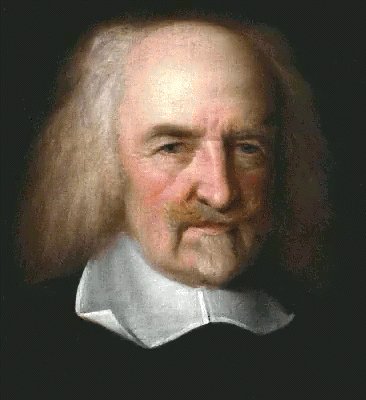
The system of state in the U.S. descends in most ways from the political thought and tradition extant in early modern England. Perhaps the most controversial and studied figure of this tradition (with the possible exception of John Locke) is Thomas Hobbes (1588-1679). After considering the nature of Hobbes's thought on the nature of man and the state of nature, the origins of government and the nature of sovereignty, some connections will be made to the present day and generally argue that we have not, in many ways, escaped the world that Hobbes described in Leviathan. In many ways, thankfully enough though, we have.

One must start any consideration of Hobbes with an idea of his notion of the state of nature, that is, the state of human society and relations before organization and codification. Hobbes viewed the state of nature as a state of constant war and struggle. People, driven by the desire for self preservation and their personal passions, constantly attacked each other in the attempt to survive. It was in this consideration that Hobbes coined the phrase that life in the state of nature is "nasty, brutish and short." So, the state of nature for Hobbes is a negative state and one in which there is no safety or security beyond that which the individual can provide for himself.

From this state of nature, the people involved come to realize that the constant war and insecurity is untenable and that there must be born a higher authority. In other words, there must be a transfer of sovereignty from the individual (state of nature) to another entity. It is here that Hobbes forwards his conception of the social contract. Hobbes's social contract involves the individuals agreeing with each other to transfer power to a sovereign entity. This differs significantly with the social contract as discussed by John Locke, Jean-Jacques Rousseau or Charles-Louis de Secondat, Baron de Montesquieu in the later seventeenth and eighteenth centuries.

The key occurrence for Hobbes's social contract is the fact that once the sovereignty is transfered from the people to the sovereign, it cannot be taken back. The transfer is final and the sovereign is freed from taking the people's desires and opinions into consideration. This also, for Hobbes, precludes any idea of resistance to the sovereign as it is not in the right of the people to question the power that they decided (mutually, at first) would rule over them.

In doing this, Hobbes argues that the sovereign is an artificial man, an independent entity, not bound by the same constraints as regular people. The sovereign is not bound even to obey its own laws, but it is expected that the sovereign will always have the best interests of the people in mind when making the decisions of state.

As depicted visually on the frontspiece to the original 1651 edition, this artificial man created by the transfer of sovereignty is show as a king. To be sure, Hobbes was quite royalist in his leanings. A pupil-cum-patron of his, Thomas Hardwick, the Second Earl of Devonshire, began Hobbes's long association with Royalist forces and this extended into the English Civil War. Hobbes actually fled England during the Civil War (after the execution of Charles I on January 31, 1649), and part of the Commonwealth and Protectorate of Oliver Cromwell. It was during this period when Hobbes was in France that he wrote Leviathan (approx. 1649-1650). He also, at this time, met Rene Descartes and provided commentary on his Discourses.

Back to the ideas, though, Hobbes was a Royalist, but it did not really matter to him what form the government was to take. The important factor for Hobbes was the indivisibility of sovereignty once it is given by the people. This, in other words, precludes ideas such as separation of powers, federalism, checks and balances (another Montesquieu idea) or devolved government. The sovereignty, to be effective, must be vested in one body, quite literally if the analogy of commonwealth as an artificial man is to be believed.

With this framework, it is not hard to imagine what Hobbes thought about free will. He was a thoroughgoing determinist. He did not believe that individuals could be free actors and live in a stable society separated from the violence of the state of nature. This also relates to his materialism, the belief that the human life is nothing but the moving of uncontrollable inner biology (although he would not have used that word) and therefore the artificial man that was Leviathan can have the life force just as any man can. The human person is nothing but its instrumental functions; for Hobbes, the state is no different.

As you can see, these ideas concerning the nature of man, state of nature and the genesis of the state are all related and provide a pretty bleak picture of society and human nature. How can this be explained? As aluded to above, Hobbes was indeed a product of his times. The seventeenth century in England (and in Europe generally) was a bloody one filled with uncertainty, war and death. The absolutist idea ruled in government, most famously displayed (although this can be debated) by King Louis XIV of France. England had its absolutist tradition, too, although inspired and backed by such French theorists as Jean Bodin who, in his Six Books of the Commonwealth laid out the rationalization for the absolutist state. King James I of England (who was also King James VI of Scotland) was a dedicated absolutist, believing in the divine right of kings and seeing his place as the undisputed ruler of the land.

It is out of such times, which combined the horrors of protracted war with the notions of a powerful central government, that can be seen as the backdrop of Hobbes and Leviathan. Hobbes lived in unstable times and one can understand that this would influence the thought of someone concerned not only with government but human nature as well.

The idea of the divine right of kings leads to a consideration of Hobbes and religion. In other words, how important is religion to the ideas of Thomas Hobbes? It was a much debated subject in Hobbes's time and ours, the debate centering on the exact religious disposition of Hobbes himself. There were arguments for everything from Anglican to Protestant Dissenter to (most provocatively) a Deist or even an Atheist. God does not seem to do much in Leviathan, apart from the Creation. People are the sum total of their desires and vices and it is not up to God to stop them or introduce moral sanction. It is the people who erect governments and not God. He does spend a considerable time rubbishing the Catholics, for who he had considerable contempt (although Locke was no big supporter of Rome either).

So, is religion necessary for the commonwealth described to function? As I have hopefully shown, religion can be a part of the state but it does not seem instrumental to state formation or maintenance. If anything, Hobbes believes that religion, while it can pacify people and make the obedient, it can also lead to dissention and challenge to the leadership (here again, he blames the Catholics).

Bearing all of this in mind, what can be said of Hobbes considering the political landscape of today? It is tempting, given the problems and horrors that confront us daily, to agree with Hobbes in saying that people are inherently evil, selfish and will do anything to get their way if left ungoverned. This position is convienent when one throws one's hands up in exaspiration at the world and says "Fine. Maybe people just need a strong-fisted, brutally repressive regime that will rule absolutely and keep everyone in line." Is this reasonable? Incidentally, Hobbes thought that reason was central to the orderly functioning of society but that it was not a priori. That is, people are not born with reason; reason develops from human industry.

I cannot accept Hobbes's idea of the permanent transfer of sovereignty or the indivisibility of power in a government. As has been shown, his times and position may have influenced these ideas, but they are troubling nonetheless. If a government ceases to perform its function (the protection of the human rights of its people), the people should be free to resist it at all harms. For Hobbes (personally and theoretically), the only manner of acceptable resistance was to flee the country.

Why should people be free to resist the government? Because the government exists at their behest and at their service. After all, the reason for setting up the state in the first place was a desire of people for safety, right? Even Hobbes would seemingly agree. Hobbes also sets his framework on shaky ground when he asserts that this transfer of sovereignty may not have to be a real act, but can be a foundational, explanatory myth. The countermanding of this idea comes with Locke and his idea of "tacit consent," whereby individuals rebind themselves to the idea of the state automatically (for lack of a better word). Remember, though, that Locke had a completely different notion of the state of nature, natural law and the relation of the individual to the collectivity than did Hobbes. We will discuss Locke in future.

I also disagree with Hobbes's denial of free will for all people. Why? Well, there is a religious argument that contends that people must be free to choose even if the morality of the choice is already known. In other words, people, to be truly dedicated to the service of God, must be free to choose wrong. They must be ready to accept the consequences, but this is the price humankind must pay for being created in "God's own image."

Is there a non-religious argument for free will? Perhaps the full implications of this question are not germane to the present discussion, but suffice to say that if society is indeed composed of individuals and those individuals want to live together in groups, there must be a balance stricken between individual and group. This can only arise if the individuals are free actors, not coerced to react from outside forces visible or otherwise. It is the opposite of this notion that leads to repression through the abrogation of the very basis of society as a collection of individuals and nothing approaching the artificial man of Leviathan.

Thomas Hobbes and Leviathan have a long shadow indeed. In many ways, we still have not completely escaped from Hobbes's view of humankind, their nature and relations to each other. How is this true? Superficially, people do indeed seem to react how Hobbes describes. People want what they want and will do whatever it takes to get it. On a deeper level, when power is transfered from the individual to the commonwealth, it does seem to take on a mind of its own. Ideas of power get entrenched in institutions that are hard to change and almost impossible to get rid of. We seem trapped in a system where even the access to the organs of organized change (the legislative process, for example) seem ever more resistant to evolution or even closed to active participation by the citizenry.

The transfer of power being original and irrevocable, we seem stuck in a system that cannot be changed easily. I would argue, however, that while this may be the case, it is a rather pessimistic view of humankind to take and one that leads to the perpetuation of a bloated and out-of-control state acting completely in its own interest. It is through rediscovery of our nature as free actors and granters of the reins of power that real change can be fostered. We all must realize that the individual is at the heart of society, not the collectivity or the government it supposedly put into power in the past.

Humans should be free-born, individual actors and the center of a system where the power descends from their consent (tacit or otherwise), all in the knowledge that the system can be changed or scrapped if it ceases to perform its function. Human weakness in the face of such responsibility is what leads to chaos and disorder, and I do believe that human beings are weak but not inherently evil. Hobbes believed that humans were not up to the task.

The price of liberty is indeed eternal vigilance. Are we willing to stand guard?

Wednesday, May 17, 2006

Blogging Called. He Accepted The Charges.

I would like to welcome a fellow Madisonian and loyal member of the Opposition here in the P.R.O.M (People's Republic of Madison). Now, we are not scary Republicans nor lackadaisical Democrats...we are much, much better (at least we think so).

So, check out Greg's blog for some great pieces on Madison, the "Midwestern ethos" (something I have considered at length), the sporting life and other worthwhile pieces in future.

Greg is moving to Berlin, Germany for a time so his perspective on Continental affairs will be most welcome.

Oh, and I helped him design and build a five-storey beer bong. I am not (in the words of Dave Barry) making this up.

Here is the link to Greg's blog.

Much in the works...be thinking about your impressions of Thomas Hobbes.

Friday, May 12, 2006

One Down, Seven To Go

As of 8:23 A.M. CDT, I, upon sending an email with an attached .pdf, finished the first year of my doctoral program in the Department of History at UW-Madison.

My feelings? Well, whew! for a start. (I realize that sentence was interestingly punctuated; deal with it."

These past months (although it seems like about three hours ago) have been a challenge, but I think that I have risen to it. Those of you who have gone to graduate school know that it is more of a marathon than a sprint and tenacity is tested almost more than ability. They figure that by now, you know how to play the game. Take it to the next level.

Grad school is like the Super Bowl of Nerdiness...this is the Big Dance. Do you have the stomach to go all the way?

Well, those of you who know me know that my stomach is ready for damned near anything.

Speaking of that, is it wrong that it is about 8:30 AM and I want a beer? Do I have a problem or have I just found the right solution? I guess it is a matter of perspective, but I will say no, that is not at all wrong.

The paper that I finished and sent just now was, to put it mildly, surgery with a baseball bat...or an oil tanker. Yeah, I made the point, but the specifics are just not there. Oh well, what could one indeed say for a historian in the midst of linguists. They, like everyone in the social sciences (history is humanities, folks), just get to make shit up.

What now? Oddly enough, in a strange case of bookending, there is a party at the same place there was one the second night I was here. It is a serious case of veja du.

As for the long term, I will not care for a few weeks, then, back at the reading for fall and prepping for prelims (a.k.a. the test from fucking hell).

Well, that is quite enough of my personal troubles. They are not that interesting, but I felt that this was an adequate time for reflection.

Oh, thanks for the response to the Hitler thing. I guess if attention to detail, cognizance of the worst cases possible and a slight suspicion of people makes me Hitler, well then, I'm Hitler, I guess (more interesting punctuation).

Jenks-I forgot about the Trevor Wilson thing...that is indeed odd. If I recall, Giles accused me of Nazi-ish behaviors once (probably). Also, thanks for the comment on my wild speculations. Read my response.

The Rest Of You- Enjoy Every Sandwich.

Tuesday, May 09, 2006

Rather Off-Putting

I took one of those personality tests. This one, based on my answers to twenty-seven questions, assesses what world leader you most closely resemble.

Well...


Take it for yourself. I honestly am not sure what to make of the results...

American Agriculture, Fuel Technology And National Security

With uncertain oil prices and a dicey international situation concerning oil producing nations (like this has been any different for thirty-five years), there is much talk of developing alternative sources of fuel.

One that is bandied about a lot (especially here in the corncentric Midwest) is ethanol which is made from that very bounty of the American Middle West. I know that there are laws in certain places that mandate a certain percentage of ethanol in fuel and that there are also engines that can run on an increasingly high mixture of ethanol and petroleum-based products.

Sounds good, right? The American farmer can be freed from damaging and outdated subsidies (please hold back the laughter) and sell their crops for a fair and higher price so that their relevance and efficacy is guaranteed. The U.S., broadly, would become a more important producer of an increasingly important source of fuel, right?

[Here begins the wild speculation.]

So, if this is true, and the U.S with its corn resources becomes a globally significant producer of fuel, then the source of this fuel would become more valuable, right?

If this source is indeed corn, then corn is more valuable than ever before, correct? Boon for farmers, producers and speculators, a golden [Bantam] age for American agriculture, right?

Could it be said that, given this situation, corn would have to be more closely guarded than it is now. The fields of it consume, let's be honest, whole states and the bulk of a region of the U.S. If it is indeed valuable as a source of fuel, will it have to be guarded like oil fields?

Does this change the dynamics of national security as far as energy resources. Oil refineries and storage units are, doubltess, guarded fairly closely, as are pipelines, depots and transport vessels both land and sea. I am sure that even before 9/11, a significant portion of expenditure for oil companies was spent on asset security. Does this new development make corn fields and grain elevators across the nation more vulnerable because of their increased worth.

Think of the "what ifs" here...terrorist attacks made as simple as torching fields of passive grain as their owners wonder how to protect their vast and diffuse assets...cities such as, say, Dubuque, Iowa becoming as big of a concern for security as any port city...the potential for chemical/biological/radiological/nuclear attack against a crop with no natural defenses must be vast...this is all ignoring the devastating effects on food production, both crops and livestock...

Is all of this rather far-fetched? Possibly and I certainly hope so.

It cannot be ignored, however, that in a search to protect ourselves through the use of resources and technology, new concerns may arise and with them, new complications.

In other words, is the cure potentially more deadly than the disease?

Could the plowshares of the American farmer become a target for the swords of potential enemies?

Is it possible that the American staff of life could be transformed into a cudgel, wielded by those who would destroy us?

Monday, May 08, 2006

Better Than Sex? Not Even Close.

Sex, that is.

The ever-observant late Dr. Hunter Stockton Thompson observed, in the title to his tale of the 1992 presidential election, that politics is better than sex. Far more addictive, too.

Well, as always, the Good Doctor was right on the head, at least as far as I am concerned.

What goes on inside the Beltline and around it is infinitely more intersting that what goes on below it.

I, between the more esoteric deliberations of the academic realm, have been keeping myself apprised of political developments, large and (seemingly) small. Just a few observations, some cryptic, others not...
  • Tommy Thompson as governor of Wisconsin again? He served in the cabinet, still popular at home and knows what's expected of him (if you catch my drift).
  • Cabinet shake-up? This happens to all presidents, in a thinly veiled attempt (by the administration) to buoy itself as the clock ticks and (by potential successors) to cleanse themselves of the stain of the outgoing regime. Think back to 1985-1989 or 1997-2001. Second-term swoon, welcome back, old chum. Plus, the jobs for former cabinet people (lobbyists, pundits, professors, consultants) won't fill themselves to bursting, now will they? Snouts in the trough, all of them. Well, it's all they know...
  • Jack Straw out? You are seriously out of touch if this one surprised you. Whitehall (especially the FCO) and No. 10 have been at odds for some time. That will pretty much set the stage for the fight to control Labour when Blair steps aside (which he said he will before elections are called next).
  • Illinois governor? Hell if I know...Seems like a toss-up, though the George Ryan card is now again a somewhat potent one.
  • Iran? Jack Straw was right on this one. Completely nuts. Interpret my use of it how you will.

I end with two great website suggestions for political junkies and those who love to waste time in front of a computer:

  1. Politics1.com - Polling data summaries, tracking of midterm and P2008 gossip and other goodies. Like crack, but potentially more damaging to brain tissue in the long run.
  2. Atlas of U.S. Elections - This site is mind-boggling. Data going back to the 1796 presidential election with great statistical breakdowns for all since. Great tools and fun "what if" scenarios. Predictions for 2006 races and other great stuff. Again, highly addictive.

Which is more damaging, sex, drugs or electoral politics? The similarities, if you consider them, are, well, considerable.

Everyone has a drug of choice. This happens to be mine. Well, that and Blatz.

Friday, April 28, 2006

Life, Liberty Property...And Language?

(This is another sort of "recycled" post, comprised of some comments I made in a class concerning language and immigration. The notion was posited that it is the responsibility of governments to "protect" and "promote" linguistic minorities. My comments follow.)

I just wanted to offer a few observations on the topic of government and the protection/promotion of linguistic human rights (LHR).It seems to me that anything that comes down from the UN, especially anything of a cultural nature, is a bit difficult from a sovereignty standpoint.

The difficulty, as far as I see it, comes in the terminology, namely the use of "protect" and/or "promote."Now, when I see the word "protect" used, I assume that this posits a negative rights standpoint as far as the government is concerned. What I mean is that the rights that people have intrinsically should be protected from the incursion/denegration from other actors in the society.

This, naturally, arises from an entire view of the role of government as protector of the natural rights of the citizenry, namely (to use John Locke's words) life, liberty and property. Beyond the protection of these rights, in a minimal state, the government can play no positive role; the actors in the society are left to themselves to perpetuate their culture without aid from the state.

When, on the other hand, I hear the word "promote," this denotes a more utilitarian, activist concept of the function of government in the field of rights. Promotion can mean a lot of things: the facility of institutions, the passage of legal protections and the provision of public funds. In my opinion, government enters dangerous territory (especially when it refers to culture) in taking an extremely activist role in such matters. Why do I think this, you ask?I believe that rights, at least the ones protected by the state, should derive from the rubric of life, liberty and property. These rights denote that the state should not be allowed to kill you, detain you or steal from you.

Can LHR be derived from any of these basic negative rights?Here again, I suppose this descends from one's understanding of "stealing." In the strictest sense (and the one that formed the spirit of much of law in the eighteenth and nineteenth century era of state-building), the only referent here is tangible assets. Is this proper?

As I said before, that comes with one's definition of the proper role of government.I guess the real issue is are LHR on the same level of rights as life, liberty and property? Should rights be categorized as such? And, if so, what responsibility should any state have for protecting them? If they don't protect them, can/should coercive, forceful action be taken against them?

(If you are interested in this topic further, check UNESCO's page on the subject for all of the official UN documents. Also useful is this page maintained by a professor of language and linguistics at the University of Essex.)

Tuesday, April 25, 2006

Illinois And The Fine Art Of Jiggery-Pokery

This will be a short one, just two more recent examples of the "culture of corruption" in Illinois politics, especially in Cook County.
  • When they say culture, perhaps it was in a literal sense. Illinois has been called a "petri dish for corruption" by the National Association of Attorneys- General. So, how are the fine people of Illinois supposed to take this assertion by a bunch of government lawyers. Well, people of Illinois, consider the case of Wisconsin AG Peg Lautenschlager. I am sure she would be the first to down Illinois for being on the make, but, well, explain this away, top law enforcement officer in the state (be sure to watch the video). We don't mind corruption...means you don't have to bother with the forms.
  • Hey, this is abuse of the system...civil servants getting away with flouting the law like that...oh, wait, this sort of deal makes that look like a sort of a fringe benefit. Were there kickbacks, brown-envelope jobs, payola...well, it got done, didn't it?

And the beat goes on...

(Oh, this is what jiggery-pokery means).

Friday, April 21, 2006

In The Good Old Summertime...

...there will be more posts.

I am currently engrossed in the end-of-year rush and feel like an academic air-traffic controller. I have projects, presentations and suchlike to finish. It always gets done, but the pressure is on.

Fear not, kind reader. The summer frees me up for more independent reflections and ability to publish in this space.

On the agenda are continued ruminations on impeachment of President Bush (we are taking the long route, naturally, so expect discussions of history, law, precedent, allegations and just war theory), immigration reform (at the behest of reader Eric Schneider), the nature of sovereignty and the proper role of government (an underlying theme of much of my thinking, but we will handle these directly), continuing coverage of politics in Illinois, Wisconsin and beyond and other topics of interest to me (and you, hopefully).

Read the piece below. Ahh, bad government at its worst.

No summer break for the intellect, ever. Blessing or curse? You decide.

George, Judy and Rod: Jail, Trouble, Lucky

Well, it has been quite a few weeks in Illinois politics indeed.

This past Monday, after a thirteen year investigation and a five month trial, former Illinois Governor George Ryan (R) was found guilty on all counts in his federal indictment.

This would be a big story by itself, but the added bonus of it coming down in a gubernatorial election year makes the speculation (at least for me) that much more dastardly.

For Ryan himself, good riddance. My grandfather said that he met George Ryan in 1960 when he was a Kankakee County Supervisor and did not trust him from that moment. Oh, if the rest of the state would have had the same experience. He rose through the ranks of the legislature and the Illinois G.O.P. to the rank of Secretary of State under Governor Jim Edgar. After Edgar decided to call it quits and not seek re-election in 1998, Ryan ran and beat a rather un-electable Democrat, Dawn Clark Netsch. He, at that time, at least seemed like the "devil we knew."

Illinois politics has a funny effect on people. No matter who the are or what they say, that ol' culture of corruption is a tempting mistress and most fall prey to her whims. We all knew that the new governor was a Springfield hack who would have his snout in the trough just like the rest of them. What was not counted on was that this corruption would get people killed.

No need to recount the whole story here (if you want me to, I will in subsequent posts), but the "licences for bribes" scandal exposed a web of racketeering, mail fraud and lies that all centered on Ryan, who decided not to run for re-election in 2002. This was the point when I realized that this would become serious, that there was much more at play that the normal downstate corruption that is endemic to state government in Illinois.

George Ryan is an egregious offender and liar who deserves the worst that can be given him. He joins the growing list of Illinois governors who have been convicted, forced out of office or in general acted in an extremely shady manner. I am thinking of Otto Kerner and Dan Walker here.

As for the "blow-back" from this on the governor's race, Topinka may well feel it soon. She was in state government while all of this was going on (she has been the State Treasurer since 1994). Could she have done anything to stop Ryan and his dealings? Officially, maybe not. But as a leader in the GOP in Illinois, she certainly could have appealed to him from a party standpoint. Could it hurt her chances in the election? Maybe, just maybe.

Blago, of course, wasted no time in linking the two, saying that something could have been done. What does this mean for the incumbent governor? It is a sort of a late Easter present that he has not let go wasted (as the above article makes plain). This is just the sort of thing that he needed to portray his opponent as a Springfield insider who was anxious to support her friend George Ryan (although Blago is no outsider by any means and Topinka has not been friendly with Ryan for a while. Wonder why...)

My advice for Blago is the old favorite "timeo danaos et dona ferentes," which loosely translates as "beware of Greeks bearing gifts." In this case, it might not be Greeks but the Irish in the form of Patrick Fitzgerald, the dogged prosecutor who I think might get a nod for U.S. Attorney-General one day (or not; he's a little TOO good at his job. But, here again, people said that about Elliot Spitzer). It is never good to be in Fitzgerald's radar, but it seems that Blago might be just there now.

Apparently, there were some interesting fund-raising methods that Blago may have had a hand in. In this investigation, there is constant reference to "Public Official A." This investigation, undertaken by Fitzgerald and his office, has not identified this mysterious official, but all signs point to Blago.

The election is in November. Seven months is an eternity in politics (remember the 1992 presidential campaign?) Anything can happen and I hope it does. Politics is my favorite bloodsport.

When it comes down to real issues, though, don't kid yourself. We are just deciding which lunatic will run the asylum for the next four years. Barring that, engross yourself in these people and their curious ways. It is better than the zoo and the animals act thousands of times stranger.

Wednesday, April 12, 2006

Shannon's (Crash) Landing

No, no. I did not crash land (at least in any literal sense).

Rather, a situation was brought to my attention that underlines much of what I think is wrong with bars/music venues today.

I come to find out, through my good friends/best damned band around The Wanderers, that a regular hang-out and show venue for them (and by implication, all of their crowd) has, shall we say, shifted paradigms. I am speaking of Shannon's Landing in Lansing, Illinois.

All euphamism aside, the place has turned into another example of why I hate bars and many of the people who go to them.

Apparently, the place has decided to "raise" its image by introducing brighter lights, flat-screen televisions, new dress for the staff and have removed the dart board.

In other words, they have turned a really great place (it overlooks a runway at an airport) in a unique location into another brightly lit, safe hang-out for the post-collegiate and miserable suburban yuppie crowd that seems to be taking things over everywhere in the southern suburbs of Chicago (my ancestral home).

Why is this bad, you ask? Isn't it good to change sometimes?

Well, as the old saying goes, change for the sake of change is the philosophy of the cancer cell.

The management has apparently made it clear that The Wanderers and "those types of people" who listen to them are no longer welcome no matter that they usually make for a financially successful evening for the establishment.

What this says is that spending power no longer is the great equalizer, at least as far as bars are concerned. Drinking culture in the United States, at least public drinking culture, can be seen to be more egalitarian than in, say, Great Britain where pubs often catered to certain classes of clientele (and moreso after the middle class began to do their drinking at home). Public places of entertainment, including bars, should openly welcome all paying customers that do not destroy property.

This should be even more apparent to these bar owners when they consider the regular crowds and the revenue brought in by a live music act, especially one that has the history of crowd-rallying of The Wanderers (I know this from first-hand experience).

Where does this leave us? With another unique neighborhood spot turned into a brightly lit Denny's with a bar; a place that is safe for granny and the kids and not filled with "those people" who might scare off the parish gentry. Just another "Irish" bar that has completely forgotten the sociocultural function of the pub in Irish society (as a site of local unity rather than a continuation of the divisions that the rest of society makes all too clear).

This is also a paean of the death of the "neighborhood tavern" in general. A place where people could go with their friends, where they know you, to drink and relax (with other adults, mind you) and maybe, just maybe, take in some local live music. A complete evening's entertainment and all should be happy, right?

Not right. This is a blatant case of judging a collective book by its cover. You, bar owner, are a business. That means, in the simplest sense, that you are in a pursuit to turn a profit that is greater than your losses. What you are not is a judge of the social acceptability of your patrons or their friends. You are also not imbued with the power to judge, from the mere sound of a band playing, that their fans MUST be "those types," unacceptable and therefore out of line with the "corporate philosophy (a term that I think is bullshit. The philosophy of corporations is to be profitable. Anyone who tells you otherwise is lying)."

I close by saying that I hope that the owners of this newly purged establishment get exactly what they hope for. Kids and old people are notoriously bad tippers and don't drink as much as a crowd there to see a band. Why don't you also ban smoking, just to make it complete. Hell, it's doing wonders for local bars in Madison. It would go over like a house on fire in your brave new tavern world.

Or, in a more poetic end, maybe one of those planes will misjudge the runway JUST enough...

Saturday, April 08, 2006

On Wisconsin! On Ice!


I'd like to take this opportunity to wish the UW-Madison Men's Hockey Team the best in the playoff match against Boston College.

We all know that Bucky will bitch-slap the goofy accents right out of those New Englanders.

And, even if we lose, we can still drink you under the table, grind the table into sawdust, mix into an old-fashioned and drink it (all with the sawmill in the backyard).

It is a long bus ride back to Boston, especially with the sting of loss in one's nostrils and nursing the bottle welts that you will doubtless recieve in Milwaukee tonight.

Don't say I didn't warn you.

Know When To Hold 'Em, Know When To Fold 'Em...

...and know when to not bring up an issue.

No, seriously, thanks to everyone for the comments. I appreciate them.

My standpoint is basically that of a peronal rights issue when it comes to abortion, not really a moral one.

Is this because I have no morals? Possibly.

Is abortion morally wrong? Yes, if you think that ALL killing is wrong. Even then, it still might be.

Should there be a law banning it? Absolutely not. People need to have these decisions in hand, not the government.

Also bear in mind the nature of the author of the post. I am a bitter, cranky, eternally single libertarian who never plans on having anything to do with offspring of my own. I would never willingly saddle an innocent person with my severely defective personality. Perhaps it is best to take my opinions on these matters and ignore them. I realize that a lot of what I believe is kinda wacky (upon first hearing it).

So, here is another one for you (and something that I believe firmly).

I believe that you cannot truly own something unless you are able to sell it. This includes your body. So, this means that you should be able to sell yourself into slavery and prostitution should be legalized.

I think lots of things should be legalized, or have prohibitions removed from them.

Am I an anarchist? No, but I am running out of reasons not to be.

Monday, April 03, 2006

The Thin End Of The Wedge? South Dakota's Abortion Ban

Let it never be said that I agree with much of anything said or professed by Rush Limbaugh. He did, however, make a statement long ago about abortion being the "next civil war." While this sort of hyperbole is out of line (and also a large part of Limbaugh's schtick), this seems like one of those issues that will just not go away and there is no solution in sight.

Then comes, at the end of last month, a development in South Dakota that forced the issue back to the fore. The South Dakota State Senate passed what would be the strictest anti-abortion legislation in the nation. Governor Mike Rounds (R) is expected to sign the bill into law. Basically (if you did not read the above links) the law would outlaw abortion in every case unless the life of the mother was demonstrably at risk.

There are, naturally, many issues involved here. First, this seems to challenge the 1973 Roe v. Wade decision in the U.S. Supreme Court that protects the right to access to an abortion from the interference of the government. In this way, there does seem to be a challenge from a state to a pronouncement of a federal branch decision. This introduces problems of federalism and the issue of the legitimacy of judicial review, a precedent in American and British jurisprudence, but not a constitutional power accorded to the Supreme Court.

As to these issues, I think that it should be the states and not the federal government that makes these decisions and this is based on my conviction that the idea of judicial review, as instituted in the 1803 Marbury v. Madison decision is counter to the spirit of the Constitution and its delineation of the powers of the judiciary and also the separation of powers that lies at the heart of the federal system (as defined in the Tenth Amendment). So, in summary, I do not believe that it is within the power of the federal government, owing to the shaky precedent of judicial review, to enact legislation that is beyond the purview of the powers outlined in the Constitution. In this sense, I agree that South Dakota has the right to make its own laws concerning abortion.

I do not, however, in any way agree with the text or spirit of the law as passed in South Dakota. These sorts of laws, aiming at prohibiting what the state (or its rulers at the time) feel to be deleterious or morally wrong, strike at the very heart of our conception of human rights. If we consider property rights, what does a person own without question? It can be argued that there is no justification for private property as we (and the framers of our system) understood it. O.K., for now let's take that as stipulated. So, what do we REALLY own?

The answer, and I think this is plain to see, is ourselves, our bodies and minds. If this is not the case, then we are slaves in theory and in reality. This is not the case...at least not yet.

I believe, therefore, that while South Dakota may make such laws as they see fit, it is wrong to deprive people of sole province and dominion over the dispensation and condition of their person. People should be able to do whatever they want to their bodies, provided that it harms no-one else.

Then the issue becomes, if the foetus is indeed a "person," does this not require that it be protected from the above mentioned liberty of the person over, well, their person. I think not and it is because can a foetus truly be said to have full, conscious and abiding control over its person? This cannot be the case when it is dependent on another for everything. When they become viable apart from the mother, then they are indeed people and subject to the natural rights that are possessed by all people.

How can a baby have rights? It can have rights because it can suffer a wrong, such as neglect or abuse. Does this not then prohibit the killing of a foetus before it is born? No, simply because a foetus cannot survive without its mother but a baby, wether in it's parents care or someone elses, can.

Does this settle the issue. Of course not. It comes down to a matter of principle, and these can always be tricky.

One interesting "market reaction" to this law came from, of all places, the Oglala Sioux Tribe. The chief of the tribe wants to open up an abortion clinic on tribal lands, stating (rightly so) that tribal lands have a measure of sovereignty beyond that of the U.S. government or any state or locale. I say to that, good show. Way to react to a need and desire of the people that is taken away by the state.

May your venture flourish in these tough times where the rights to basic personal dominion are threatened by moralizing politicos who favor an exclusive religion from the inclusion of basic human rights.

Tuesday, March 28, 2006

"Cap The Knife" Cuts Out

It was announced this morning that former Defense Secretary Caspar Weinberger died at the age of 88.

He served, most notably, as President Ronald Reagan's Defense Secretary from 1981-1987. For more, read this extensive (and quite flattering) biography from the Department of Defense.

I always thought that it was a joke that he kept his old nickname, which hints at his affinity for economies and saving money. Why, you ask?

Well, he presided over one of the most wide-ranging and costly defense-building projects that could have ever been imagined. It was estimated that during Weinberger's tenure, the U.S. defense budget rose 43% over its levels at the height of the war in Vietnam. That's quite a lot, no?

We were, however, locked in a showdown with the perfidious and shadowy Soviet Union, and we were experiencing a period of economic expansion. Then again, it left massive budget deficits that basically insured that George H.W. Bush would be a one term president because of the economy, stupid.

The claim that it was Weinberger that pioneered the idea that we should "spend" the Soviets into submission is kinda true, kinda false. First off, the U.S.S.R. in the mid-1980's was in a rather sad state of repair. With the death of Yuri Andropov AND Konstantin Cherenenko in 1984, and a young Mikhail Gorbachev (young for a Soviet premier, anyway) at the helm, the Evil Empire never looked weaker. Years of failed economic planning, party bureaucratic torpor, the ill-concieved invasion of Afghanistan (1979) and a general culture of corruption and ignorance came to a head in these years. I hate to make this judgement, but I think it was only a matter of time. The U.S.S.R.'s days (as it had existed since the 1920's) were numbered.

So, you ask, was the massive spending on defense a good thing. You naturally realize that this is an extraordinarily complex issue that is hard, perhaps even dangerous, to cover in so short a space, but here goes...

Budget deficits? Bad.

Mutually assured destruction? Worse.

Thursday, March 23, 2006

Impeachment in America: Law. Precedent. Ambiguity.

In considering the notion that the current president, George Walker Bush, should be impeached for various offenses, it is important to review the Constitutional laws governing this process and their precedents in the U.S. legal system's "ancestor," English common and constitutional law.

First, the U.S. Constitution. Impeachment is discussed in Article II, Section 4, in one sentence no less. For those who do not feel like clicking the link, here is the text of that section:

The President, Vice President and all civil officers of the United States, shall be removed from office on impeachment for, and conviction of, treason, bribery, or other high crimes and misdemeanors.


Well, simple enough, right? Not at all (as anyone who was conscious in 1998 will remember). The term impeachment is often wrongly understood as the actual removal of an official from his or her office. The impeachment, however, is merely the presentation of the charges against the accused (much like an indictment in a criminal case). The process of removing an official from office involves the impeachment, the presentation of evidence and then the subsequent vote on the charges by the responsible legislative body.

Historically speaking, the indictment power was discussed in the period that surrounded the writing and adoption of the U.S. Constitution between 1787 and 1789. In the most notable of these discussions, The Federalist Papers, Alexander Hamilton discusses the topic of impeachment.

In Federalist No. 65, Hamilton argues that it should be the Senate (with some members of the House of Representatives to serve as managers of the trial) that should serve as the court of impeachment. To allow the people to hear such trials would be, in Hamilton's estimation, to imflame popular passions. Hamilton's pathological distrust of the people aside, he only discusses the nature of the power briefly, at the beginning of the document.

There, Hamilton says that impeachment should be undertaken in cases of "misconduct of public men, or in other words, the abuse or violation of some public trust." It can be seen that this notion does not exactly match with the notion as defined in the final draft of the Constitution.

Taken together, the ambiguous terms from the Constitution and Federalist No. 65 present the central problem of calling for the impeachment of a federal official. Namely, what are "high crimes and misdemeanors" and what is an "abuse or violation of the public trust." These words will become quite the nub of the problem.

Perhaps it is germane to point out that the Constitution is the law of the land and The Federalist Papers are not. Still, they should provide further nuance to an understanding of this most confusing part of the U.S. Constitution.

The fact that there needs to be a set procedure for the removal of federal officials is obvious. What is not are the aforementioned terms and their meaning not only to us in the present, but also in divining the influences on people such as Alexander Hamilton to see if this issue can be made clearer.

Next time (at least the next time I feel like writing about impeachment), we shall look at the English precendent, use and possible influence on the Constitution and its provisions for impeachment. In England, briefly, the impeachment power was (up until the early modern period) taken to mean punitive action against anyone, official or not. It was in the seventeenth and eighteenth centuries that its sole use as punishment for those protected by the Crown (officials, that is) developed. This will be our focus.

More broadly, I intend to trace these precendents, look at three historical examples from the American past. Two from the nineteenth century (Chief Justice Samuel Chase in 1801 and President Andrew Johnson in 1868) and one from the twentieth century (Bill Clinton in 1998) will provide us with good consideration into the possibility of an impeachment of the current president.

After this is established, then we will look at possible charges against him, the likelihood of an impeachment/conviction and the broader implications of these (in the words of Former Chief Justice William Rehnquist) "grand inquests."

Until then, why not check out the Impeachment Information Center, an excellent source maintained by the Law School at the University of Pittsburgh.

Monday, March 20, 2006

Loose Ends And Echoes From The Past

Yes, I will continue on with impeachment soon, but I was on vacation for a week.

One might say that one disengages one's normal activities during vacation and does the opposite, mightn't one?

Well, for me the norm is thinking and other such academic bric-a-brac. I was, you will be pleased to know, able to disengage this for an extended period.

Whiskey helps, as usual.

It was a busy week. Friends getting married, my dad's birthday, St. Patrick's Day For The Reinforcement Of All The Worst Stereotypes About The Irish. It was jam-packed and, riding the bus home in the middle of the night, I realized that exhausted was hardly the word.

The sight of the capitol and Lake Monona was truly a sight for sore eyes (and legs and liver and damn near everything else). It is not because I wanted to leave my family and friends. Far from it.

I have not been sure what location is really "home" anymore. This was discussed in a seminar I had last semester but, as with most things academic, no agreement was reached and the discussion could have gone on ad nauseum.

My current "base of operations" is clearly Madison, WI. That is also where my books, ties, washrags, flatware, Funkmaster Flex medallion and other material things currently have their home.

I still, however, find myself calling Oak Forest "home."

I guess you really never can truly go home.

This adage does not help much, but oh well.

Lastly, good to hear from Otto von Bozzi. Too long, my brother, too long. Everyone else, too. Thanks for looking in.

Back to the usual boringness this week. I promise.

Wednesday, March 08, 2006

It Ain't Gettin' Easier...

The lack of response to my last post, even from my usual "commentators," has caused me to wonder.

Is this space becoming too "heavy," laden with concerns of a questionable nature?

Have I become "ivory tower," catering to intellectuals and ignoring the seemingly more pressing issues of life?

Well, I thought that the nature of power in government is a constant concern, given how much people just loooooove to complain about the government and its faults. I thought that, through examining the roots of power in government, we might come to some answers that would be directly pertinent to our times.

Will I just lighten up already?

Not on your life. Those who know me know that I am not like that.

To lay out the agenda, I may have one more piece on the last topic, introducing ideas of separation of powers and government by contract (think Thomas Hobbes, not Jean-Jacques Rousseau here).

Then, I was struck by a (syndicated) article in the Sunday Wisconsin State Journal last week.

It seems that Garrison Keillor is calling for the impeachment of President Bush.

When such a figure as Keillor calls for such a course of action, it bears notice. He is best known for his Prarie Home Companion on NPR and wistful tales of Lake Woebegon, not being, well, a political hack like me.

I think this can segue nicely into a discussion of impeachment, the laws for it, some historical case studies of it (there are only two), and a reflection on this course of action.

If you want to see me lighten up, stop by on a Friday night, not before.

Bring whiskey.

Friday, March 03, 2006

Power To The People: The Impossible Dream?

In my reading for classes this week (and for the past few actually), I have been forced to confront some thorny issues concerning the nature of government, the location of sovereignty in a system and the fact that government by consent might not make sense or even be remotely practical.

It is often strange how this happens, especially for historians. We confront what are supposedly dusty ideas of the past and, lo and behold, we are confronted with the same issues that plague us from their day to our own. I guess that people always come back to worrying about the same issues.

The specific period in question here happens to be England in the seventeenth century. More specifically the decades leading up to the English Civil War. The debates then extant were concerned with the locus of power in society and had been so for some time. On one side of the issue were the ideas and partisans of such people as Jean Bodin and Sir Robert Filmer. Bodin argued in his Six Books of the Commonwealth that sovereignty is indivisible and is not based on any sort of contract. It descends from God, through Adam (leader of the first human community) to kings (or, by implication, other forms of government). Bodin also argued that it can never be within the right of the people to oppose a king unless his actions are sinful, and even then all they can do is pray or flee the country. For Bodin, then, sovereignty lies not with the people, nor did it ever. The people did not cede the right to govern to the king and it was not in their power to do so. There is no social contract and therefore no limits on the power of the king. While, however, the king is enjoined to rule justly, there is no requirement that he do so.

These arguments were further extended by Sir Robert Filmer in his Patriarcha. Filmer argues that the authority of a king is like that of a father in a family. A father should be just but firm and should (get ready for this one) have the right of life and death over his children. In the same manner, a king rule his people this way. Filmer quotes often from Bodin, agreeing that sovereignty cannot be divided because it descends from God perfect and whole. He, therefore, rejects the idea of popular sovereignty and the separation of powers. This also, implicitly, rejects the idea of the social contract by which the people allow themselves to be governed in exchange for the freedom of the "commonwealth." Filmer asserts that to divide the power of government is to open the society up for anarchy and a non-extant rule of law.

Filmer argues that consent to be governed cannot be possible because this would involve a "meeting" of all the people of earth to cede the right to their rulers. It would also call into question the idea of elective versus successive monarchy. When the king dies, for example, is the transfer of sovereignty natural to his heirs or does it devolve to the people, to be given again upon the accession of a new monarch? Filmer firmly believes the former, stating that without the ability for commonwealth consent, it is only natural that the succession be maintained. While this argument may seem to be a sort of reductio ad absurdum, it bears consideration in the light of the question of the origins of government power.

On the other side are two different groups of theorists, the "monarchomachs" and (more historically specific) those who argued for the power of parliament during the English civil war. First, the monarchomachs (if you are not familiar with this term in general, read Lecture Five in John Neville Figgis's 1907 classic Studies in Political Thought From Gerson to Grotius.) Their ideas were basically that there WERE situations in which the king could be deposed, thus implying that his authority was not complete and that it DID descend from a consent from the governed. In his De jure magistratuum in subditos, Theodore Beza (John Calvin's "right-hand man") argues that, while it is not in the purview of the people to resist, it is the job of the magistrates and other "minor officials" to assure that the king governs for the benefit of the commowealth. If he does not, he can be deposed and Beza gives examples of this. Similarly, George Buchanan in De jure regni apud Scotos, asserts that if the king does not rule with justice and is swayed by evil-doers or flatterers at court, he can similarly be deposed of his power because that power exists from a consent of the governed.

The term "consent" presents a problem. While Filmer's argument seems to be fallacious, it must be considered how exactly the entire human race entered into such a contract with their leadership and that this contract can stand the test of time and history. The answer, as far as I am concerned, is given by John Locke in his idea of "tacit consent." But, back to the negative case...

Another group of thinkers who challenged the unfettered power of the sovereign were several parliamentarian pamphleteers of the seventeenth century in England. They were responding to the reign of Charles I and more specifically to his reluctance to call Parliament to serve as the legislative/appropriative body of the kingdom. One of these, Henry Parker, was concerned with the fact that the king fled to Scotland, leaving Parliament sitting in Westminster. In his Observations upon some of his Majesty's late answers and expresses, written in 1642, he posits that Parliament sits as the grand council of the nation and is instrumental in advising the king and performing one of the essential functions of government: a conduit between the people and the state. While, according to the like of Bodin and Filmer, Parliament was to serve as the magnification of the king's power, it can be seen in Parker's thinking that a different mode of government was coming to light. One where the legislature was not the king (the idea of the king as lex loquens, or "the law speaking," as expressed by Charles's predecessor King James I), but was the proper duty of the Parliament with the king retaining the executive function.

What relevance does this have for us? Consider these questions:
  • Is our system of government inherently flawed? Is it for any of the reasons given by Bodin or Filmer?
  • Does a contract exist between the governed and the governors? If so, explain how this is.
  • Parker argued further that the Parliament could act in the king's stead. Is this a usurpation of power or a practical move for expediency?
  • What do you make of Filmer's argument concerning consent?
  • If we live in a society that does NOT have a contractual base of power, from whence does sovereignty descend? For these men, it was from God. What of a "secular society" such as our own?
  • Are these just dead English/Swiss/Frenchmen whose ideas died when liberal democracy became the "norm?" Were they, in other words, swept into the old dustbin when John Locke came around (remember Locke was reacting to Filmer in the Two Treatises of Government)?
  • To really extend the argument, did our society eventually arrive at the best form of government? Was Francis Fukuyama right?

Think on that, whydon'cha?

Further Reading

If these subjects interest you (and why wouldn't they), why not read these other great works?

  • Philip Hunton, A Treatise of Monarchie. Another English Civil War-era pamphleteer, he argues that limited monarchy is the only way to protect people from evil, deluded rulers.
  • Samuel Rutherford, Lex Rex. More reasons, from a 1644 pamphlet, on limiting the unchecked power of the king.

There will be more to come on this topic, including Hobbes (and why I disagree with him), Locke (and why I agree with him) and more roots of our current situation.

Ignore it at your peril.