Friday, July 21, 2006

Music Is The Best

As I said before, this is not a real post, as such. I just wanted to post something silly for the weekend. I present here band names that I made up, on and off, over the past week (and then some classics with credit given where it's due).

SOME OF THEM ARE A BIT NASTY, SO IF THIS BOTHERS YOU, READ NO FURTHER. PERHAPS THIS SITE ABOUT THE HISTORY OF NAILS WILL BE MORE TO YOUR LIKING.
  • Hammer of the North
  • Forlorn Driftwood
  • Tip In (Pervcore)
  • Meathenge
  • Screwin' Pants (with help from Otto von Bozzi)
  • Windswept Promontory
  • Blowjob Panacea
  • Neoprene Jesus
  • Vanilla Hitler
  • Majestic Bilge Pump of Love
  • Reverie en Charcuterie
  • Osama bin Rockin'
  • Windy Canyon
  • Voerwaard!
  • Gratuitous Umlaut (with help from Andrew Erickson)

Now, for the classics. With a tip of the hat and a strum of the pick to my brother Pat and Tom Swan, my spiritual advisor.

  • Washcloth
  • Turdburglar
  • Nature's Starch
  • Lucifer's Luau
  • HellTiki
  • CarbHut
  • Satan's Bedstains
  • Belleek Breeze
  • Meat Spew
  • The Haggard Old Gaelickers

Did you have any respect left for me. Well, that should have taken care of that.

Anyway, whadd'ya think?

Wednesday, July 19, 2006

Well, O.K. But, Still...

(I have some bigger things to post, but it seems that Blogger is moving omniously slow. I don't want to launch into something big just to see it lost. Expect those things tomorrow, Friday or whenever Blogger gets their act together...)

All right. It seems as if I was a bit hasty in condeming the U.S. evacuation efforts. Seems that today the removal of Americans from Lebanon began in earnest.

While this individual situation may blow over, my essential question remains: if a government cannot protect those it governs, what good is it?

How might this issue inform this question for us today?

Considering that, how far does the government's responsibility to protect (or to allow free research and inquiry to better people's lives) go? Do the two overlap? Should they?

Tuesday, July 18, 2006

Protecting Americans In Lebanon? Pants Around Ankles, I'm Afraid.

Considering the situation between Israel and Hizbullah (with a shaky, new Lebanese government caught in the middle), an appraisal of the situation could go many ways. It could focus on the roots of the conflict, the current goings-on or what will happen in the end.

I will offer a bit of that at the end, but I wanted to approach what I think is one of the most irresponsible parts of the situation at hand.

I think that the slow U.S. response to protect its citizens in Lebanon is nothing short of appalling.

As the situation in the region has developed over the past week or so, other nations with interests in the region (and more importantly people) have scrambled resources and manpower to get their people out of harm's way. To take one example, the Royal Navy has docked in Beirut to begin what is planned to be the largest evacuation of British nationals from a war-torn area since Dunkirk.

What is the U.S. government doing to protect its estimated 25,000 passport holders in Lebanon? Well, it seems more today than yesterday or over the weekend. With the help of the Marines and the U.S. Navy, 320 Americans have left Lebanon today. According to the plans publicized by Condoleeza Rice over the weekend, all Americans in Lebanon who want to leave will eventually be afforded the chance, as this is considered not an evacuation but a voluntary move on the part of the Americans in Lebanon.

Now, I understand that moving 25,000 people (or at least providing them adequate opportunity to move) is tough even in during peaceful conditions. Anyone who has tried to leave a large sporting event/concert will know what I mean. I also understand that people should be free to choose whether they stay or go (unless you are on embassy staff or otherwise engaged with the U.S. government; in that case, you are not calling the shots anymore. Hey, it's the life you chose).

I also understand that this is not a situation like Iran in 1979 where U.S. embassy staff was taken hostage and used as bargaining chips by a new, revolutionary regime. In that same vein, I also am fully aware of the fact that the overall beef is not with the Lebanese governmenty per se, but with Hizbullah. This would mean that we will not close the embassy, run down the flag and escape from the roof in a helicopter, a la Saigon in 1975.

What DOES disturb me, however, is how the government seems to be getting caught with its pants down so much recently. One only need look at the response to Hurricane Katrina/Rita to see that when the government says they have "contingency plans," don't put too much stock in this. With the recent track record of the U.S. government, we would do better to have Wal-Mart coordinate the planning of disaster relief than FEMA.

This is another case of the U.S. being caught with aformentioned trousers around ankles. As I conceded, this is not an easy thing to do, but we should have put the wheels in motion as soon as things began to heat up.

But Will, you say, you believe in limited government almost to the point of being an anarchist. What gives with you calling for government response? The answer is quite simple, really. One of the few things that I believe government SHOULD do is protect the lives of the people that it governs. That is a basic tenet of the social contract, no matter how you care to define it. Protection of life, liberty and property - that is the only proper functionl for government.

It is clear from the case of Lebanon (and others, no doubt) that the government seems monumentally bad at doing this. When a government cannot even protect its citizens in harm's way (no matter where they are in the world), something is greviously wrong with that government. What can be done? Just read the first two paragraphs of the Declaration of Independence...

But Will, you might also say, if these people choose to go to possibly dangerous areas, while it is their choice, why is it the government's responsibility to protect them? All I need say here is think about the alternate situation...travel restrictions on U.S. citizens. The government telling them where they can and cannot go, saying that the protection of the government is contingent on factors other than those agreed upon in the Constitution? Do we want that? I think you know the answer to that one.

To conclude, two speculations about the wider effects/impact of this brand spanking new chapter in the ongoing shitstorm in the Middle East. First, Iran must be loving this. A free (apart from the aid given sub rosa, you understand) proxy war against Israel. Ahmadinejad, I think, could not care who wins or loses. If Israel wins, well, another brick in the wall of Israeli mistreatment and hatred of Muslims. If Hizbullah wins (which it most likely won't. You can never underestimate the Israeli military. Ever.), his ally in the region is buoyed and could possibly take over an already unstable new regime in Beirut.

Secondly, in many of the news stories I read, Turkey comes across as a clearing house for the evacuation efforts and a point man in the region, especially for the EU countries. Could this help to tip the scales for Turkey's admission into the EU. I suspect not directly, but it certainly cannot hurt.

Wednesday, July 12, 2006

Relationships, Art Fairs, Coercion and Compromise: A View From The Bus

These observations are the result of a bit of street-level social observation by an interested non-professional social scientist (or "people-watching" to normal people). My observations, flawed as they doubtless are, led me to some broader considerations. See what you think...

This past weekend, Madison played host to a two-day art fair that took up a good portion of the downtown area around the state capitol building. It was this that led me to begin my observations as the busses were diverted and took forever to get anywhere. So, in the midst of traffic and interminable waiting, I began to watch the people.

What struck me, and it seemed so obvious as to be embarassing that I had not noticed before, was that most of the attendees were couples, male-female couples. Some had children with them, but most did not. When I noticed the prevalence of couples, what really hit me was the expressions, body language and snippets of conversation that I saw/heard from these people.

From these observations, I came to some conclusions related to the nature of such public events and the nature of relations between people, however provisional because of my lack of background information.

It seemed to me that all of the women in these couples looked absolutely overjoyed to be there, while the men looked annoyed, angry or looking for the nearest route of escape. Time after time, regardless of age or race, the couples involved displayed some or all of these traits. Needless to say, this dynamic caused me to think a great deal about how these people got there and why they were acting in this manner.

It seemed on further reflection, that this is not just an "art fair" phenomenon. If you think about it, men and women act like this at most outdoor events that do not involve sports, music or beer (or all in some combination). So-called "cultural events" in the outdoors in summer are grand displays of this type of behavior. Yes, but why?

I was left with two conflicting notions of these behaviors. One comes from a cynical view of human relationships, one more compromise based.

First, the cynical. These people act and behave this way because, at the root of every human relationship, is a certain level of coercion. People will seek what makes them happy and avoid that which makes them unhappy. This is human nature. When this dynamic is disrupted (i.e. when someone pursues something that seems to make them unhappy or avoids that which is pleasureable), one must consider why.

That is where coercion come into the picture. For someone to not seek pleasure over discomfort, they must be forced to do so. This force can come in the guise of actual threat of physical or mental violence. I doubt that this was the case with the people that I observed. In other words, I think it is rather unlikely that a wife/girlfriend would tell their husband/boyfriend "we are doing this, or I will kill you."

No, this is more of a soft-pedal coercion. More to the point, it delves into the ideas of punishment and reinforcement (behavioral conditioning). It is hard to pin this particular situation down because of lack of background knowledge, but I suspect it can be thought of as a dynamic combination of positive reinforcement and negative punishment.

Positive reinforcement involves the presentation of a reward that is designed to increase a certain behavior. Negative punishment involves the withholding of reward in order to decrease a certain behavior. These are basic ideas of operant conditioning, developed in its fullest form by B.F. Skinner.

In this situation, the coercion by operant conditioning is apparent. If something that the male likes is presented when he goes along with the female's plan, the "art fair" experience is positively reinforced. On the other side, if something the male does not like is taken away, it negatively punishes and decreases the behavior.

What is the "carrot and stick" in this situation? It could be anything the male enjoys. In particular, think Lysistrata here.

Yes, that is a particularly cynical view of human nature. It assumes that people react reliably to certain things in certain ways and also that coercion is the only method of effecting human behavior.

Now, the more compromise based view. Perhaps it is true that the males do not want to go to these events. Why are they there? Compromise. Both men and women realize that they will not always get along or find the same things enjoyable. What is needed, then, is a trade-off, some creative diplomacy. When a deal is struck, and the two sides (here, a wife/girlfirend or husband/boyfriend) agree and follow through, it builds the depth of the relationship and shows a remarkable level of interpersonal flexibility. If each side agrees to a minimal amount of a negative experience, it will lead to understanding and the promise of better things to come. Both sides get what they want and there are no regrets.

Much more positive, don't you think?

I close with three questions:
  1. Am I making too much of a simple situation?
  2. Which one of these paradigms to I actually believe to be true?
  3. Which do you believe and why?

Scattershot Thoughts Of An Unimportant Thinker

Below you will find, well, nothing much, really.

These are things that have came to me over the past few days, whether through observation or just "having a bit of a think." Some are statements, others questions.

In either case, they are not very important. Perhaps I should be focused on more important matters, but I have all the time in the world.

To wit:
  • British television : American Television :: The world as it is : The world as we wished it would be. A generalization, for sure. I think there is some truth to it. This is not a value judgement on either, merely an observation.
  • Perhaps this article delves further into my dislike of soccer. I usually don't read The Weekly Standard, but it seemed somewhat germane. While the authors push the postmodern metaphor a bit far, it does make some valid points.
  • For me to be an object of desire for any woman would take such a bending of the mind that it could be said to be impossible. In other words, I am not sure I would like to meet a woman who finds me desirable. Conflicted? You bet.
  • If the guy behind me clears his throat or rattles his phlegm one more time, I am going to fucking stab him.
  • Can we ever escape Hobbes' notions about society? Is the battle between order and chaos the eternal center point of any sociopolitical arrangement?
  • Come to it, can we ever truly escape Aristotle's ideas concerning politics and the cyclical nature of government in a society?
  • I saw people bicycling in the midst of a hours-long downpour yesterday. I can imagine that wet Spandex bike shorts would be really disgusting feeling.

Are you a better person for having trod where I hath trod?

Better not answer that.

Friday, July 07, 2006

Heavenly Retribution, Class Conflict And Ouzo

Just a few short things here on the brink of the weekend:
  • Remember my post concerning iPods and beer? Seems that someone was listening, a rather omnipresent someone. Read this and marvel at the fact that the heavens may have spoken to us through this stupid kid.
  • The wine-and-cheese crowd have a run-in with the cops? Seems they did. Crowd control for the beer-and-brat crowd? Chain link fence and armed policemen. Crowd control for the yuppie scum? "Oh, please move your blanked and fifty-dollar bottle of wine so that we can pack more assholes like you here to listen to Mozart, who originally composed for rich douchebags like you." Typical, absolutely typical.
  • Here is what I am doing tonight. In part, at least.

Have a good one.

Life'll kill ya.

Thursday, July 06, 2006

Being Right All The Time Does Get Tiring

I'll just have to deal with it, I guess.

No, seriously, you all know that I am not like that.

I offer two posts below about soccer and North Korea. See what you think.

The being right all the time refers to my post about worries that Madison's Fourth of July celebration would devolve into a drunken orgy of violence. Well, it didn't. So there, Bruce Frey of Madison.

Besides, a public park is the worst place to hold a drunken orgy anyway. But you knew that already, right?

The World Cup? I Just Don't Get It

Well, perhaps I should qualify that and say that I do get it and I don't get it. I offer these explanations for the snotty, wine and cheese swilling, self-loathing Americans who love soccer and decry football (how's that for some stereotypes? Well, these people are just as crude as anyone. We'll get back to them later). To wit:

Things I Understand About Soccer/The World Cup/Soccer Fans
I understand that it is the most popular sport in the galaxy. I also understand the soceital function of sports in the places where soccer is popular. It is the sport of the masses, the common people. In England, for example, rugby was the gentleman's game and soccer the game of the common man on the terrace on a Saturday afternoon. I understand all of that.

I also realize that football, our football, will never displace soccer's prominence on the world sporting stage. Fine, so be it. I could frankly care less.

I also understand that the World Cup is merely another venue for the expression of international hatred. Just like the Olympics and the United Nations, these events serve as an outlet for national prejudices and hatreds that are admittedly better confined to a soccer field than the battlefield. The hooligans might disagree, but oh well.

Things I Don't Understand About Soccer/The World Cup/Soccer Fans
Now, a qualifier here. I am talking about most American fans of international soccer teams (because heaven forfend one support Team USA. How gauche). To return to the stereotypes of before, these people seem to be the same sort who would tell people abroad that they are actually from Canada and that America is a dying empire and oh, isn't George Bush a monster and on and on.

They seem to take great pride in looking down their noses at American football fans in their general program of America-hatred and, by implication, self loathing. They view football as a violent sport, watched by legions of fat beer-swilling morons on Sunday afternoons. These people must have short attention spans because there are so few games and the scores have to be fast and often because they understand nothing else. The violence? Well, don't you see? It just underlines the fact that Americans are violent and warmongering and could not possibly see the grace and sportsmanship in "the beautiful game."

So why the popularity among these people, you ask? It is their craving for anything that seems to distance them from America, any shred of an adopted foreign identity that can clease them of the stink of the U.S. and have them born anew as expatriates in all things but the fact that they still live here.

Why I Don't Care That I Don't Get It
To answer these perceptions that I have been getting throughout the course of "World Cup Mania," I offer these observations.

I think that football is a game that combines the full panoply of human emotion and nature in a way that soccer does not. Football can be rough and violent, but isn't the world? You can have the perfect plan of action, only to be taken down from the side and mashed into the earth. At that point, you must pick your self off and continue to press on. How more of a reflection of the general human condition could there be?

There is a certain brutal grace to the game of football that is utterly mesmerizing. From the soaring arc of a field goal as it sails through the uprights to the graceful movements of the running back weaving his way through danger and destruction in search of glory. It combines the planning of a military attack and the orchestration of a ballet. The game is a symbol for life itself, with its brutality balanced with the artful skill that makes the human race a wonder to behold.

Even beyond that, it is the whole experience of the game. At the field, during the autumn and winter months, the mellow tones of fall gently slip away under the gathering cold and bluster. The people there realize, at some level, that they and their game are a part of the eternal rebirth of the seasons passing and that the game is as much a reflection of this nature as the seasons are for the entire world.

The camaraderie of the football experience goes almost without saying. All that need be said is that talk of football is as close to a national language (at least for men) as we are ever likely to have. All are brought together to witness the terrible beauty that is football.

Now, I know that all of this will sound like so much flowery nonsense and that it's just a game and who are you anyway. In a way, that's right. Football doesn't ask for much and can be enjoyed on so many different levels, almost as many as there are people. Perhaps this is why I don't like soccer. It does not seem to have that depth, or at least it is afraid to show it.

Are we, as a nation, ever likely to become a soccer place? I doubt it. Oh, people will tell you that soccer is the most popular youth sport and that with more and more immigrants from soccer parts of the world that may change. Why I think not I have tried to express above.

As for the American soccer fans, I'm sorry you think so lowly of football. Try to see it as I see it and for the great experience it is. Try to understand (and I know it is hard for you) that violence is as much a part of life as peace and the sooner we deal with it, the better off we will be as a whole.

If you refuse to try and see my point as I have tried to see yours, I have only one thing left to say.

Go straight to fucking hell you snotty little pricks.

Is North Korea For Real?

Ever since their ill-fated missile tests two days ago, the media fearmonger brigade has been in full swing telling all of the dangers of North Korea and it's zany ruler Kim Jong Il. They are made out to be a real threat, an armed camp of a country itching for a fight and picking the biggest target out there, the U.S.A.

It is true that North Korea is militarized to the extreme. With conventional forces numbering almost 1 million, the Democratic People's Republic of Korea (DPRK) seems to be little more than a training facility buoyed by a communist government that is in turn propped up by a personality cult surrounding its leader. Seems like it could be trouble, right?

Consider what would happen if the DPRK decided to use those forces. Who would they attack? Seeing as their missile tests were a complete failure, and also the knowledge that a nuclear attack on the United States or Japan would get them seriously dead, any attack would most likely be a conventional forces attack on South Korea. This would then involve the some 30,000 U.S. military personnel in the DMZ along with the South Korean forces. This would then involve all of North Korea's neighbors and powers in the region including Russia, China and Japan.

How would this scenario play out? I don't think we have to worry about that and we have to worry even less about an attack on U.S. territory by North Korea.

Why is this? In a one-man communist dictatorship with an enigmatic leader like Kim Jong Il, the man is the state literally. Like Louis XIV saying "L'etat, c'est moi," the DPRK is really all focused on the personality of the leader. So, what kind of guy is Kim Jong Il.

Lots of people think he is crazy, actually mentally insane. I disagree. He is crazy in the same way that Saddam Hussein was crazy. He is a loathesome brute who's worst victims are his own people. He knows exactly the right buttons to push to get a reaction out of the West and especially the U.S. Ever since they made it into the "axis of evil," they have been in competition with the other members for the public eye.

In this sense, Kim Jong Il is like any political leader. What they crave most of all is attention: name in the paper, face on the television. It is my contention that Kim Jong Il thought that the world "madman du jour," who for a while has been Iran's Mahmoud Ahmadinejad, was getting all of the face time and cries of revulsion from the West. In interest of regaining the position, cometh the missile testing. Saber-rattling still works because it can make people skittish.

Kim Jong Il is a political operator and a slick one at that. He knows, just as all of the leaders who decide to take on the role, just how far he can push other people before he must relent. After all, he is the ruler of a one-man communist dictatorship. This is how he maintains power: a combination of awe and fear.

It is often seen as the last gasp of dying powers to lash out seemingly at random in an attempt to bolster failing regimes and positions on the world stage. Austria-Hungary did it in 1914. The Soviet Union did it in 1956 (Hungary), 1968 (Czechoslovakia), 1979 (Afghanistan), 1990 (Lithuania). They feel their status is threatened and they need to do something to scare the folks at home back into submission and keep the people abroad on their toes.

What will eventually happen in North Korea? In a country so plagued with economic hardship, starvation and the general lack of openness that leads to a free society, it cannot last forever. If the twentieth century proved anything it was that seemingly strong totalitarian regimes cannot last forever because they are either situation-specific or try to do the impossible and completely control people and their minds. You cannot put a noose around the neck of an idea. You can only keep a people in frightened submission for so long.

Kim Jong Il knows exactly what he's doing and will play every move for all its worth. The question then becomes (and remains): will the U.S., China, Russia, Japan and the rest of the world let them get away with it?

Thursday, June 29, 2006

Your Choice of Kvetching

Allright, the choice is yours concerning today's posts. You can read along as Will:
  • Tells you why dead English guys are crucial to your life.
  • Explores the difference between a beer tent and a drunken riot.

Read either or neither or both. As there were two today, I figured I would "preview" them for all of you.

Feel free to comment, as always. It makes me feel wanted (in an intellectual sorta way, you understand).

Fourth Of July Is Not Halloween: A Reflection

Blatantly obvious to you. Knockout revelation for some in Madison.

In a letter to the editor in today's Capital Times, a Madison resident called Bruce Frey opines that the expansion of hours and space for beer tents at this year's Rhythm and Booms fireworks display (the largest in the Midwest) means that this "family" event will soon go the way of Madison's infamous Halloween celebrations. Far from being a safe place to take the kids, Mr. Frey argues that Independence Day (ID) in Madison will turn into another "booze fest (his words)," a drunken riot with hundreds of arrests and property damage. He seems to blame all of this on the city's desire to make more money off of the event and isn't that horrible but he doesn't disagree with the city making money.

I will explain why Mr. Frey is wrong. To be more precise, I will explain why on one hand he is confused and on the other he is a hypocrite or perhaps delusional.

First, the confusion. There are several reasons why an ID event cannot turn out like Halloween does in Madison. First, Mr. Frey fails to remember that the undergraduate population, the undisputed source of the Halloween free-for-all, is not currently here. This decreases much of the problem at a stroke.

O.K., I know that does not explain the confusion completely. What does, however, is Mr. Frey's complete ignorance of the nature of both events and the relation of alcohol availability to the control of the situation. At the Rhythm and Booms, which is held in a public park, carry-ins of alcohol are forbidden and punishable. There are designated areas where alcohol (beer, I imagine) are sold. These areas are separated from the "general population" and entry to them is based on an I.D. check and a police presence in the beer garden/enclosure/holding pen for evil, dissolute drunks. I am reminded of William Hogarth's Gin Lane here. Once inside, people may purchase beer (at inflated prices, no doubt) to be consumed in the enclosure but not be taken outside. Us evil, beer-swilling fools can engage in our dirty business hemmed in by the mailed fist of the law.

Sounds pretty controlled, right?

Halloween is anything but. Taking place in the open air on State Street, this event has no set guidelines other than the ordinance banning drinking in public. In a street lined with bars, two liquor stores, other businesses and private residences, the level of control over the access to and consumption of alcohol is much lower. Consequently, young idiots who don't know their limits and want to drink in the street, fight or get lippy with the cops are free to roam about in search of these aforementioned pleasures of the evening. The problems that ensue are real (violence and property damage, mainly), but as always, the mailed fist once mustered is hard to put away. Even more draconian measures are being mentioned for next year.

To put Mr. Frey's confusion to rest, considering the above mentioned scenarios, one would indeed have to be almost as blind as he was stupid to think that they could turn out the same.

Now, the hypocrisy and/or delusions. These are concerned with Mr. Frey's position on the city making money off of the event. The plain fact of the matter is that alcohol sales make a huge amount of money at any public event. Alcohol, already one of the most overtaxed consumer products in America, brings in fantastic revenues for anyone who can sell it to a big crowd.

If Mr. Frey does indeed believe that it is O.K. for the city to make money off of the event, I would like to ask one simple question. How? How will the city make money? I am no expert on public finance or the economics of a mass event and the profit/loss on concessions. What I do have is experience with such events. That experience leads me to the conclusion that you make money selling beer and food and lose on everything else. You cannot pay the bills with pony rides, face painting and cotton candy. It's the truth. Get used to it.

What will come of this event? I believe that Frey's Fourth of July Foofaraw is just another example of the declining state of respect for the responsible drinker in America. Already hemmed in by laws, taxes, religious fanatics and health zealots, we in the drinking community are made to feel like lepers and sinners for engaging in what is (for now) a legal act.

The Bruce Freys of the world might be right and they seem to more and more have the majority on their side. As for me, however, you will have to pry my beer mug out of my cold, dead hands. Oh, and while you're down there, you can pry the hip flask out of my cold, dead pocket, too.

Why The Levellers Matter


Terms such as "democracy" get bandied about so often that one often forgets that these concepts were not sprung, fully formed from the Earth. Rather, they were developed over the centuries in response to historical developments and the problems faced by people in the past.

The Levellers were just such a group of people. The movement was short lived, lasting from 1645 to perhaps 1649. It was not a widespread phenomenon. What it was, however, was a significant moment in the development of the "liberal democratic" ideal with which we wrestle to this day.

So below I intend to offer four reasons why these scarcely read pamphleteers and radicals of seventeenth century England matter to us today.

First, the Levellers form an important point in the development of the idea of government by consent. Leveller leaders Richard Overton and William Walwyn argued in 1646 that the people had, again and again, been abused by governments and their agents. This fact could not be denied. The reason given by Overton and Walwyn was that these governments had no interest in the people but only in themselves and their preservation. This led to arbitrary government by whim where the ordinary citizen was kept in line through fear and intimidation. This would not do for free-born Englishmen. The people deserved better. So, we owe the Levellers no small debt in advancing the idea of government through consent of the governed.

Religious toleration, secondly, was also of central concern to the Levellers. The English Civil Wars were fought in a time of continued religious ferment. Henry VIII's rejection of Rome and establishment of the Church of England was not the end of the issue for religion in England. Quite far from it. The Levellers attacked this imposition of religion on the parts of the C of E and the Presbyterians who had come to rule people's minds and actions from the pulpits of the Scottish kirk. Walwyn, again writing in 1646, calls upon people to think for themselves in matters of faith and suggests nothing less than the disestablishment of the church and separation of church and state.

Thirdly, the debates at Putney in July of 1647 represent a curious milestone in the formation of a new system of government. Oliver Cromwell and Henry Ireton, who's New Model Army was winning the day against the royalists, agreed to meet with representatives of the Leveller cause from their own ranks in the New Model. The debate was over what was to become the official policy of the army as their victory was surely drawing near (and it was). In a stirring bit of oratory, Thomas Rainsborough (the highest-ranking Leveller supporter in the army) proclaimed that:

I think that the poorest he that is in England have a life to live, as the
greatest he: and therefore truly, sir, I think it's clear, that every man that
is to live under a government ought first by his own consent to put himself
under that government.

Cromwell did not accept these ideas, was put off by the radicalism of the Levellers, and had them jailed. It was this head to head meeting of the minds, however, that showed new promise in the delineation of debate in a government.

The fourth reason, and the most important, stems from Cromwell's rejection of the Leveller program and his subsequent seizure of power upon the execution of Charles I on January 30, 1649. At Putney, the Levellers told Cromwell that to replace the king with himself was no real change at all because it was merely swapping the rule of monarch for that of Parliament and its army. What was really needed, they had argued in 1647, was a wholesale reappraisal of government itself in England.

Cromwell did none of this nor did he heed the Levellers' criticisms. After Pride's Purge and the execution of Charles I, Cromwell set out to establish in reality his Puritan vision of a heaven on earth in England, the new Jerusalem. In 1653, after expelling his council of ministers and dissolving parliament, he unleashed his corps of major-generals on the land. The regime was nothing less than an Puritan Taliban. Theaters and taverns were closed, people were terrorized, property was seized and Christmas was even cancelled. Cromwell's intentions of displacing the monarch had come full circle in Cromwell, the Puritan Caesar. One need only read about his slaughter of Irish Catholics at Drogheda and elsewhere to see that Cromwell, as Lord Protector of England, was protecting his own power and status and not much more.

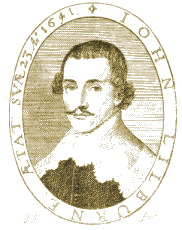
In conclusion, the Levellers (like John "Free-Born John" Lilburne pictured above) were ahead of their time and may indeed be called "liberal democrats," although they were not though of as such in their own time. Their ideas of toleration and consent ring across the ages as a example of popular government and radical dissent in the face of insurmountable odds.

Lastly, keep in mind their warnings to Cromwell at Putney. My reflections on Independence Day will concern revolutions that were and those that really weren't. The words of the Levellers echo throughout these revolutionary movements. Whether they were heeded is quite another story.

Tuesday, June 27, 2006

In The Dull, Old Summertime

This piece is probably a load of self-serving bullshit, but I am in the midst of preparing larger things (look for your homework assignment at the end) and just wanted to take stock of my life as a man of leisure.

I promise to keep all sentences punchy yet and at the same time pithy as I go over my May and June.

Books I've Read
(This does not include the many items from this reading list for one of my seminars)

Books I'm Currently Reading

Films I've Recently Seen/Rewatched

  • The Fog of War - Excellent documentary. War is extremely complex as are the people who wage it and Robert McNamara is a perfect example of this. No, it does not let him off the hook.
  • All The President's Men - Political/journalistic thriller at its best. No matter what you think of any of the players (my views on Richard Nixon are famously complex), it is a well-done film.
  • Enron: The Smartest Guys in the Room - Really informative, leaves the central question unanswered (was the collapse the fault of bad people or indicative of a bad system?)

Places I've Recently Visited (That Aren't The Grocery Store, Sleazy Dives, Etc.)

Things I've Regretted

  • Not getting to Indiana to see my Puma bretheren. We shall meet on the good earth of the Hoosier State once again. I promise.
  • Beer, refried beans and gyros in a single day. My colon has recalled its ambassador and closed the embassy.

Asses I've Kicked

  • Those other bitches in the Pub Trivia League. Trey Junkins does not fuck around. So there.

Current Favorite People (You Readers Out There Are ALWAYS My Favorites)

Well, that's about it. Oh, and I played host to my brother, my friend Eric and my parents in three weekends of fun and frolic here in beautiful south central Wisconsin. I love visitors and should ask Mayor Dave to put me on the payroll. I sell this place better than your whiny ass.

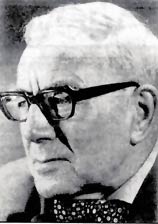
I also added a picture. Do you know who that is? I'm guessing Greg probably does.

Your Homework For The Evening (Or Whenever, I Guess)

  • Read about the Levellers and the debates at Putney in 1647. Real democracy in action in the midst of the English Civil Wars. Don't worry, this will not be Hobbes redux. I learned my lesson.

Remember, more links make it more fun. Enjoy!

Tuesday, June 13, 2006

A Sad Commentary On Today's College Students

I read this story with considerable worry when it first broke a few days ago.

If you don't want to read the whole thing, it essentially says that college students prefer their iPods to beer.

Yeah, I cried too.

If the people at the Ridgewood, NJ based market research firm Student Monitor are to be believed, the college student of today prefers a sterile wafer of plastic and circuit boards to the fermented perfection of Mother Nature's awesome bounty.

What this says to me is that college students of today are in real trouble. Those of us who have been to college (and some of us who never intend to leave, really) know that drinking beer is a social event. It gets people together, out of the house (sometimes) and into each other's company. There is no better way to get to know people than over several glasses of that earthen-toned liquid that pours in a generous river from our great nation's heartland.

With the beer and friends ultimately comes great conversation, talk of issues great and small. It can be about sport, politics, work, personal life experiences, bawdy jokes and cunning comebacks. It is the very milk of society, the very basis of what's best about being human. We have no word for it in English, but in Irish it is craic and in German it is Gemutlichkeit. It is the great feeling of elation brought on by good drink, friends and conversation.

Listening to an iPod is none of these things. It is perhaps the complete opposite. Once the headphones are plugged into the ear canal, the listener is cut off from the outside world and any interaction from others. What world to they enter? A self-constructed world of disjointed playlists wherein only the listener him/herself can partake in the goings-on.

I have no problem with self-gratification (by which I mean making oneself happy...minds out of gutter, now). What I take issue with is the way that, as with the cellular telephone, it cuts people off from each other and becomes a constant companion and obsession, like the constantly fingered fetishes and amulets of bygone, superstitious days (they are gone, right?). They become the only focus as one glides through life blissfully unaware of the real "flowers of life" (to quote the late, great Lord Buckley): people.

This shows that the college student of today is more interested in pleasing themselves than in interacting with other people. If all drinkers were like this, we would all be sullen, jittery alcoholics alone with the bottle as we let out the evil spirits and confront our darkest personal reaches alone. That is why alcohol is best enjoyed with friends. It is this interaction with other people that makes the experience one of sociability rather than dependency.

This story speaks volumes about the human condition, at least among college students. Not allowed to have fun anymore, jammed into impossible schedules and self-imposed academic and social strictures, they become socially frightened cenobites, fearing for their future at the expense of their present.

Sliding down the razor blade of life is tough enough without people who have no idea how to let go every now and again. Oh, to those of you who will doubtless say that I (and those like me) should just workout or pray or something to let off steam, I say bullshit. They are not the same thing, never will be (for reasons discussed above) and, in any event, stop telling me how to live.

So, college students of the world, if a large, Irish-looking gentleman walks up to you, yanks your iPod out of your ears, pours beer all over it and hands you the rest of the six-pack, just take the beer and thank him later in your own way. He has freed you and opened up your ears in more ways than one. Oh, and he likes Blatz.

Monday, June 12, 2006

Soul Searching Up North: Canada And Terrorism

I was prompted to comment on a recent column by Jonah Goldberg in National Review concerning the foiled plans of a radical Islamist cell in Canada. Read Goldberg's commentary here.

I agree with Goldberg that Canada is the most deluded industrialized nation on earth. The way that Canadians seem to view themselves and the actual state of affairs nationally and internationally are, as they often are, quite different. Canadians view themselves as peaceful, pacificstic and as the perfect North American foil to the warlike, militarized Americans. They see themselves as "the American alternative," offering all of the benefits of the United States with none of the bloodied hands or notions of world hegemony.

In light of these perceptions, it is easy to understand how a homegrown terrorist cell with plans of chilling specificity would shake the Canadian people and their government out of their preconcieved notions of national benevolence. "How could it happen here?" That was, I'm sure, the question on the lips of Canadians from top to bottom when this dastardly plot was (thankfully) defused.

How COULD it happen in Canada? Quite simply, really. The things that radicalized, marginalized Muslim populations in the West find to attack in Europe and the United States are no different in Canada. These radical Islamists, radicalized by their place in their adopted society and feelings of animosity towards "the West" in general helped to lead to radicalization that was turned into apparent plans for action. Put another way, the way it happened in Canada is the same way it happened in England in the summer of 2005, in Spain in the spring of 2005 and also with the 9/11 hijackers in 2000-2001.

The deeper question then becomes why attack a system that tries so hard to make everyone feel welcome? I think the key to understanding this is the fact that in an open society, such as those in the West, the rights guaranteed to every person are not without risks nor can they be limited to some and denied to others. If one person has the right to speak and assemble freely, all must have it. The fact that these would-be terrorists could congregate in the same mosque and hear whatever is said must be protected, however one might disagree with what is said.

The limit to this protection comes in the transmuting of speech to action. People should be able to say whatever they want; when action becomes involved that could harm other people, then the situation changes. Saying that I want to kill a public official and then actually buying a weapon and making plans are two completely different things. When the lives and property of others is directly and specifically threatened, then the state has the right to step in to protect its citizens (which is the primary function of a state to begin with anyway).

Rights imply risks. It is as simple as that. It can be something as small as having to hear people say things that you don't agree. It can be as large as a system that can allow plans that would lead to its own destruction to be formulated under its aegis. We must consider if the rights of every person protected (not given) by the state are worth the risks that we incur in protecting them in the first place.

I think that rights are too important to sacrifice to risks. These are risks that I am willing to bear. Risks that I am not willing to bear are those that involve the state deciding when rights can and cannot be exercised and that certain people have a stronger claim to protection than others. If we want an open society, these are the burdens and tensions that we all must bear.

It also must be said that, in this situation, nothing ACTUALLY happened. The plans were not carried out and they were foiled before they could be carried out. It remains to be seen (and may never come out) how the police in Canada and elsewhere inflitrated these plans. It might well be that the horrendous apparatus of the police state tripped up these plans and that I am just plain wrong. It is well that these plans were frustrated, in any event.

In closing, we cannot forget that this jolt to the system in Canada is, in the long run, a good thing. Canadians must reassess their view of themselves as an impregnible beacon of tolerance and openness. It could have happened there and Canadians must realize that they are not perfect and can be a target just as easily as the United States, Great Britain, Spain or anywhere else in the West.

This should also give pause to those despicable American who claim to be Canadians or want to move to Canada because the U.S. is so terrible. In the eyes of militant Islam (infused with Marxism and anti-colonial rhetoric), Canada and the U.S. are part of the same system of global domination and control that makes the need for radical reaction necessary.

The world is a dangerous place, Canada. Remember this when reordering your grand strategy to keep the True North truly strong and truly free...or else.

Clarification And Explanation (Well, Sort Of)

First, to answer Matt Jenks (who I hope is feeling better), Montenegro and Macedonia are not the same thing. They are both indeed former parts of Yugoslavia and both were some of the poorer parts of the confederation when it began to split up in 1991-1992.

Macedonia is on the track that Montenegro wants to join. Macedonia has officially entered the candidature for EU membership, according to the EU's website. There were until quite recently some unresolved issues between Macedonia and Greece over border demarcation and the use of the name "Macedonia," as the Greeks saw that as a violation of their sovereignty. These issues have been dealt with and Macedonia, poor as it still is, is forging ahead towards integration into a broader Europe, which seems to be a boon for poor, small countries and a mixed blessing (at best) for big, rich countries.

For more information, read the U.S. State Department's background notes on Macedonia and the official website of the Macedonian Government and also the DoS profile on Greece for a regional perspective. Refer to the previous post for all Montenegro-related information.

Second, explanation (of a rather less Balkan-themed nature). The doubled posts of my previous work is anyone's guess. Blogger decided to run really slow and not publish anything for the better part of last week. I am pretty sure that it was not our network as everything else ran just fine. That is also part of the reason I have not been able to check in with my other friends in the blogosphere (I kinda hate that word, but oh well). My sincerest apologies.

Wednesday, June 07, 2006

Montenegro to Serbia: "Good Riddance."

After reviewing the situation, I realized that there was not as much to say about this topic as I originally planned. In that cause, let's make this short, sweet and bullet-pointed:
  • Overall, declaring their independence from Serbia will be a good thing for Montenegro. It has been assumed, at least since 2003, that this would happen.
  • It is good because Montenegro can cleanse itself of any relation to Serbia. This is important as Montenegro desires to become part of the European Union(EU) and eventually the North Atlantic Treaty Organization(NATO). Serbia still has two major questions to answer for in the wake of Slobodan Milosevic and the 1990's.
  • First, there is the question of turning over war criminals that should be prosecuted under the International Criminal Tribunal for the Former Yugoslavia. This is one of the major stumbling blocks to Serbia integrating itself into any larger European framework. If they are seen to still be hiding war criminals, no moves can be taken. Montenegro has dodged this bullet, so to speak, by making this latest move.
  • Second, there is the unresolved issue of Kosovo. The United Nations Mission in Kosovo (UNMIK) with the enforcement of NATO's KFOR still controls this province of Serbia. What the settlement will be is still up in the air, but a decision is set for some time this year. Montenegro, I am sure, finds this a prospect devoutly to be missed.
  • Serbia inherits all of the international memberships of the (now) former Republic of Serbia and Montenegro. This is exactly how the Montenegrins wanted it. They want to be "integrated" on their own terms and not as a partner to the Serbs.
  • Montenegro, if you look at the map, by making this move has cut Serbia off from access to the Adriatic Sea. You can count on this being a major bargaining chip for the Montenegrins in negotiating use rights and access for the Serbs, for which the Serbs will doubtless be made to pay dearly.

Of course, this is a "watch-and-see" situation, but if the record of the war crimes tribunals are any indication, this might take a while. Montenegro will be much better off generally when separated from Serbia. Now, the Montenegrin government must take care to mind its own problems (organized crime, for a start) and make a clean break.

Further Reading

Wednesday, May 31, 2006

The Balkans: My Attempt At '90s Retro

In preparation for a larger piece on recent developments in the Balkans, please consider the following:
  1. So, what has been happening in the Balkans since those hoary days of the early and mid 1990's when they were all the rage?
  2. Very recently (last week, in fact), Montenegro voted to become independent from Serbia. Read the details here and here.
  3. Look at this map. Using what you know (or what, in my case, you think you remember), what implications for the region spring to mind when considering that Montenegro will be an independent, sovereign state?

Let's take a trip down memory lane, shall we? This trip could, like most important developments, go WAY back. The Battle of Kosovo Polje, which took place in 1389, became a major issue in the conflict. Read about it here, but be aware that the link is to a page maintained by the Serbian Orthodox Diocese of Raska and Prizen.

Feel free to post your recollections of the situation and any other considerations as this is a work in progress for publication sooner rather than later.

Political Addicts, I Am Your Enabler

I know I did this recently, but I have found two other sites that could literally take up hours of valuable time.

As for my political addiction, it has waned with my lack of access to cable news (every hard-core addicts "guilty pleasure") but I still read too much for my own good.

I view it like this: some people like to pick Academy Award winners; others like to do fantasy sports (I do this, but not well at all); some place wagers, legal and otherwise, on all manner of contests. This is what I do.

Anyway, your fix:
  1. PollingReport.com - This site provides the latest polling data for people, elections and issues as taken by the major poll taking organizations (some of which have great, evil names like Diageo and Opinion Dynamics, along with the more traditional Gallup and the silly Quinniapac). The most recent are concerning people's opinions of John McCain, Hilary Clinton, the state of morals in the U.S. and consumer confidence. Pure gold.
  2. Congress.org - Another ubersite. The best part, though, is their "power rankings" of members of Congress. The comparison of these rankings can fuel all sorts of speculation, providing hours of enjoyment. For example, Wisconsin (as a state) exerts considerable pull in the House, but not really in the Senate. Wisconsin has two representatives in their "top ten," namely James Sensenbrenner (R-Menomonee Falls) who is #5 and David Obey (D-Wausau), who is #9. Look up your guys and gals and see where they fit.

Yes, I'm the pusherman. You know you need it. Just one hit won't hurt anyone. It's never just one, though, is it?

A Big, Dull Thud

COMMENTS ON THOMAS HOBBES THINK-PIECE= 0

COMMENTS ON GUY-GETS-HIS-NUTS-RIPPED-OFF-PIECE = 2

Ok, ok, I know. Hobbes is not exactly light holiday reading and maybe needs to be mulled over a bit. I also realize that, when transfered to MS Word, the last entry was the equivalent of six double spaced pages.

An interesting exercise would be to relate Hobbes and Nuts-Ripped-Off-Guy. In other words, what would Hobbes have to say about human nature and society considering the aformentioned nut-ripping?

That is the most times I have ever used the word "nuts" in a piece of writing. I promise it won't happen again. The use of the word, I mean.

As for future nut-rippings (there it is again), I can make no guarantees. Could/would Hobbes do the same?