Thursday, September 21, 2006

Like A Ton Of Intellectual Bricks

Yes, I am fully aware that I have not posted in some time. The academic year, coupled with personal commitments, have drained my time to the last.

I know I promised reflections on my first year in Madison and "Swinging London," so here goes:
  • Madison feels more like home every day...and Oak Forest, apart from my family being there, feels ever less so. It is somewhere I am "from" not "of," if you follow me.
  • London, and all of England, was a mostly joyful and happy place in the early 1660's. Remember people in Afghanistan when the Taliban was deposed. Same deal. It didn't last.

Now, as to the future, we are in the midst of an election season and, as you all know, electoral politics is one of my drugs of choice. I will, naturally, offer my views. In fact, I will post tomorrow with some predictions.

If all goes according to plan. I hope. Probably.

Thanks for your continued support.

Monday, August 28, 2006

A Case Of Blatz, A Block Of Cheddar And Thou

I have two more substantive posts in the pipeline for this week. One concerns my reflections on living in Madison, away from "home" for a year (the anniversary of which was yesterday). The other is focused on Swinging London in the '60s, but not what you expect; think more Drury Lane than Carnaby Street here.

In the meantime, enjoy this wonderful site recommended by NPR legend, host of Whad'ya Know? and Madison resident Michael Feldman (which was in turn recommended by my dad).

Hey, poetry is not just about, well, poetic things. It can be about anything. I published a series of poems about molluscs in my high school literary magazine. They were good, I was told.

Maybe I was just told that to get me to stop writing the likes of "Hey, Buddy Mollusc."

Hey, their loss, right?

Wednesday, August 23, 2006

Prenuptual Rituals and Human Nature: A Personal Reflection

All things considered, I think that I have a decent grasp on many of the sociocultural dynamics that define and (some might say) plague our world today. How people interact with each other and their culture over time is a "broad-brush" generalization about what many historians (including me) do in their work.

There is one sociocultural dynamic, however, and its set of attendant rituals and practices that utterly eludes me: everything to do with getting married.

Now, there is a certain level on which I DO understand the whole thing. That would be the recognition of the importance of marriage in a particular society (as narrow as that definition might be), the public acknowledgement that two people are now linked officially as well as emotionally and the formalization of a partnership that will redefine the position of the couple vis-a-vis the rest of society.

I also understand that these things, which a society deems important, often become laden with ritual because they are, in many ways, inherently conservative acts. The people involved are saying, in effect, "we will play the part in this ritual to prove that, at the end of the day, we are not maverick. We are not radical. We agree with a certain amount of society's expectations."

Much of this understanding, incidentally, comes from the days where marriage was more a business deal than an emotional event. Before, oh, the eighteenth century, marriage was really just an arraingment for the continued inheritance of property. It was not until later that emotion even entered into it. That much I get.

Perhaps what I don't understand is the performative aspects of the rituals that come before a marriage in the modern United States. These would be the bachelor(ette) party. In particular, one particular aspect of each that has come to my attention through observation and, in the latter case, participation.

First, the bachelorette and her cadre. I view nothing with more horror than the arrival of a bachelorette party at any bar at which I am ensconced. "Why is this, Will," you may ask. Think of the group dynamic that just entered my space and you will understand. The group will, invariably, begin to draw all of the attention of the staff until getting a drink is slightly harder than distilling one for yourself in the bathroom.

Then their attentions will doubtless turn to the other patrons of the bar, in many cases, all men. There are two types here: those men who will egg the women on and participate in their escapades and those who would just as soon be left alone. No points for guessing which of those I am.

It is well and good if it ends there (which it often seems to): with the jagoff locals wrapped up in the "fun," and me (and the other sullen, angry sots) moving elsewhere. It can, however, turn into the worse case scenario: your participation is "requested" by the fiat of the group of women or expected by proxy due to the fact that you are a man. This situation is often precipitated by one's male friends, seeing the possibility of women with their inhibitions down, trying to knock one for six, as it were. Your participation is then expected.

This is where I draw the line. If the rest of your group wants to get involved, fine. Not me. In the great words of Eric Cartman, "screw you guys, I'm going home."

Oh, and to the women, no one actually thinks you are funny/cute/charming/more attractive when you behave like this. The men who play along are just in it for the, well, you know, and the ones who don't really DO just want to be left alone. Most of the women who read this space know this and this is not directed at you (hopefully). To the rest, seems a bit harsh? Seems, madam? Nay, it is.

Now, as far as bachelor parties go, most of the ones that I have attended seem to be more private, not out in public affairs. There is a public component, no doubt. A few bars, some food and then, inevitably, the strip club. Words cannot express how uncomfortable these places make me (strip clubs, that is).

Do I think that it is women being objectified? Yes, but the women there know this, exploit it to great profit and think nothing more of it. I have no problem with this. Sex is the best way to cajole a man out of his hard-earned cash and, if it can be done, more power to those who can do it.

So what is it that makes me uncomfortable? Hard to say, really. It may have something to do with seeing my friends, people I respect as human beings, in the throes of the lowest aspects of human nature. I try and find the best in all people, and no people more keenly than my friends. They are such a wonderfully diverse and deep group of people and I consider anyone fortunate to meet with us. It is truly an experience not soon forgotten.

Take these people that you respect and put something female and unclothed in front of them, and the whole scene changes. They begin to behave, for lack of a better word, like all of the worst characteristics of guys that you hate and do not associate with under any circumstances.

Is this part of the male nature? Some would say that it is and that my revulsion in the situation tells more about me than my friends. I, however, think that it is something else. It is tantamount to seeing any side of someone that you respect that causes you to re-evaluate that respect and attempt to rationalize it. Something like catching your dad with someone who isn't your mom.

Complete and coherent? Not really. It is, it must be admitted, a complex consideration and one that I am not sure I will settle any time soon. In the meantime, however, I will go with my rationalizations of the past, write this behavior off to momentary insanity brought on by base urges and alcohol and move on through the experience.

As before, I must give great credit to alcohol, which has gotten my through many an uncomfortable bachelor party moment. Many has been the time when I have sucked down countless overpriced Dewar's and waters at strip clubs waiting for everyone else to "get it out of their systems" so the real drinking can commence. Oh, booze; what would I do without you?

To wrap this up, perhaps I am completely off base with my observations and I have missed the mark completely. Perhaps my biases and personal shortcomings are being brought to bear on something that everyone else thinks is fun. Perhaps I am, as ever, making far too much of this.

Or maybe, just maybe, me and the Dewar's Highlander have a point.

What say you?

Monday, August 21, 2006

Let's Get Trashed

O.K. The title to this post is a bit of false advertising. Below are not my ruminations on the merits of a booze-up (though they are indeed many). There are instead two observations concerning garbage.

First, in the wake of the aforementioned "hippie Christmas" here in Madison, the streets are again clear of the garbage mounds...with a few exceptions. For you see, the city requires an additional payment to dispose of appliances. It seems that you must pay for anything larger than, say, a toaster. Instead of the garbage heaps, therefore, the streets are dotted with microwaves, fridges, air conditioning units, computer equipment and other electronic gee-gaws that have gone to Appliance Heaven. They all bear a bright green sticker as evidence of their un-pick-up-able nature.

It is quite a "catch-22" if you think about it. In fact, in the book Catch-22, the dead man in Yossarian's tent is somewhat of a metaphor for these appliances. In the case of the dead man, there were seemingly good administrative reasons why the man could not be moved; no one knew what they were, but they must have been frightfully good.

With the appliances, the people who threw them out have moved, possibly out of town, so they're out. The landlord won't touch it, much less pay for it, because he/she did not throw it out to begin with. Lastly, the city will not pick up any appliance that has not been paid for. See what I mean? The streets of Madison are dotted with little curbside monuments to governmental and systemic ineffeciency.

Observation number two comes in the form of something I noticed about myself. Through no extra effort on my part, I am actually quite environmentally friendly.

First, and this is the big one, I do not own a car and have not in three years. I go everywhere via public transportation. I'll bet that even Al Gore cannot say that. Second, I recycle/reuse almost everything possible. Madison's recycling program takes almost anything (except appliances, apparently) and being a swinging bachelor (ahem), I create very little trash. The bulk of the trash I do create is the recyclable kind (empty beer cans and the cases that they came in, mainly). Thirdly, I wash my clothes in a high-effeciency, double load commerical washer that uses less water and less soap, therefore creating less toxic (especially from my socks) run-off.

So there, Al Gore, your truths (if they indeed be that) are not inconvienent for me at all. Nice try at making me feel guilty, though.

Friday, August 18, 2006

Typonomy Blundering, Spatial Understanding

A short news item concerning misprinted Chicago Transit Authority (CTA) maps led me back to a pet subject of mine: the power of maps.

Granted, this seems like an accidental oversight, and one that will cost the already cash-strapped CTA quite a lot of money to correct.

Which led me to these thoughts: what would happen if they were not corrected? What would have happened if no-one noticed?

Maps have a certain air of authority to people in the modern world. It is thought that they are scientific documents, produced by professionals and they are therefore foolproof. Think about this. You look at a road atlas, transit map or whatever and you just figure that it is correct. Most people, moreover, consider that the makers of these maps have no motive other than providing correct geographical information to get you from here to there with the least amount of hassle.

On one level, this is what maps are: utilitarian documents that represent a three-dimensional reality in two dimensions for people who want more information about the territory depicted. They are, on another level, much more than this.

Think about the awesome conceptual leap that it takes to represent something on a scale and in a different dimensional framework than it is normally experienced and you'll see what I mean. A map cannot, obviously, represent territory on a 1:1 scale, so decisions must be made, items included and excluded. It is in these comissions and omissions that the deeper meaning of cartography begins to reveal itself.

In other words, what is left out of a map often tells as much about the maker and their society than what is included. Just as in music, you must listen for the silences as well as the notes.

As shown by the CTA blunder, place names also carry an awesome power behind them. While this case was just a mistake (most likely), it illustrates that typonomy is important and can be a very loaded concept. One need only look at maps of "colonized" areas to see the power of place names over the understanding of the landscape for conqueror and conquered alike.

Is the case of the CTA the same as the (as some have argued) cultural genocide of place re-naming. Hardly. What it does show, however, is that maps shape understandings of territory as much as territories lead to the creation of maps of all sorts.

Am I making too much of this? Consider how we do (or don't) "think cartographically," (to use David Buisseret's words. How do our minds experience and process space? From another angle, what is it in all human cultures that leads them to express space cartographically in one way or another?

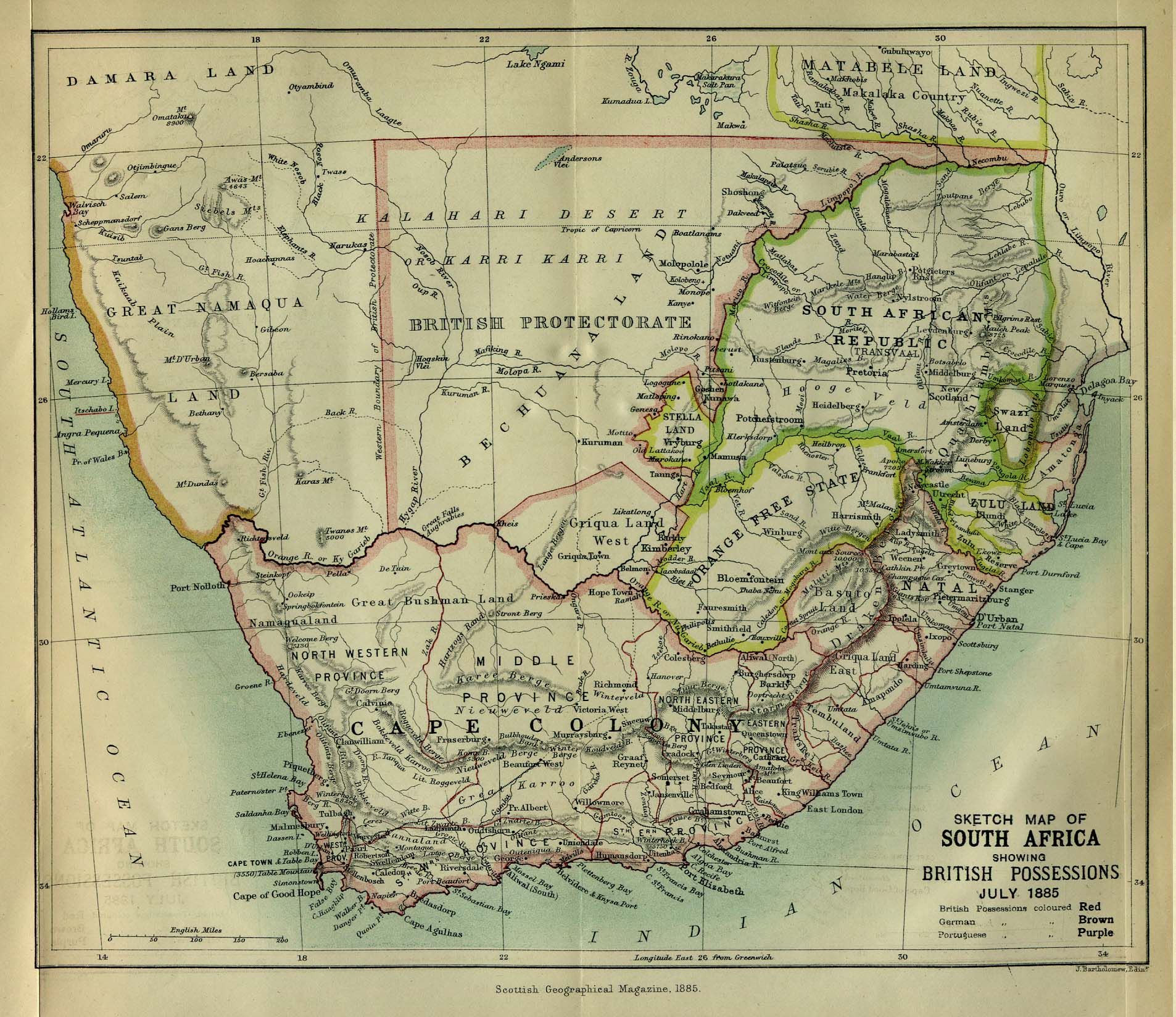
For more visual learners (and because it's more interesting), are these images maps? Why or why not?

Oh, if your answer to "am I making too much of this" was yes, you may be on to something...

Monday, August 14, 2006

Madison Halloween 2006: The Death of Fun And/Or Freedom

As another school year here in Madison draws near, thoughts locally turn to all of the highs and lows that the influx of tens of thousands of people bring about every year. We are in the midst of the spate of moving trucks and monumental garbage piles of the "moving-in" period (and the garbage picking mecca that is refered to as "hippie Christmas.")

Doubtless, thoughts also turn to the hoary old chestnut that is Halloween in Madison, 2006. After last year, which was more subdued that previous years, Mayor Dave still seems worried about the revelers and their antics. So, what is his plan?

He intends to charge a five dollar admission charge, barracade every entrance to State Street and set an upper limit for the number of "tickets sold. Read the full story here.

This plan has the support of the Madison Common Council and other groups such as the Associated Students of Madison, the Interfraternity Council, Downtown Madison Inc., and the State Street Business Association.

It does not, however, have the support of the UW-Madison Student Government, who claim that it punishes the innocent and presumes guilt on the part of all attendees for the rowdy acts of a few troublemakers (most of which don't even live here). Check out their objections here.

What do I think, you ask? Let's look at this from a few different angles: the city government, the partygoers and the business owners on State Street. Then, having considered that, let's take a broader view.

The City of Madison
From the city's standpoint, it seems that this may be just another bandage on a gaping head wound. Sure, the money will be welcomed and, on paper, the plan does seem to stem the tide of, well, the tide of people that crowd State Street. On paper, that is. Actually, the enforcement of this policy seems more easily said than done. Take a look at a map of State Street, scan up and down and try and count all of the access points...sure are a lot, no?

Not to mention the fact that while State Street is a pedestrian mall, it is crossed by several streets that are not (Lake, Gorham, Johnson, Dayton, Fairchild). How will traffic be directed through these areas while limiting access on foot?

Another enforcement issue comes in the counting of the admissions charged. This will take a level of coordination that, while keeping the coercive presence to a maximum, might lead to miscommunincations and other issues of coordination. Perhaps not, but it could happen.

Halloween Partygoers
This is the proverbial "x-factor." This is the reason that there is a problem in the first place. From these people's view, they want to be in public, act stupid, drink and get in fights. No amount of coercive effort will change this. What will, you ask? Well get to that, but first, the lizard brain.

The lizard brain is the brain as functioning under the influence. It is well known that the first thing to go, cognitively, when drinking is judgement. This means that the irrational becomes necessary and that doing what one would normally not do seems like the best idea ever. Now, imagine 70,000 people in a similar condition and the enormity of the situation takes hold.

O.K., the first people there will not cause a stink. What about those who are turned away or those who pay, are admitted and then are unable to access drink because bars will not allow it (not likely, but who knows)? In other words, you wanna know how to make angry drunks even angrier? Antagonize them and put a barrier between them and their goal. This will, and has, presented problems.

Business Owners on State Street
It seems from the preliminary endorsements, the business that cater to the crowd on State Street are amenable to the city's plan. Given the recent incidents (although last year was a bit less intense) and the property damage, I guess I'll buy that.

Personally, if I were a business owner (more specifically, a tavern owner), I would take considerable exception to a government plan to limit access to my place of business in order to make the government's life easier. I want to earn as much as possible and, given the no smoking ordinance and the crackdown on drink specials, every little bit helps.

I would also want to know what exactly the city plans to do with the money. If you are limiting access to my business and charging for the right, I want a detailed expense accounting of the funds.

More Kerosene on the Fire
An additional factor that could, well, complicate things comes in the fact that Halloween always comes during football season. Halloween happens to fall on a home football Saturday here in Madison (wherein the Badgers will ride roughshod over the Cryin' Illini). This means more people, more booze for more of the day. I am sure that this has been considered in all its ramifications.

It has, right?

The Broader View
What is really at issue here, given all of the above considerations, is freedom of assembly. When did it become acceptable to charge citizens admission to walk down a public street? When did it become O.K. to limit people's right to assemble by charging a fee? These are the real issues and ones that the city has yet to answer. What say you, Mayor Dave?

Another issue to consider is the notion of "rebranding" Halloween. I agree that it may do the city well to welcome visitors and make them feel at home; in some strange way, this may influence their behavior. If they come and see "Welcome to Halloween in Madison" and "Enjoy Your Stay" rather than police on horseback and barracades, things might just be different. Maybe so, maybe not.

I have not, however, seen any moves in this direction and no rumblings that things will be much diffferent.

In closing, this event will never go away. It has taken on a life of its own and anything short of martial law will not completley stop people. The primary responsibility of any government is to protect its citizens lives and property. In doing so, however, it cannot trample other rights that the people hold no less dear. It is this balance that must be struck and the plan as it stands for Halloween 2006 does not do this.

Further Reading
Oh, you might be interested to read several blog posts by former Madison Mayor Paul Soglin (yes, the serial mayor himself) about Halloween this year. Somewhat amazingly, Soglin is the voice of reason...not a usual role for him. I quite agree with him that constitutional issues are at stake and that the activities are, at their core, sophomoric and inane. Can't these kids drink in the woods on Halloween like normal people?

Sunday, August 06, 2006

Gross Blog Negligence

Yeah, yeah. I know. I have not posted in ten days. Here's why:
  • I went on vacation. I went back to Oak Forest and then to Highland, IN and then back to Oak Forest to then depart for Lake Geneva, WI from whence I left for Arlington Heights, IL by way of Richmond, Spring Green, Volo, Wauconda, Fox Lake, Lake Zurich (all in Illinois) and returning to Lake Geneva, WI via Wonder Lake, Woodstock and Hebron (also in Illinois. We returned to Oak Forest via Kenosha, WI (where I ate a bratwurst).
  • I had a lovely time.
  • I am trying to get ahead for the fall semester. My results have been mixed.

I will return to Madison and more regular posts in a few days. My travels have proved (as they always do) great fodder for reflection. Here's some of the things you can expect (with a certain generosity of spirit):

  • Why the arrival of a batchelorette party at the bar you are inhabiting is a sure sign of trouble.
  • The interesting blending and bleeding of borders between rural, suburban and rural.
  • Other curmudgeonly observations, no doubt.

Aren't you lucky?

Wednesday, July 26, 2006

Promising Noises From The Buckeye State

(For more background on this issue, read these posts that I wrote last year concerning eminent domain.)

In the arena of eminient domain abuse, 2005 was a low point. The Supreme Court, in the decision of Kelo v. New London basically decided that the right of eminient domain given to governments in the Constitution is almost endlessly vast. Under this decision, it looked as if the rights of property owners would be under increasing attack by governments and other bodies that sought to "condemn" their land and use it for their own purposes.

A recent decision by the Ohio Supreme Court shows that this may not be the case. In the case of Norwood v. Horney, the Ohio Supreme court sided with local homeowners against the village of Norwood (in suburban Cincinnati) and land developers in saying that their projects were not valid reasons for the seizure of property.

Read more about the decision here and here.

More encouraging even than the decision itself is the fact that the high court of Ohio declared a large portion of Ohio's eminent domain law unconstitutional, stating that it gave governmental officials too much power over private property (you can read about this at the first "here" link above which takes you to the summary of the decision).

In a time when it seems that individual rights are on the run and government for the people and by consent are quaint notions from the past, it is enheartening to learn of people taking their government to task for violating their rights.

Let this be a lesson to us all.

Non-Coercion And Cost-Benefit Analysis In The Face Of Desire

(This is in partial response to the questions I posed here.)

All human relationships (couples, families, tribes, states, supranational organizations) should be viewed from the standpoint of cost/benefit analysis. In other words, the relationship can only be good or useful if it is beneficial to both parties, or at least moreso than it is harmful.

Naturally, this suggests that either party should be free to end the relationship or restructure it drastically if is becomes less beneficial than harmful.

Human relationships, however, should not be viewed merely from the standpoint of the collective as a whole. I believe that the proper perspective is that of a free association of individuals where the individuals are the atomic subject of the society, whatever form it takes.

Individuals naturally seek pleasure and avoid pain and, in this search, seek to maximize their pleasure through their efforts. This search necessarily descends from the concept of individual freedom and free will. People are not determined; they are free actors who should be free to pursue their indivudual wants, free from outside coercion.

Coercion is the most damaging action taken against a free individual and its excess leads to unfree association and slavery (in one way or another).

If, therefore, an individual in any social relationship uses coercion to seek their ends, and this decreases the freedom of the other, this denies the very humanity of the other person or persons involved in this relationship. This should not (but does) happen.

This naturally leads to questions. Can relationships ever "work" in the long run? Be it a couple or a society, can it ever be said that conditions are met for the benefit of all at the expense of none?

At some level, it would seem so. If entered into freely, with the understanding that it may be broken without fault at any time, then the "system" works, right? Well, sort of...

This notion of human interaction (influenced by the likes of Thomas Hobbes, John Locke and John Stuart Mill) is predicated on the notion that people are, at their core, rational and seek to act in rational ways. Any person can tell you, however, that it is not always (or perhaps never is) the case. Bertrand Russell famously said that "it has been said that man is a rational animal. All my life I have been searching for evidence which could support this."

How does the irrational human mind come in contango with the above mentioned notions of free association and societal structure. Well, there are any number of explanations ranging from Hegel's notions of the "search for recognition" and Plato's (or Socrates's) ideas concerning thymos in The Republic to psychologists like, well, everyone from Sigmund Freud to B.F. Skinner to Carl Jung to Abraham Maslow to Rollo May.

Where does this lead? Who can say, really. It is one of those issues that will always be with us: how can irrational being live in a rationally structured society. It seems to me, though, that Hegel's notions about recognition go a long way in explaining that human dignity is only recognized through contact, often hostile, with other people. This may help bridge the gap between the "state of nature" and "civil society" predicted in the distant past (or maybe not at all) by damned near every Western philosophical tradition.

We have to learn to live with each other, we are always told. Is this the nub of the problem or a fact to be dealt with? Is man/woman really a social animal? Political? Rational?

The Two That Got Away

Thanks for the response on the band names. I have no recognizable musical talent...apart from naming bands.

Anyway, there were two that I forgot:
  • Jesus Chrysler (Road Savior)
  • Hill Music

Friday, July 21, 2006

More Honored In The Breech Than In The Observance

Yeah, yeah, I know. I know that I said I would have something substantial for the end of the week. Truth is, I do.

I really don't want to type it right now, and as it is not of pressing concern, it can wait.

You can look forward to:
  • My response to the questions I posed here.
  • A bit more about Lebanon, perhaps.
  • Why I am a philistine and why this does not bother me.

In the meantime, read this from the latest issue of MDM; my favorites are nos. 13, 28 and 29. What the heck, read the whole issue.

If you really want fun, then don't read the post below. It involves me making stuff up...

...and that's funny because I never do that, right?

Don't answer that.

Take care all and thanks for the continued support.

Music Is The Best

As I said before, this is not a real post, as such. I just wanted to post something silly for the weekend. I present here band names that I made up, on and off, over the past week (and then some classics with credit given where it's due).

SOME OF THEM ARE A BIT NASTY, SO IF THIS BOTHERS YOU, READ NO FURTHER. PERHAPS THIS SITE ABOUT THE HISTORY OF NAILS WILL BE MORE TO YOUR LIKING.
  • Hammer of the North
  • Forlorn Driftwood
  • Tip In (Pervcore)
  • Meathenge
  • Screwin' Pants (with help from Otto von Bozzi)
  • Windswept Promontory
  • Blowjob Panacea
  • Neoprene Jesus
  • Vanilla Hitler
  • Majestic Bilge Pump of Love
  • Reverie en Charcuterie
  • Osama bin Rockin'
  • Windy Canyon
  • Voerwaard!
  • Gratuitous Umlaut (with help from Andrew Erickson)

Now, for the classics. With a tip of the hat and a strum of the pick to my brother Pat and Tom Swan, my spiritual advisor.

  • Washcloth
  • Turdburglar
  • Nature's Starch
  • Lucifer's Luau
  • HellTiki
  • CarbHut
  • Satan's Bedstains
  • Belleek Breeze
  • Meat Spew
  • The Haggard Old Gaelickers

Did you have any respect left for me. Well, that should have taken care of that.

Anyway, whadd'ya think?

Wednesday, July 19, 2006

Well, O.K. But, Still...

(I have some bigger things to post, but it seems that Blogger is moving omniously slow. I don't want to launch into something big just to see it lost. Expect those things tomorrow, Friday or whenever Blogger gets their act together...)

All right. It seems as if I was a bit hasty in condeming the U.S. evacuation efforts. Seems that today the removal of Americans from Lebanon began in earnest.

While this individual situation may blow over, my essential question remains: if a government cannot protect those it governs, what good is it?

How might this issue inform this question for us today?

Considering that, how far does the government's responsibility to protect (or to allow free research and inquiry to better people's lives) go? Do the two overlap? Should they?

Tuesday, July 18, 2006

Protecting Americans In Lebanon? Pants Around Ankles, I'm Afraid.

Considering the situation between Israel and Hizbullah (with a shaky, new Lebanese government caught in the middle), an appraisal of the situation could go many ways. It could focus on the roots of the conflict, the current goings-on or what will happen in the end.

I will offer a bit of that at the end, but I wanted to approach what I think is one of the most irresponsible parts of the situation at hand.

I think that the slow U.S. response to protect its citizens in Lebanon is nothing short of appalling.

As the situation in the region has developed over the past week or so, other nations with interests in the region (and more importantly people) have scrambled resources and manpower to get their people out of harm's way. To take one example, the Royal Navy has docked in Beirut to begin what is planned to be the largest evacuation of British nationals from a war-torn area since Dunkirk.

What is the U.S. government doing to protect its estimated 25,000 passport holders in Lebanon? Well, it seems more today than yesterday or over the weekend. With the help of the Marines and the U.S. Navy, 320 Americans have left Lebanon today. According to the plans publicized by Condoleeza Rice over the weekend, all Americans in Lebanon who want to leave will eventually be afforded the chance, as this is considered not an evacuation but a voluntary move on the part of the Americans in Lebanon.

Now, I understand that moving 25,000 people (or at least providing them adequate opportunity to move) is tough even in during peaceful conditions. Anyone who has tried to leave a large sporting event/concert will know what I mean. I also understand that people should be free to choose whether they stay or go (unless you are on embassy staff or otherwise engaged with the U.S. government; in that case, you are not calling the shots anymore. Hey, it's the life you chose).

I also understand that this is not a situation like Iran in 1979 where U.S. embassy staff was taken hostage and used as bargaining chips by a new, revolutionary regime. In that same vein, I also am fully aware of the fact that the overall beef is not with the Lebanese governmenty per se, but with Hizbullah. This would mean that we will not close the embassy, run down the flag and escape from the roof in a helicopter, a la Saigon in 1975.

What DOES disturb me, however, is how the government seems to be getting caught with its pants down so much recently. One only need look at the response to Hurricane Katrina/Rita to see that when the government says they have "contingency plans," don't put too much stock in this. With the recent track record of the U.S. government, we would do better to have Wal-Mart coordinate the planning of disaster relief than FEMA.

This is another case of the U.S. being caught with aformentioned trousers around ankles. As I conceded, this is not an easy thing to do, but we should have put the wheels in motion as soon as things began to heat up.

But Will, you say, you believe in limited government almost to the point of being an anarchist. What gives with you calling for government response? The answer is quite simple, really. One of the few things that I believe government SHOULD do is protect the lives of the people that it governs. That is a basic tenet of the social contract, no matter how you care to define it. Protection of life, liberty and property - that is the only proper functionl for government.

It is clear from the case of Lebanon (and others, no doubt) that the government seems monumentally bad at doing this. When a government cannot even protect its citizens in harm's way (no matter where they are in the world), something is greviously wrong with that government. What can be done? Just read the first two paragraphs of the Declaration of Independence...

But Will, you might also say, if these people choose to go to possibly dangerous areas, while it is their choice, why is it the government's responsibility to protect them? All I need say here is think about the alternate situation...travel restrictions on U.S. citizens. The government telling them where they can and cannot go, saying that the protection of the government is contingent on factors other than those agreed upon in the Constitution? Do we want that? I think you know the answer to that one.

To conclude, two speculations about the wider effects/impact of this brand spanking new chapter in the ongoing shitstorm in the Middle East. First, Iran must be loving this. A free (apart from the aid given sub rosa, you understand) proxy war against Israel. Ahmadinejad, I think, could not care who wins or loses. If Israel wins, well, another brick in the wall of Israeli mistreatment and hatred of Muslims. If Hizbullah wins (which it most likely won't. You can never underestimate the Israeli military. Ever.), his ally in the region is buoyed and could possibly take over an already unstable new regime in Beirut.

Secondly, in many of the news stories I read, Turkey comes across as a clearing house for the evacuation efforts and a point man in the region, especially for the EU countries. Could this help to tip the scales for Turkey's admission into the EU. I suspect not directly, but it certainly cannot hurt.

Wednesday, July 12, 2006

Relationships, Art Fairs, Coercion and Compromise: A View From The Bus

These observations are the result of a bit of street-level social observation by an interested non-professional social scientist (or "people-watching" to normal people). My observations, flawed as they doubtless are, led me to some broader considerations. See what you think...

This past weekend, Madison played host to a two-day art fair that took up a good portion of the downtown area around the state capitol building. It was this that led me to begin my observations as the busses were diverted and took forever to get anywhere. So, in the midst of traffic and interminable waiting, I began to watch the people.

What struck me, and it seemed so obvious as to be embarassing that I had not noticed before, was that most of the attendees were couples, male-female couples. Some had children with them, but most did not. When I noticed the prevalence of couples, what really hit me was the expressions, body language and snippets of conversation that I saw/heard from these people.

From these observations, I came to some conclusions related to the nature of such public events and the nature of relations between people, however provisional because of my lack of background information.

It seemed to me that all of the women in these couples looked absolutely overjoyed to be there, while the men looked annoyed, angry or looking for the nearest route of escape. Time after time, regardless of age or race, the couples involved displayed some or all of these traits. Needless to say, this dynamic caused me to think a great deal about how these people got there and why they were acting in this manner.

It seemed on further reflection, that this is not just an "art fair" phenomenon. If you think about it, men and women act like this at most outdoor events that do not involve sports, music or beer (or all in some combination). So-called "cultural events" in the outdoors in summer are grand displays of this type of behavior. Yes, but why?

I was left with two conflicting notions of these behaviors. One comes from a cynical view of human relationships, one more compromise based.

First, the cynical. These people act and behave this way because, at the root of every human relationship, is a certain level of coercion. People will seek what makes them happy and avoid that which makes them unhappy. This is human nature. When this dynamic is disrupted (i.e. when someone pursues something that seems to make them unhappy or avoids that which is pleasureable), one must consider why.

That is where coercion come into the picture. For someone to not seek pleasure over discomfort, they must be forced to do so. This force can come in the guise of actual threat of physical or mental violence. I doubt that this was the case with the people that I observed. In other words, I think it is rather unlikely that a wife/girlfriend would tell their husband/boyfriend "we are doing this, or I will kill you."

No, this is more of a soft-pedal coercion. More to the point, it delves into the ideas of punishment and reinforcement (behavioral conditioning). It is hard to pin this particular situation down because of lack of background knowledge, but I suspect it can be thought of as a dynamic combination of positive reinforcement and negative punishment.

Positive reinforcement involves the presentation of a reward that is designed to increase a certain behavior. Negative punishment involves the withholding of reward in order to decrease a certain behavior. These are basic ideas of operant conditioning, developed in its fullest form by B.F. Skinner.

In this situation, the coercion by operant conditioning is apparent. If something that the male likes is presented when he goes along with the female's plan, the "art fair" experience is positively reinforced. On the other side, if something the male does not like is taken away, it negatively punishes and decreases the behavior.

What is the "carrot and stick" in this situation? It could be anything the male enjoys. In particular, think Lysistrata here.

Yes, that is a particularly cynical view of human nature. It assumes that people react reliably to certain things in certain ways and also that coercion is the only method of effecting human behavior.

Now, the more compromise based view. Perhaps it is true that the males do not want to go to these events. Why are they there? Compromise. Both men and women realize that they will not always get along or find the same things enjoyable. What is needed, then, is a trade-off, some creative diplomacy. When a deal is struck, and the two sides (here, a wife/girlfirend or husband/boyfriend) agree and follow through, it builds the depth of the relationship and shows a remarkable level of interpersonal flexibility. If each side agrees to a minimal amount of a negative experience, it will lead to understanding and the promise of better things to come. Both sides get what they want and there are no regrets.

Much more positive, don't you think?

I close with three questions:
  1. Am I making too much of a simple situation?
  2. Which one of these paradigms to I actually believe to be true?
  3. Which do you believe and why?

Scattershot Thoughts Of An Unimportant Thinker

Below you will find, well, nothing much, really.

These are things that have came to me over the past few days, whether through observation or just "having a bit of a think." Some are statements, others questions.

In either case, they are not very important. Perhaps I should be focused on more important matters, but I have all the time in the world.

To wit:
  • British television : American Television :: The world as it is : The world as we wished it would be. A generalization, for sure. I think there is some truth to it. This is not a value judgement on either, merely an observation.
  • Perhaps this article delves further into my dislike of soccer. I usually don't read The Weekly Standard, but it seemed somewhat germane. While the authors push the postmodern metaphor a bit far, it does make some valid points.
  • For me to be an object of desire for any woman would take such a bending of the mind that it could be said to be impossible. In other words, I am not sure I would like to meet a woman who finds me desirable. Conflicted? You bet.
  • If the guy behind me clears his throat or rattles his phlegm one more time, I am going to fucking stab him.
  • Can we ever escape Hobbes' notions about society? Is the battle between order and chaos the eternal center point of any sociopolitical arrangement?
  • Come to it, can we ever truly escape Aristotle's ideas concerning politics and the cyclical nature of government in a society?
  • I saw people bicycling in the midst of a hours-long downpour yesterday. I can imagine that wet Spandex bike shorts would be really disgusting feeling.

Are you a better person for having trod where I hath trod?

Better not answer that.

Friday, July 07, 2006

Heavenly Retribution, Class Conflict And Ouzo

Just a few short things here on the brink of the weekend:
  • Remember my post concerning iPods and beer? Seems that someone was listening, a rather omnipresent someone. Read this and marvel at the fact that the heavens may have spoken to us through this stupid kid.
  • The wine-and-cheese crowd have a run-in with the cops? Seems they did. Crowd control for the beer-and-brat crowd? Chain link fence and armed policemen. Crowd control for the yuppie scum? "Oh, please move your blanked and fifty-dollar bottle of wine so that we can pack more assholes like you here to listen to Mozart, who originally composed for rich douchebags like you." Typical, absolutely typical.
  • Here is what I am doing tonight. In part, at least.

Have a good one.

Life'll kill ya.

Thursday, July 06, 2006

Being Right All The Time Does Get Tiring

I'll just have to deal with it, I guess.

No, seriously, you all know that I am not like that.

I offer two posts below about soccer and North Korea. See what you think.

The being right all the time refers to my post about worries that Madison's Fourth of July celebration would devolve into a drunken orgy of violence. Well, it didn't. So there, Bruce Frey of Madison.

Besides, a public park is the worst place to hold a drunken orgy anyway. But you knew that already, right?

The World Cup? I Just Don't Get It

Well, perhaps I should qualify that and say that I do get it and I don't get it. I offer these explanations for the snotty, wine and cheese swilling, self-loathing Americans who love soccer and decry football (how's that for some stereotypes? Well, these people are just as crude as anyone. We'll get back to them later). To wit:

Things I Understand About Soccer/The World Cup/Soccer Fans
I understand that it is the most popular sport in the galaxy. I also understand the soceital function of sports in the places where soccer is popular. It is the sport of the masses, the common people. In England, for example, rugby was the gentleman's game and soccer the game of the common man on the terrace on a Saturday afternoon. I understand all of that.

I also realize that football, our football, will never displace soccer's prominence on the world sporting stage. Fine, so be it. I could frankly care less.

I also understand that the World Cup is merely another venue for the expression of international hatred. Just like the Olympics and the United Nations, these events serve as an outlet for national prejudices and hatreds that are admittedly better confined to a soccer field than the battlefield. The hooligans might disagree, but oh well.

Things I Don't Understand About Soccer/The World Cup/Soccer Fans
Now, a qualifier here. I am talking about most American fans of international soccer teams (because heaven forfend one support Team USA. How gauche). To return to the stereotypes of before, these people seem to be the same sort who would tell people abroad that they are actually from Canada and that America is a dying empire and oh, isn't George Bush a monster and on and on.

They seem to take great pride in looking down their noses at American football fans in their general program of America-hatred and, by implication, self loathing. They view football as a violent sport, watched by legions of fat beer-swilling morons on Sunday afternoons. These people must have short attention spans because there are so few games and the scores have to be fast and often because they understand nothing else. The violence? Well, don't you see? It just underlines the fact that Americans are violent and warmongering and could not possibly see the grace and sportsmanship in "the beautiful game."

So why the popularity among these people, you ask? It is their craving for anything that seems to distance them from America, any shred of an adopted foreign identity that can clease them of the stink of the U.S. and have them born anew as expatriates in all things but the fact that they still live here.

Why I Don't Care That I Don't Get It
To answer these perceptions that I have been getting throughout the course of "World Cup Mania," I offer these observations.

I think that football is a game that combines the full panoply of human emotion and nature in a way that soccer does not. Football can be rough and violent, but isn't the world? You can have the perfect plan of action, only to be taken down from the side and mashed into the earth. At that point, you must pick your self off and continue to press on. How more of a reflection of the general human condition could there be?

There is a certain brutal grace to the game of football that is utterly mesmerizing. From the soaring arc of a field goal as it sails through the uprights to the graceful movements of the running back weaving his way through danger and destruction in search of glory. It combines the planning of a military attack and the orchestration of a ballet. The game is a symbol for life itself, with its brutality balanced with the artful skill that makes the human race a wonder to behold.

Even beyond that, it is the whole experience of the game. At the field, during the autumn and winter months, the mellow tones of fall gently slip away under the gathering cold and bluster. The people there realize, at some level, that they and their game are a part of the eternal rebirth of the seasons passing and that the game is as much a reflection of this nature as the seasons are for the entire world.

The camaraderie of the football experience goes almost without saying. All that need be said is that talk of football is as close to a national language (at least for men) as we are ever likely to have. All are brought together to witness the terrible beauty that is football.

Now, I know that all of this will sound like so much flowery nonsense and that it's just a game and who are you anyway. In a way, that's right. Football doesn't ask for much and can be enjoyed on so many different levels, almost as many as there are people. Perhaps this is why I don't like soccer. It does not seem to have that depth, or at least it is afraid to show it.

Are we, as a nation, ever likely to become a soccer place? I doubt it. Oh, people will tell you that soccer is the most popular youth sport and that with more and more immigrants from soccer parts of the world that may change. Why I think not I have tried to express above.

As for the American soccer fans, I'm sorry you think so lowly of football. Try to see it as I see it and for the great experience it is. Try to understand (and I know it is hard for you) that violence is as much a part of life as peace and the sooner we deal with it, the better off we will be as a whole.

If you refuse to try and see my point as I have tried to see yours, I have only one thing left to say.

Go straight to fucking hell you snotty little pricks.

Is North Korea For Real?

Ever since their ill-fated missile tests two days ago, the media fearmonger brigade has been in full swing telling all of the dangers of North Korea and it's zany ruler Kim Jong Il. They are made out to be a real threat, an armed camp of a country itching for a fight and picking the biggest target out there, the U.S.A.

It is true that North Korea is militarized to the extreme. With conventional forces numbering almost 1 million, the Democratic People's Republic of Korea (DPRK) seems to be little more than a training facility buoyed by a communist government that is in turn propped up by a personality cult surrounding its leader. Seems like it could be trouble, right?

Consider what would happen if the DPRK decided to use those forces. Who would they attack? Seeing as their missile tests were a complete failure, and also the knowledge that a nuclear attack on the United States or Japan would get them seriously dead, any attack would most likely be a conventional forces attack on South Korea. This would then involve the some 30,000 U.S. military personnel in the DMZ along with the South Korean forces. This would then involve all of North Korea's neighbors and powers in the region including Russia, China and Japan.

How would this scenario play out? I don't think we have to worry about that and we have to worry even less about an attack on U.S. territory by North Korea.

Why is this? In a one-man communist dictatorship with an enigmatic leader like Kim Jong Il, the man is the state literally. Like Louis XIV saying "L'etat, c'est moi," the DPRK is really all focused on the personality of the leader. So, what kind of guy is Kim Jong Il.

Lots of people think he is crazy, actually mentally insane. I disagree. He is crazy in the same way that Saddam Hussein was crazy. He is a loathesome brute who's worst victims are his own people. He knows exactly the right buttons to push to get a reaction out of the West and especially the U.S. Ever since they made it into the "axis of evil," they have been in competition with the other members for the public eye.

In this sense, Kim Jong Il is like any political leader. What they crave most of all is attention: name in the paper, face on the television. It is my contention that Kim Jong Il thought that the world "madman du jour," who for a while has been Iran's Mahmoud Ahmadinejad, was getting all of the face time and cries of revulsion from the West. In interest of regaining the position, cometh the missile testing. Saber-rattling still works because it can make people skittish.

Kim Jong Il is a political operator and a slick one at that. He knows, just as all of the leaders who decide to take on the role, just how far he can push other people before he must relent. After all, he is the ruler of a one-man communist dictatorship. This is how he maintains power: a combination of awe and fear.

It is often seen as the last gasp of dying powers to lash out seemingly at random in an attempt to bolster failing regimes and positions on the world stage. Austria-Hungary did it in 1914. The Soviet Union did it in 1956 (Hungary), 1968 (Czechoslovakia), 1979 (Afghanistan), 1990 (Lithuania). They feel their status is threatened and they need to do something to scare the folks at home back into submission and keep the people abroad on their toes.

What will eventually happen in North Korea? In a country so plagued with economic hardship, starvation and the general lack of openness that leads to a free society, it cannot last forever. If the twentieth century proved anything it was that seemingly strong totalitarian regimes cannot last forever because they are either situation-specific or try to do the impossible and completely control people and their minds. You cannot put a noose around the neck of an idea. You can only keep a people in frightened submission for so long.

Kim Jong Il knows exactly what he's doing and will play every move for all its worth. The question then becomes (and remains): will the U.S., China, Russia, Japan and the rest of the world let them get away with it?