Thursday, June 29, 2006

Your Choice of Kvetching

Allright, the choice is yours concerning today's posts. You can read along as Will:
  • Tells you why dead English guys are crucial to your life.
  • Explores the difference between a beer tent and a drunken riot.

Read either or neither or both. As there were two today, I figured I would "preview" them for all of you.

Feel free to comment, as always. It makes me feel wanted (in an intellectual sorta way, you understand).

Fourth Of July Is Not Halloween: A Reflection

Blatantly obvious to you. Knockout revelation for some in Madison.

In a letter to the editor in today's Capital Times, a Madison resident called Bruce Frey opines that the expansion of hours and space for beer tents at this year's Rhythm and Booms fireworks display (the largest in the Midwest) means that this "family" event will soon go the way of Madison's infamous Halloween celebrations. Far from being a safe place to take the kids, Mr. Frey argues that Independence Day (ID) in Madison will turn into another "booze fest (his words)," a drunken riot with hundreds of arrests and property damage. He seems to blame all of this on the city's desire to make more money off of the event and isn't that horrible but he doesn't disagree with the city making money.

I will explain why Mr. Frey is wrong. To be more precise, I will explain why on one hand he is confused and on the other he is a hypocrite or perhaps delusional.

First, the confusion. There are several reasons why an ID event cannot turn out like Halloween does in Madison. First, Mr. Frey fails to remember that the undergraduate population, the undisputed source of the Halloween free-for-all, is not currently here. This decreases much of the problem at a stroke.

O.K., I know that does not explain the confusion completely. What does, however, is Mr. Frey's complete ignorance of the nature of both events and the relation of alcohol availability to the control of the situation. At the Rhythm and Booms, which is held in a public park, carry-ins of alcohol are forbidden and punishable. There are designated areas where alcohol (beer, I imagine) are sold. These areas are separated from the "general population" and entry to them is based on an I.D. check and a police presence in the beer garden/enclosure/holding pen for evil, dissolute drunks. I am reminded of William Hogarth's Gin Lane here. Once inside, people may purchase beer (at inflated prices, no doubt) to be consumed in the enclosure but not be taken outside. Us evil, beer-swilling fools can engage in our dirty business hemmed in by the mailed fist of the law.

Sounds pretty controlled, right?

Halloween is anything but. Taking place in the open air on State Street, this event has no set guidelines other than the ordinance banning drinking in public. In a street lined with bars, two liquor stores, other businesses and private residences, the level of control over the access to and consumption of alcohol is much lower. Consequently, young idiots who don't know their limits and want to drink in the street, fight or get lippy with the cops are free to roam about in search of these aforementioned pleasures of the evening. The problems that ensue are real (violence and property damage, mainly), but as always, the mailed fist once mustered is hard to put away. Even more draconian measures are being mentioned for next year.

To put Mr. Frey's confusion to rest, considering the above mentioned scenarios, one would indeed have to be almost as blind as he was stupid to think that they could turn out the same.

Now, the hypocrisy and/or delusions. These are concerned with Mr. Frey's position on the city making money off of the event. The plain fact of the matter is that alcohol sales make a huge amount of money at any public event. Alcohol, already one of the most overtaxed consumer products in America, brings in fantastic revenues for anyone who can sell it to a big crowd.

If Mr. Frey does indeed believe that it is O.K. for the city to make money off of the event, I would like to ask one simple question. How? How will the city make money? I am no expert on public finance or the economics of a mass event and the profit/loss on concessions. What I do have is experience with such events. That experience leads me to the conclusion that you make money selling beer and food and lose on everything else. You cannot pay the bills with pony rides, face painting and cotton candy. It's the truth. Get used to it.

What will come of this event? I believe that Frey's Fourth of July Foofaraw is just another example of the declining state of respect for the responsible drinker in America. Already hemmed in by laws, taxes, religious fanatics and health zealots, we in the drinking community are made to feel like lepers and sinners for engaging in what is (for now) a legal act.

The Bruce Freys of the world might be right and they seem to more and more have the majority on their side. As for me, however, you will have to pry my beer mug out of my cold, dead hands. Oh, and while you're down there, you can pry the hip flask out of my cold, dead pocket, too.

Why The Levellers Matter


Terms such as "democracy" get bandied about so often that one often forgets that these concepts were not sprung, fully formed from the Earth. Rather, they were developed over the centuries in response to historical developments and the problems faced by people in the past.

The Levellers were just such a group of people. The movement was short lived, lasting from 1645 to perhaps 1649. It was not a widespread phenomenon. What it was, however, was a significant moment in the development of the "liberal democratic" ideal with which we wrestle to this day.

So below I intend to offer four reasons why these scarcely read pamphleteers and radicals of seventeenth century England matter to us today.

First, the Levellers form an important point in the development of the idea of government by consent. Leveller leaders Richard Overton and William Walwyn argued in 1646 that the people had, again and again, been abused by governments and their agents. This fact could not be denied. The reason given by Overton and Walwyn was that these governments had no interest in the people but only in themselves and their preservation. This led to arbitrary government by whim where the ordinary citizen was kept in line through fear and intimidation. This would not do for free-born Englishmen. The people deserved better. So, we owe the Levellers no small debt in advancing the idea of government through consent of the governed.

Religious toleration, secondly, was also of central concern to the Levellers. The English Civil Wars were fought in a time of continued religious ferment. Henry VIII's rejection of Rome and establishment of the Church of England was not the end of the issue for religion in England. Quite far from it. The Levellers attacked this imposition of religion on the parts of the C of E and the Presbyterians who had come to rule people's minds and actions from the pulpits of the Scottish kirk. Walwyn, again writing in 1646, calls upon people to think for themselves in matters of faith and suggests nothing less than the disestablishment of the church and separation of church and state.

Thirdly, the debates at Putney in July of 1647 represent a curious milestone in the formation of a new system of government. Oliver Cromwell and Henry Ireton, who's New Model Army was winning the day against the royalists, agreed to meet with representatives of the Leveller cause from their own ranks in the New Model. The debate was over what was to become the official policy of the army as their victory was surely drawing near (and it was). In a stirring bit of oratory, Thomas Rainsborough (the highest-ranking Leveller supporter in the army) proclaimed that:

I think that the poorest he that is in England have a life to live, as the
greatest he: and therefore truly, sir, I think it's clear, that every man that
is to live under a government ought first by his own consent to put himself
under that government.

Cromwell did not accept these ideas, was put off by the radicalism of the Levellers, and had them jailed. It was this head to head meeting of the minds, however, that showed new promise in the delineation of debate in a government.

The fourth reason, and the most important, stems from Cromwell's rejection of the Leveller program and his subsequent seizure of power upon the execution of Charles I on January 30, 1649. At Putney, the Levellers told Cromwell that to replace the king with himself was no real change at all because it was merely swapping the rule of monarch for that of Parliament and its army. What was really needed, they had argued in 1647, was a wholesale reappraisal of government itself in England.

Cromwell did none of this nor did he heed the Levellers' criticisms. After Pride's Purge and the execution of Charles I, Cromwell set out to establish in reality his Puritan vision of a heaven on earth in England, the new Jerusalem. In 1653, after expelling his council of ministers and dissolving parliament, he unleashed his corps of major-generals on the land. The regime was nothing less than an Puritan Taliban. Theaters and taverns were closed, people were terrorized, property was seized and Christmas was even cancelled. Cromwell's intentions of displacing the monarch had come full circle in Cromwell, the Puritan Caesar. One need only read about his slaughter of Irish Catholics at Drogheda and elsewhere to see that Cromwell, as Lord Protector of England, was protecting his own power and status and not much more.

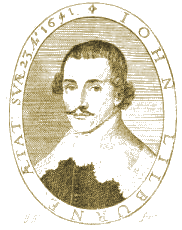
In conclusion, the Levellers (like John "Free-Born John" Lilburne pictured above) were ahead of their time and may indeed be called "liberal democrats," although they were not though of as such in their own time. Their ideas of toleration and consent ring across the ages as a example of popular government and radical dissent in the face of insurmountable odds.

Lastly, keep in mind their warnings to Cromwell at Putney. My reflections on Independence Day will concern revolutions that were and those that really weren't. The words of the Levellers echo throughout these revolutionary movements. Whether they were heeded is quite another story.

Tuesday, June 27, 2006

In The Dull, Old Summertime

This piece is probably a load of self-serving bullshit, but I am in the midst of preparing larger things (look for your homework assignment at the end) and just wanted to take stock of my life as a man of leisure.

I promise to keep all sentences punchy yet and at the same time pithy as I go over my May and June.

Books I've Read
(This does not include the many items from this reading list for one of my seminars)

Books I'm Currently Reading

Films I've Recently Seen/Rewatched

  • The Fog of War - Excellent documentary. War is extremely complex as are the people who wage it and Robert McNamara is a perfect example of this. No, it does not let him off the hook.
  • All The President's Men - Political/journalistic thriller at its best. No matter what you think of any of the players (my views on Richard Nixon are famously complex), it is a well-done film.
  • Enron: The Smartest Guys in the Room - Really informative, leaves the central question unanswered (was the collapse the fault of bad people or indicative of a bad system?)

Places I've Recently Visited (That Aren't The Grocery Store, Sleazy Dives, Etc.)

Things I've Regretted

  • Not getting to Indiana to see my Puma bretheren. We shall meet on the good earth of the Hoosier State once again. I promise.
  • Beer, refried beans and gyros in a single day. My colon has recalled its ambassador and closed the embassy.

Asses I've Kicked

  • Those other bitches in the Pub Trivia League. Trey Junkins does not fuck around. So there.

Current Favorite People (You Readers Out There Are ALWAYS My Favorites)

Well, that's about it. Oh, and I played host to my brother, my friend Eric and my parents in three weekends of fun and frolic here in beautiful south central Wisconsin. I love visitors and should ask Mayor Dave to put me on the payroll. I sell this place better than your whiny ass.

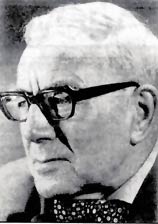
I also added a picture. Do you know who that is? I'm guessing Greg probably does.

Your Homework For The Evening (Or Whenever, I Guess)

  • Read about the Levellers and the debates at Putney in 1647. Real democracy in action in the midst of the English Civil Wars. Don't worry, this will not be Hobbes redux. I learned my lesson.

Remember, more links make it more fun. Enjoy!

Tuesday, June 13, 2006

A Sad Commentary On Today's College Students

I read this story with considerable worry when it first broke a few days ago.

If you don't want to read the whole thing, it essentially says that college students prefer their iPods to beer.

Yeah, I cried too.

If the people at the Ridgewood, NJ based market research firm Student Monitor are to be believed, the college student of today prefers a sterile wafer of plastic and circuit boards to the fermented perfection of Mother Nature's awesome bounty.

What this says to me is that college students of today are in real trouble. Those of us who have been to college (and some of us who never intend to leave, really) know that drinking beer is a social event. It gets people together, out of the house (sometimes) and into each other's company. There is no better way to get to know people than over several glasses of that earthen-toned liquid that pours in a generous river from our great nation's heartland.

With the beer and friends ultimately comes great conversation, talk of issues great and small. It can be about sport, politics, work, personal life experiences, bawdy jokes and cunning comebacks. It is the very milk of society, the very basis of what's best about being human. We have no word for it in English, but in Irish it is craic and in German it is Gemutlichkeit. It is the great feeling of elation brought on by good drink, friends and conversation.

Listening to an iPod is none of these things. It is perhaps the complete opposite. Once the headphones are plugged into the ear canal, the listener is cut off from the outside world and any interaction from others. What world to they enter? A self-constructed world of disjointed playlists wherein only the listener him/herself can partake in the goings-on.

I have no problem with self-gratification (by which I mean making oneself happy...minds out of gutter, now). What I take issue with is the way that, as with the cellular telephone, it cuts people off from each other and becomes a constant companion and obsession, like the constantly fingered fetishes and amulets of bygone, superstitious days (they are gone, right?). They become the only focus as one glides through life blissfully unaware of the real "flowers of life" (to quote the late, great Lord Buckley): people.

This shows that the college student of today is more interested in pleasing themselves than in interacting with other people. If all drinkers were like this, we would all be sullen, jittery alcoholics alone with the bottle as we let out the evil spirits and confront our darkest personal reaches alone. That is why alcohol is best enjoyed with friends. It is this interaction with other people that makes the experience one of sociability rather than dependency.

This story speaks volumes about the human condition, at least among college students. Not allowed to have fun anymore, jammed into impossible schedules and self-imposed academic and social strictures, they become socially frightened cenobites, fearing for their future at the expense of their present.

Sliding down the razor blade of life is tough enough without people who have no idea how to let go every now and again. Oh, to those of you who will doubtless say that I (and those like me) should just workout or pray or something to let off steam, I say bullshit. They are not the same thing, never will be (for reasons discussed above) and, in any event, stop telling me how to live.

So, college students of the world, if a large, Irish-looking gentleman walks up to you, yanks your iPod out of your ears, pours beer all over it and hands you the rest of the six-pack, just take the beer and thank him later in your own way. He has freed you and opened up your ears in more ways than one. Oh, and he likes Blatz.

Monday, June 12, 2006

Soul Searching Up North: Canada And Terrorism

I was prompted to comment on a recent column by Jonah Goldberg in National Review concerning the foiled plans of a radical Islamist cell in Canada. Read Goldberg's commentary here.

I agree with Goldberg that Canada is the most deluded industrialized nation on earth. The way that Canadians seem to view themselves and the actual state of affairs nationally and internationally are, as they often are, quite different. Canadians view themselves as peaceful, pacificstic and as the perfect North American foil to the warlike, militarized Americans. They see themselves as "the American alternative," offering all of the benefits of the United States with none of the bloodied hands or notions of world hegemony.

In light of these perceptions, it is easy to understand how a homegrown terrorist cell with plans of chilling specificity would shake the Canadian people and their government out of their preconcieved notions of national benevolence. "How could it happen here?" That was, I'm sure, the question on the lips of Canadians from top to bottom when this dastardly plot was (thankfully) defused.

How COULD it happen in Canada? Quite simply, really. The things that radicalized, marginalized Muslim populations in the West find to attack in Europe and the United States are no different in Canada. These radical Islamists, radicalized by their place in their adopted society and feelings of animosity towards "the West" in general helped to lead to radicalization that was turned into apparent plans for action. Put another way, the way it happened in Canada is the same way it happened in England in the summer of 2005, in Spain in the spring of 2005 and also with the 9/11 hijackers in 2000-2001.

The deeper question then becomes why attack a system that tries so hard to make everyone feel welcome? I think the key to understanding this is the fact that in an open society, such as those in the West, the rights guaranteed to every person are not without risks nor can they be limited to some and denied to others. If one person has the right to speak and assemble freely, all must have it. The fact that these would-be terrorists could congregate in the same mosque and hear whatever is said must be protected, however one might disagree with what is said.

The limit to this protection comes in the transmuting of speech to action. People should be able to say whatever they want; when action becomes involved that could harm other people, then the situation changes. Saying that I want to kill a public official and then actually buying a weapon and making plans are two completely different things. When the lives and property of others is directly and specifically threatened, then the state has the right to step in to protect its citizens (which is the primary function of a state to begin with anyway).

Rights imply risks. It is as simple as that. It can be something as small as having to hear people say things that you don't agree. It can be as large as a system that can allow plans that would lead to its own destruction to be formulated under its aegis. We must consider if the rights of every person protected (not given) by the state are worth the risks that we incur in protecting them in the first place.

I think that rights are too important to sacrifice to risks. These are risks that I am willing to bear. Risks that I am not willing to bear are those that involve the state deciding when rights can and cannot be exercised and that certain people have a stronger claim to protection than others. If we want an open society, these are the burdens and tensions that we all must bear.

It also must be said that, in this situation, nothing ACTUALLY happened. The plans were not carried out and they were foiled before they could be carried out. It remains to be seen (and may never come out) how the police in Canada and elsewhere inflitrated these plans. It might well be that the horrendous apparatus of the police state tripped up these plans and that I am just plain wrong. It is well that these plans were frustrated, in any event.

In closing, we cannot forget that this jolt to the system in Canada is, in the long run, a good thing. Canadians must reassess their view of themselves as an impregnible beacon of tolerance and openness. It could have happened there and Canadians must realize that they are not perfect and can be a target just as easily as the United States, Great Britain, Spain or anywhere else in the West.

This should also give pause to those despicable American who claim to be Canadians or want to move to Canada because the U.S. is so terrible. In the eyes of militant Islam (infused with Marxism and anti-colonial rhetoric), Canada and the U.S. are part of the same system of global domination and control that makes the need for radical reaction necessary.

The world is a dangerous place, Canada. Remember this when reordering your grand strategy to keep the True North truly strong and truly free...or else.

Clarification And Explanation (Well, Sort Of)

First, to answer Matt Jenks (who I hope is feeling better), Montenegro and Macedonia are not the same thing. They are both indeed former parts of Yugoslavia and both were some of the poorer parts of the confederation when it began to split up in 1991-1992.

Macedonia is on the track that Montenegro wants to join. Macedonia has officially entered the candidature for EU membership, according to the EU's website. There were until quite recently some unresolved issues between Macedonia and Greece over border demarcation and the use of the name "Macedonia," as the Greeks saw that as a violation of their sovereignty. These issues have been dealt with and Macedonia, poor as it still is, is forging ahead towards integration into a broader Europe, which seems to be a boon for poor, small countries and a mixed blessing (at best) for big, rich countries.

For more information, read the U.S. State Department's background notes on Macedonia and the official website of the Macedonian Government and also the DoS profile on Greece for a regional perspective. Refer to the previous post for all Montenegro-related information.

Second, explanation (of a rather less Balkan-themed nature). The doubled posts of my previous work is anyone's guess. Blogger decided to run really slow and not publish anything for the better part of last week. I am pretty sure that it was not our network as everything else ran just fine. That is also part of the reason I have not been able to check in with my other friends in the blogosphere (I kinda hate that word, but oh well). My sincerest apologies.

Wednesday, June 07, 2006

Montenegro to Serbia: "Good Riddance."

After reviewing the situation, I realized that there was not as much to say about this topic as I originally planned. In that cause, let's make this short, sweet and bullet-pointed:
  • Overall, declaring their independence from Serbia will be a good thing for Montenegro. It has been assumed, at least since 2003, that this would happen.
  • It is good because Montenegro can cleanse itself of any relation to Serbia. This is important as Montenegro desires to become part of the European Union(EU) and eventually the North Atlantic Treaty Organization(NATO). Serbia still has two major questions to answer for in the wake of Slobodan Milosevic and the 1990's.
  • First, there is the question of turning over war criminals that should be prosecuted under the International Criminal Tribunal for the Former Yugoslavia. This is one of the major stumbling blocks to Serbia integrating itself into any larger European framework. If they are seen to still be hiding war criminals, no moves can be taken. Montenegro has dodged this bullet, so to speak, by making this latest move.
  • Second, there is the unresolved issue of Kosovo. The United Nations Mission in Kosovo (UNMIK) with the enforcement of NATO's KFOR still controls this province of Serbia. What the settlement will be is still up in the air, but a decision is set for some time this year. Montenegro, I am sure, finds this a prospect devoutly to be missed.
  • Serbia inherits all of the international memberships of the (now) former Republic of Serbia and Montenegro. This is exactly how the Montenegrins wanted it. They want to be "integrated" on their own terms and not as a partner to the Serbs.
  • Montenegro, if you look at the map, by making this move has cut Serbia off from access to the Adriatic Sea. You can count on this being a major bargaining chip for the Montenegrins in negotiating use rights and access for the Serbs, for which the Serbs will doubtless be made to pay dearly.

Of course, this is a "watch-and-see" situation, but if the record of the war crimes tribunals are any indication, this might take a while. Montenegro will be much better off generally when separated from Serbia. Now, the Montenegrin government must take care to mind its own problems (organized crime, for a start) and make a clean break.

Further Reading

Wednesday, May 31, 2006

The Balkans: My Attempt At '90s Retro

In preparation for a larger piece on recent developments in the Balkans, please consider the following:
  1. So, what has been happening in the Balkans since those hoary days of the early and mid 1990's when they were all the rage?
  2. Very recently (last week, in fact), Montenegro voted to become independent from Serbia. Read the details here and here.
  3. Look at this map. Using what you know (or what, in my case, you think you remember), what implications for the region spring to mind when considering that Montenegro will be an independent, sovereign state?

Let's take a trip down memory lane, shall we? This trip could, like most important developments, go WAY back. The Battle of Kosovo Polje, which took place in 1389, became a major issue in the conflict. Read about it here, but be aware that the link is to a page maintained by the Serbian Orthodox Diocese of Raska and Prizen.

Feel free to post your recollections of the situation and any other considerations as this is a work in progress for publication sooner rather than later.

Political Addicts, I Am Your Enabler

I know I did this recently, but I have found two other sites that could literally take up hours of valuable time.

As for my political addiction, it has waned with my lack of access to cable news (every hard-core addicts "guilty pleasure") but I still read too much for my own good.

I view it like this: some people like to pick Academy Award winners; others like to do fantasy sports (I do this, but not well at all); some place wagers, legal and otherwise, on all manner of contests. This is what I do.

Anyway, your fix:
  1. PollingReport.com - This site provides the latest polling data for people, elections and issues as taken by the major poll taking organizations (some of which have great, evil names like Diageo and Opinion Dynamics, along with the more traditional Gallup and the silly Quinniapac). The most recent are concerning people's opinions of John McCain, Hilary Clinton, the state of morals in the U.S. and consumer confidence. Pure gold.
  2. Congress.org - Another ubersite. The best part, though, is their "power rankings" of members of Congress. The comparison of these rankings can fuel all sorts of speculation, providing hours of enjoyment. For example, Wisconsin (as a state) exerts considerable pull in the House, but not really in the Senate. Wisconsin has two representatives in their "top ten," namely James Sensenbrenner (R-Menomonee Falls) who is #5 and David Obey (D-Wausau), who is #9. Look up your guys and gals and see where they fit.

Yes, I'm the pusherman. You know you need it. Just one hit won't hurt anyone. It's never just one, though, is it?

A Big, Dull Thud

COMMENTS ON THOMAS HOBBES THINK-PIECE= 0

COMMENTS ON GUY-GETS-HIS-NUTS-RIPPED-OFF-PIECE = 2

Ok, ok, I know. Hobbes is not exactly light holiday reading and maybe needs to be mulled over a bit. I also realize that, when transfered to MS Word, the last entry was the equivalent of six double spaced pages.

An interesting exercise would be to relate Hobbes and Nuts-Ripped-Off-Guy. In other words, what would Hobbes have to say about human nature and society considering the aformentioned nut-ripping?

That is the most times I have ever used the word "nuts" in a piece of writing. I promise it won't happen again. The use of the word, I mean.

As for future nut-rippings (there it is again), I can make no guarantees. Could/would Hobbes do the same?

Tuesday, May 23, 2006

In Leviathan's Long Shadow


In considering government and all of the maddening things that it does, one may forget the roots of ideas of government and the relation of the people to it. Different systems have different roots, naturally, but I think it would be hard to argue that the "Western tradition" is predominant in most governments (in one degree or another) across the globe. Why this is could be considered at another time, but it is well to note that the political tradition of early modern Europe, in all its complexity, is at the root of our current system in the United States.

The system of state in the U.S. descends in most ways from the political thought and tradition extant in early modern England. Perhaps the most controversial and studied figure of this tradition (with the possible exception of John Locke) is Thomas Hobbes (1588-1679). After considering the nature of Hobbes's thought on the nature of man and the state of nature, the origins of government and the nature of sovereignty, some connections will be made to the present day and generally argue that we have not, in many ways, escaped the world that Hobbes described in Leviathan. In many ways, thankfully enough though, we have.

One must start any consideration of Hobbes with an idea of his notion of the state of nature, that is, the state of human society and relations before organization and codification. Hobbes viewed the state of nature as a state of constant war and struggle. People, driven by the desire for self preservation and their personal passions, constantly attacked each other in the attempt to survive. It was in this consideration that Hobbes coined the phrase that life in the state of nature is "nasty, brutish and short." So, the state of nature for Hobbes is a negative state and one in which there is no safety or security beyond that which the individual can provide for himself.

From this state of nature, the people involved come to realize that the constant war and insecurity is untenable and that there must be born a higher authority. In other words, there must be a transfer of sovereignty from the individual (state of nature) to another entity. It is here that Hobbes forwards his conception of the social contract. Hobbes's social contract involves the individuals agreeing with each other to transfer power to a sovereign entity. This differs significantly with the social contract as discussed by John Locke, Jean-Jacques Rousseau or Charles-Louis de Secondat, Baron de Montesquieu in the later seventeenth and eighteenth centuries.

The key occurrence for Hobbes's social contract is the fact that once the sovereignty is transfered from the people to the sovereign, it cannot be taken back. The transfer is final and the sovereign is freed from taking the people's desires and opinions into consideration. This also, for Hobbes, precludes any idea of resistance to the sovereign as it is not in the right of the people to question the power that they decided (mutually, at first) would rule over them.

In doing this, Hobbes argues that the sovereign is an artificial man, an independent entity, not bound by the same constraints as regular people. The sovereign is not bound even to obey its own laws, but it is expected that the sovereign will always have the best interests of the people in mind when making the decisions of state.

As depicted visually on the frontspiece to the original 1651 edition, this artificial man created by the transfer of sovereignty is show as a king. To be sure, Hobbes was quite royalist in his leanings. A pupil-cum-patron of his, Thomas Hardwick, the Second Earl of Devonshire, began Hobbes's long association with Royalist forces and this extended into the English Civil War. Hobbes actually fled England during the Civil War (after the execution of Charles I on January 31, 1649), and part of the Commonwealth and Protectorate of Oliver Cromwell. It was during this period when Hobbes was in France that he wrote Leviathan (approx. 1649-1650). He also, at this time, met Rene Descartes and provided commentary on his Discourses.

Back to the ideas, though, Hobbes was a Royalist, but it did not really matter to him what form the government was to take. The important factor for Hobbes was the indivisibility of sovereignty once it is given by the people. This, in other words, precludes ideas such as separation of powers, federalism, checks and balances (another Montesquieu idea) or devolved government. The sovereignty, to be effective, must be vested in one body, quite literally if the analogy of commonwealth as an artificial man is to be believed.

With this framework, it is not hard to imagine what Hobbes thought about free will. He was a thoroughgoing determinist. He did not believe that individuals could be free actors and live in a stable society separated from the violence of the state of nature. This also relates to his materialism, the belief that the human life is nothing but the moving of uncontrollable inner biology (although he would not have used that word) and therefore the artificial man that was Leviathan can have the life force just as any man can. The human person is nothing but its instrumental functions; for Hobbes, the state is no different.

As you can see, these ideas concerning the nature of man, state of nature and the genesis of the state are all related and provide a pretty bleak picture of society and human nature. How can this be explained? As aluded to above, Hobbes was indeed a product of his times. The seventeenth century in England (and in Europe generally) was a bloody one filled with uncertainty, war and death. The absolutist idea ruled in government, most famously displayed (although this can be debated) by King Louis XIV of France. England had its absolutist tradition, too, although inspired and backed by such French theorists as Jean Bodin who, in his Six Books of the Commonwealth laid out the rationalization for the absolutist state. King James I of England (who was also King James VI of Scotland) was a dedicated absolutist, believing in the divine right of kings and seeing his place as the undisputed ruler of the land.

It is out of such times, which combined the horrors of protracted war with the notions of a powerful central government, that can be seen as the backdrop of Hobbes and Leviathan. Hobbes lived in unstable times and one can understand that this would influence the thought of someone concerned not only with government but human nature as well.

The idea of the divine right of kings leads to a consideration of Hobbes and religion. In other words, how important is religion to the ideas of Thomas Hobbes? It was a much debated subject in Hobbes's time and ours, the debate centering on the exact religious disposition of Hobbes himself. There were arguments for everything from Anglican to Protestant Dissenter to (most provocatively) a Deist or even an Atheist. God does not seem to do much in Leviathan, apart from the Creation. People are the sum total of their desires and vices and it is not up to God to stop them or introduce moral sanction. It is the people who erect governments and not God. He does spend a considerable time rubbishing the Catholics, for who he had considerable contempt (although Locke was no big supporter of Rome either).

So, is religion necessary for the commonwealth described to function? As I have hopefully shown, religion can be a part of the state but it does not seem instrumental to state formation or maintenance. If anything, Hobbes believes that religion, while it can pacify people and make the obedient, it can also lead to dissention and challenge to the leadership (here again, he blames the Catholics).

Bearing all of this in mind, what can be said of Hobbes considering the political landscape of today? It is tempting, given the problems and horrors that confront us daily, to agree with Hobbes in saying that people are inherently evil, selfish and will do anything to get their way if left ungoverned. This position is convienent when one throws one's hands up in exaspiration at the world and says "Fine. Maybe people just need a strong-fisted, brutally repressive regime that will rule absolutely and keep everyone in line." Is this reasonable? Incidentally, Hobbes thought that reason was central to the orderly functioning of society but that it was not a priori. That is, people are not born with reason; reason develops from human industry.

I cannot accept Hobbes's idea of the permanent transfer of sovereignty or the indivisibility of power in a government. As has been shown, his times and position may have influenced these ideas, but they are troubling nonetheless. If a government ceases to perform its function (the protection of the human rights of its people), the people should be free to resist it at all harms. For Hobbes (personally and theoretically), the only manner of acceptable resistance was to flee the country.

Why should people be free to resist the government? Because the government exists at their behest and at their service. After all, the reason for setting up the state in the first place was a desire of people for safety, right? Even Hobbes would seemingly agree. Hobbes also sets his framework on shaky ground when he asserts that this transfer of sovereignty may not have to be a real act, but can be a foundational, explanatory myth. The countermanding of this idea comes with Locke and his idea of "tacit consent," whereby individuals rebind themselves to the idea of the state automatically (for lack of a better word). Remember, though, that Locke had a completely different notion of the state of nature, natural law and the relation of the individual to the collectivity than did Hobbes. We will discuss Locke in future.

I also disagree with Hobbes's denial of free will for all people. Why? Well, there is a religious argument that contends that people must be free to choose even if the morality of the choice is already known. In other words, people, to be truly dedicated to the service of God, must be free to choose wrong. They must be ready to accept the consequences, but this is the price humankind must pay for being created in "God's own image."

Is there a non-religious argument for free will? Perhaps the full implications of this question are not germane to the present discussion, but suffice to say that if society is indeed composed of individuals and those individuals want to live together in groups, there must be a balance stricken between individual and group. This can only arise if the individuals are free actors, not coerced to react from outside forces visible or otherwise. It is the opposite of this notion that leads to repression through the abrogation of the very basis of society as a collection of individuals and nothing approaching the artificial man of Leviathan.

Thomas Hobbes and Leviathan have a long shadow indeed. In many ways, we still have not completely escaped from Hobbes's view of humankind, their nature and relations to each other. How is this true? Superficially, people do indeed seem to react how Hobbes describes. People want what they want and will do whatever it takes to get it. On a deeper level, when power is transfered from the individual to the commonwealth, it does seem to take on a mind of its own. Ideas of power get entrenched in institutions that are hard to change and almost impossible to get rid of. We seem trapped in a system where even the access to the organs of organized change (the legislative process, for example) seem ever more resistant to evolution or even closed to active participation by the citizenry.

The transfer of power being original and irrevocable, we seem stuck in a system that cannot be changed easily. I would argue, however, that while this may be the case, it is a rather pessimistic view of humankind to take and one that leads to the perpetuation of a bloated and out-of-control state acting completely in its own interest. It is through rediscovery of our nature as free actors and granters of the reins of power that real change can be fostered. We all must realize that the individual is at the heart of society, not the collectivity or the government it supposedly put into power in the past.

Humans should be free-born, individual actors and the center of a system where the power descends from their consent (tacit or otherwise), all in the knowledge that the system can be changed or scrapped if it ceases to perform its function. Human weakness in the face of such responsibility is what leads to chaos and disorder, and I do believe that human beings are weak but not inherently evil. Hobbes believed that humans were not up to the task.

The price of liberty is indeed eternal vigilance. Are we willing to stand guard?

Wednesday, May 17, 2006

Blogging Called. He Accepted The Charges.

I would like to welcome a fellow Madisonian and loyal member of the Opposition here in the P.R.O.M (People's Republic of Madison). Now, we are not scary Republicans nor lackadaisical Democrats...we are much, much better (at least we think so).

So, check out Greg's blog for some great pieces on Madison, the "Midwestern ethos" (something I have considered at length), the sporting life and other worthwhile pieces in future.

Greg is moving to Berlin, Germany for a time so his perspective on Continental affairs will be most welcome.

Oh, and I helped him design and build a five-storey beer bong. I am not (in the words of Dave Barry) making this up.

Here is the link to Greg's blog.

Much in the works...be thinking about your impressions of Thomas Hobbes.

Friday, May 12, 2006

One Down, Seven To Go

As of 8:23 A.M. CDT, I, upon sending an email with an attached .pdf, finished the first year of my doctoral program in the Department of History at UW-Madison.

My feelings? Well, whew! for a start. (I realize that sentence was interestingly punctuated; deal with it."

These past months (although it seems like about three hours ago) have been a challenge, but I think that I have risen to it. Those of you who have gone to graduate school know that it is more of a marathon than a sprint and tenacity is tested almost more than ability. They figure that by now, you know how to play the game. Take it to the next level.

Grad school is like the Super Bowl of Nerdiness...this is the Big Dance. Do you have the stomach to go all the way?

Well, those of you who know me know that my stomach is ready for damned near anything.

Speaking of that, is it wrong that it is about 8:30 AM and I want a beer? Do I have a problem or have I just found the right solution? I guess it is a matter of perspective, but I will say no, that is not at all wrong.

The paper that I finished and sent just now was, to put it mildly, surgery with a baseball bat...or an oil tanker. Yeah, I made the point, but the specifics are just not there. Oh well, what could one indeed say for a historian in the midst of linguists. They, like everyone in the social sciences (history is humanities, folks), just get to make shit up.

What now? Oddly enough, in a strange case of bookending, there is a party at the same place there was one the second night I was here. It is a serious case of veja du.

As for the long term, I will not care for a few weeks, then, back at the reading for fall and prepping for prelims (a.k.a. the test from fucking hell).

Well, that is quite enough of my personal troubles. They are not that interesting, but I felt that this was an adequate time for reflection.

Oh, thanks for the response to the Hitler thing. I guess if attention to detail, cognizance of the worst cases possible and a slight suspicion of people makes me Hitler, well then, I'm Hitler, I guess (more interesting punctuation).

Jenks-I forgot about the Trevor Wilson thing...that is indeed odd. If I recall, Giles accused me of Nazi-ish behaviors once (probably). Also, thanks for the comment on my wild speculations. Read my response.

The Rest Of You- Enjoy Every Sandwich.

Tuesday, May 09, 2006

Rather Off-Putting

I took one of those personality tests. This one, based on my answers to twenty-seven questions, assesses what world leader you most closely resemble.

Well...


Take it for yourself. I honestly am not sure what to make of the results...

American Agriculture, Fuel Technology And National Security

With uncertain oil prices and a dicey international situation concerning oil producing nations (like this has been any different for thirty-five years), there is much talk of developing alternative sources of fuel.

One that is bandied about a lot (especially here in the corncentric Midwest) is ethanol which is made from that very bounty of the American Middle West. I know that there are laws in certain places that mandate a certain percentage of ethanol in fuel and that there are also engines that can run on an increasingly high mixture of ethanol and petroleum-based products.

Sounds good, right? The American farmer can be freed from damaging and outdated subsidies (please hold back the laughter) and sell their crops for a fair and higher price so that their relevance and efficacy is guaranteed. The U.S., broadly, would become a more important producer of an increasingly important source of fuel, right?

[Here begins the wild speculation.]

So, if this is true, and the U.S with its corn resources becomes a globally significant producer of fuel, then the source of this fuel would become more valuable, right?

If this source is indeed corn, then corn is more valuable than ever before, correct? Boon for farmers, producers and speculators, a golden [Bantam] age for American agriculture, right?

Could it be said that, given this situation, corn would have to be more closely guarded than it is now. The fields of it consume, let's be honest, whole states and the bulk of a region of the U.S. If it is indeed valuable as a source of fuel, will it have to be guarded like oil fields?

Does this change the dynamics of national security as far as energy resources. Oil refineries and storage units are, doubltess, guarded fairly closely, as are pipelines, depots and transport vessels both land and sea. I am sure that even before 9/11, a significant portion of expenditure for oil companies was spent on asset security. Does this new development make corn fields and grain elevators across the nation more vulnerable because of their increased worth.

Think of the "what ifs" here...terrorist attacks made as simple as torching fields of passive grain as their owners wonder how to protect their vast and diffuse assets...cities such as, say, Dubuque, Iowa becoming as big of a concern for security as any port city...the potential for chemical/biological/radiological/nuclear attack against a crop with no natural defenses must be vast...this is all ignoring the devastating effects on food production, both crops and livestock...

Is all of this rather far-fetched? Possibly and I certainly hope so.

It cannot be ignored, however, that in a search to protect ourselves through the use of resources and technology, new concerns may arise and with them, new complications.

In other words, is the cure potentially more deadly than the disease?

Could the plowshares of the American farmer become a target for the swords of potential enemies?

Is it possible that the American staff of life could be transformed into a cudgel, wielded by those who would destroy us?

Monday, May 08, 2006

Better Than Sex? Not Even Close.

Sex, that is.

The ever-observant late Dr. Hunter Stockton Thompson observed, in the title to his tale of the 1992 presidential election, that politics is better than sex. Far more addictive, too.

Well, as always, the Good Doctor was right on the head, at least as far as I am concerned.

What goes on inside the Beltline and around it is infinitely more intersting that what goes on below it.

I, between the more esoteric deliberations of the academic realm, have been keeping myself apprised of political developments, large and (seemingly) small. Just a few observations, some cryptic, others not...
  • Tommy Thompson as governor of Wisconsin again? He served in the cabinet, still popular at home and knows what's expected of him (if you catch my drift).
  • Cabinet shake-up? This happens to all presidents, in a thinly veiled attempt (by the administration) to buoy itself as the clock ticks and (by potential successors) to cleanse themselves of the stain of the outgoing regime. Think back to 1985-1989 or 1997-2001. Second-term swoon, welcome back, old chum. Plus, the jobs for former cabinet people (lobbyists, pundits, professors, consultants) won't fill themselves to bursting, now will they? Snouts in the trough, all of them. Well, it's all they know...
  • Jack Straw out? You are seriously out of touch if this one surprised you. Whitehall (especially the FCO) and No. 10 have been at odds for some time. That will pretty much set the stage for the fight to control Labour when Blair steps aside (which he said he will before elections are called next).
  • Illinois governor? Hell if I know...Seems like a toss-up, though the George Ryan card is now again a somewhat potent one.
  • Iran? Jack Straw was right on this one. Completely nuts. Interpret my use of it how you will.

I end with two great website suggestions for political junkies and those who love to waste time in front of a computer:

  1. Politics1.com - Polling data summaries, tracking of midterm and P2008 gossip and other goodies. Like crack, but potentially more damaging to brain tissue in the long run.
  2. Atlas of U.S. Elections - This site is mind-boggling. Data going back to the 1796 presidential election with great statistical breakdowns for all since. Great tools and fun "what if" scenarios. Predictions for 2006 races and other great stuff. Again, highly addictive.

Which is more damaging, sex, drugs or electoral politics? The similarities, if you consider them, are, well, considerable.

Everyone has a drug of choice. This happens to be mine. Well, that and Blatz.

Friday, April 28, 2006

Life, Liberty Property...And Language?

(This is another sort of "recycled" post, comprised of some comments I made in a class concerning language and immigration. The notion was posited that it is the responsibility of governments to "protect" and "promote" linguistic minorities. My comments follow.)

I just wanted to offer a few observations on the topic of government and the protection/promotion of linguistic human rights (LHR).It seems to me that anything that comes down from the UN, especially anything of a cultural nature, is a bit difficult from a sovereignty standpoint.

The difficulty, as far as I see it, comes in the terminology, namely the use of "protect" and/or "promote."Now, when I see the word "protect" used, I assume that this posits a negative rights standpoint as far as the government is concerned. What I mean is that the rights that people have intrinsically should be protected from the incursion/denegration from other actors in the society.

This, naturally, arises from an entire view of the role of government as protector of the natural rights of the citizenry, namely (to use John Locke's words) life, liberty and property. Beyond the protection of these rights, in a minimal state, the government can play no positive role; the actors in the society are left to themselves to perpetuate their culture without aid from the state.

When, on the other hand, I hear the word "promote," this denotes a more utilitarian, activist concept of the function of government in the field of rights. Promotion can mean a lot of things: the facility of institutions, the passage of legal protections and the provision of public funds. In my opinion, government enters dangerous territory (especially when it refers to culture) in taking an extremely activist role in such matters. Why do I think this, you ask?I believe that rights, at least the ones protected by the state, should derive from the rubric of life, liberty and property. These rights denote that the state should not be allowed to kill you, detain you or steal from you.

Can LHR be derived from any of these basic negative rights?Here again, I suppose this descends from one's understanding of "stealing." In the strictest sense (and the one that formed the spirit of much of law in the eighteenth and nineteenth century era of state-building), the only referent here is tangible assets. Is this proper?

As I said before, that comes with one's definition of the proper role of government.I guess the real issue is are LHR on the same level of rights as life, liberty and property? Should rights be categorized as such? And, if so, what responsibility should any state have for protecting them? If they don't protect them, can/should coercive, forceful action be taken against them?

(If you are interested in this topic further, check UNESCO's page on the subject for all of the official UN documents. Also useful is this page maintained by a professor of language and linguistics at the University of Essex.)

Tuesday, April 25, 2006

Illinois And The Fine Art Of Jiggery-Pokery

This will be a short one, just two more recent examples of the "culture of corruption" in Illinois politics, especially in Cook County.
  • When they say culture, perhaps it was in a literal sense. Illinois has been called a "petri dish for corruption" by the National Association of Attorneys- General. So, how are the fine people of Illinois supposed to take this assertion by a bunch of government lawyers. Well, people of Illinois, consider the case of Wisconsin AG Peg Lautenschlager. I am sure she would be the first to down Illinois for being on the make, but, well, explain this away, top law enforcement officer in the state (be sure to watch the video). We don't mind corruption...means you don't have to bother with the forms.
  • Hey, this is abuse of the system...civil servants getting away with flouting the law like that...oh, wait, this sort of deal makes that look like a sort of a fringe benefit. Were there kickbacks, brown-envelope jobs, payola...well, it got done, didn't it?

And the beat goes on...

(Oh, this is what jiggery-pokery means).