Friday, August 18, 2006
Typonomy Blundering, Spatial Understanding
Granted, this seems like an accidental oversight, and one that will cost the already cash-strapped CTA quite a lot of money to correct.
Which led me to these thoughts: what would happen if they were not corrected? What would have happened if no-one noticed?
Maps have a certain air of authority to people in the modern world. It is thought that they are scientific documents, produced by professionals and they are therefore foolproof. Think about this. You look at a road atlas, transit map or whatever and you just figure that it is correct. Most people, moreover, consider that the makers of these maps have no motive other than providing correct geographical information to get you from here to there with the least amount of hassle.
On one level, this is what maps are: utilitarian documents that represent a three-dimensional reality in two dimensions for people who want more information about the territory depicted. They are, on another level, much more than this.
Think about the awesome conceptual leap that it takes to represent something on a scale and in a different dimensional framework than it is normally experienced and you'll see what I mean. A map cannot, obviously, represent territory on a 1:1 scale, so decisions must be made, items included and excluded. It is in these comissions and omissions that the deeper meaning of cartography begins to reveal itself.
In other words, what is left out of a map often tells as much about the maker and their society than what is included. Just as in music, you must listen for the silences as well as the notes.
As shown by the CTA blunder, place names also carry an awesome power behind them. While this case was just a mistake (most likely), it illustrates that typonomy is important and can be a very loaded concept. One need only look at maps of "colonized" areas to see the power of place names over the understanding of the landscape for conqueror and conquered alike.
Is the case of the CTA the same as the (as some have argued) cultural genocide of place re-naming. Hardly. What it does show, however, is that maps shape understandings of territory as much as territories lead to the creation of maps of all sorts.
Am I making too much of this? Consider how we do (or don't) "think cartographically," (to use David Buisseret's words. How do our minds experience and process space? From another angle, what is it in all human cultures that leads them to express space cartographically in one way or another?
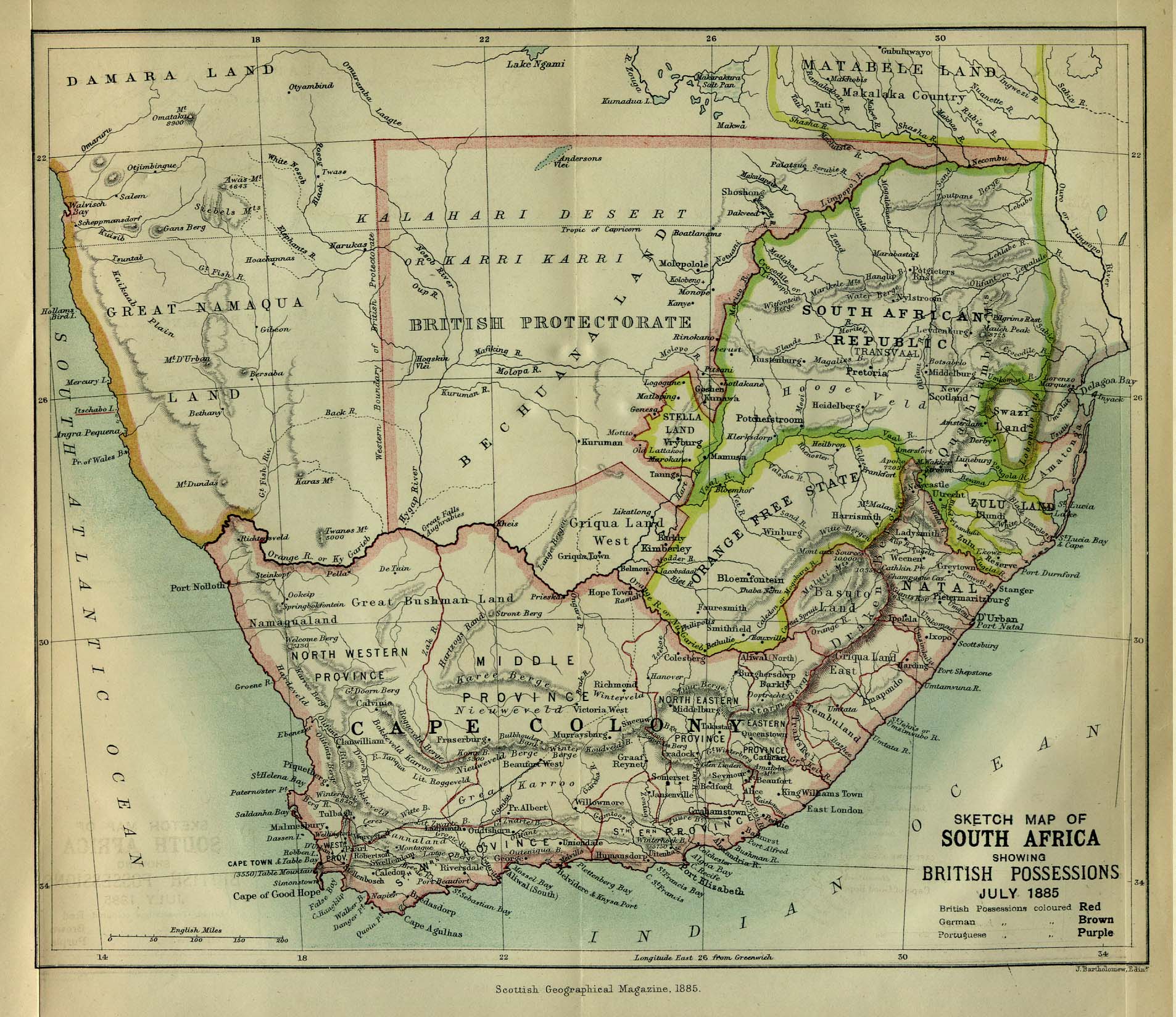
For more visual learners (and because it's more interesting), are these images maps? Why or why not?
Oh, if your answer to "am I making too much of this" was yes, you may be on to something...
Monday, August 14, 2006
Madison Halloween 2006: The Death of Fun And/Or Freedom
Doubtless, thoughts also turn to the hoary old chestnut that is Halloween in Madison, 2006. After last year, which was more subdued that previous years, Mayor Dave still seems worried about the revelers and their antics. So, what is his plan?
He intends to charge a five dollar admission charge, barracade every entrance to State Street and set an upper limit for the number of "tickets sold. Read the full story here.
This plan has the support of the Madison Common Council and other groups such as the Associated Students of Madison, the Interfraternity Council, Downtown Madison Inc., and the State Street Business Association.
It does not, however, have the support of the UW-Madison Student Government, who claim that it punishes the innocent and presumes guilt on the part of all attendees for the rowdy acts of a few troublemakers (most of which don't even live here). Check out their objections here.
What do I think, you ask? Let's look at this from a few different angles: the city government, the partygoers and the business owners on State Street. Then, having considered that, let's take a broader view.
The City of Madison
From the city's standpoint, it seems that this may be just another bandage on a gaping head wound. Sure, the money will be welcomed and, on paper, the plan does seem to stem the tide of, well, the tide of people that crowd State Street. On paper, that is. Actually, the enforcement of this policy seems more easily said than done. Take a look at a map of State Street, scan up and down and try and count all of the access points...sure are a lot, no?
Not to mention the fact that while State Street is a pedestrian mall, it is crossed by several streets that are not (Lake, Gorham, Johnson, Dayton, Fairchild). How will traffic be directed through these areas while limiting access on foot?
Another enforcement issue comes in the counting of the admissions charged. This will take a level of coordination that, while keeping the coercive presence to a maximum, might lead to miscommunincations and other issues of coordination. Perhaps not, but it could happen.
Halloween Partygoers
This is the proverbial "x-factor." This is the reason that there is a problem in the first place. From these people's view, they want to be in public, act stupid, drink and get in fights. No amount of coercive effort will change this. What will, you ask? Well get to that, but first, the lizard brain.
The lizard brain is the brain as functioning under the influence. It is well known that the first thing to go, cognitively, when drinking is judgement. This means that the irrational becomes necessary and that doing what one would normally not do seems like the best idea ever. Now, imagine 70,000 people in a similar condition and the enormity of the situation takes hold.
O.K., the first people there will not cause a stink. What about those who are turned away or those who pay, are admitted and then are unable to access drink because bars will not allow it (not likely, but who knows)? In other words, you wanna know how to make angry drunks even angrier? Antagonize them and put a barrier between them and their goal. This will, and has, presented problems.
Business Owners on State Street
It seems from the preliminary endorsements, the business that cater to the crowd on State Street are amenable to the city's plan. Given the recent incidents (although last year was a bit less intense) and the property damage, I guess I'll buy that.
Personally, if I were a business owner (more specifically, a tavern owner), I would take considerable exception to a government plan to limit access to my place of business in order to make the government's life easier. I want to earn as much as possible and, given the no smoking ordinance and the crackdown on drink specials, every little bit helps.
I would also want to know what exactly the city plans to do with the money. If you are limiting access to my business and charging for the right, I want a detailed expense accounting of the funds.
More Kerosene on the Fire
An additional factor that could, well, complicate things comes in the fact that Halloween always comes during football season. Halloween happens to fall on a home football Saturday here in Madison (wherein the Badgers will ride roughshod over the Cryin' Illini). This means more people, more booze for more of the day. I am sure that this has been considered in all its ramifications.
It has, right?
The Broader View
What is really at issue here, given all of the above considerations, is freedom of assembly. When did it become acceptable to charge citizens admission to walk down a public street? When did it become O.K. to limit people's right to assemble by charging a fee? These are the real issues and ones that the city has yet to answer. What say you, Mayor Dave?
Another issue to consider is the notion of "rebranding" Halloween. I agree that it may do the city well to welcome visitors and make them feel at home; in some strange way, this may influence their behavior. If they come and see "Welcome to Halloween in Madison" and "Enjoy Your Stay" rather than police on horseback and barracades, things might just be different. Maybe so, maybe not.
I have not, however, seen any moves in this direction and no rumblings that things will be much diffferent.
In closing, this event will never go away. It has taken on a life of its own and anything short of martial law will not completley stop people. The primary responsibility of any government is to protect its citizens lives and property. In doing so, however, it cannot trample other rights that the people hold no less dear. It is this balance that must be struck and the plan as it stands for Halloween 2006 does not do this.
Further Reading
Oh, you might be interested to read several blog posts by former Madison Mayor Paul Soglin (yes, the serial mayor himself) about Halloween this year. Somewhat amazingly, Soglin is the voice of reason...not a usual role for him. I quite agree with him that constitutional issues are at stake and that the activities are, at their core, sophomoric and inane. Can't these kids drink in the woods on Halloween like normal people?
Sunday, August 06, 2006
Gross Blog Negligence
- I went on vacation. I went back to Oak Forest and then to Highland, IN and then back to Oak Forest to then depart for Lake Geneva, WI from whence I left for Arlington Heights, IL by way of Richmond, Spring Green, Volo, Wauconda, Fox Lake, Lake Zurich (all in Illinois) and returning to Lake Geneva, WI via Wonder Lake, Woodstock and Hebron (also in Illinois. We returned to Oak Forest via Kenosha, WI (where I ate a bratwurst).
- I had a lovely time.
- I am trying to get ahead for the fall semester. My results have been mixed.
I will return to Madison and more regular posts in a few days. My travels have proved (as they always do) great fodder for reflection. Here's some of the things you can expect (with a certain generosity of spirit):
- Why the arrival of a batchelorette party at the bar you are inhabiting is a sure sign of trouble.
- The interesting blending and bleeding of borders between rural, suburban and rural.
- Other curmudgeonly observations, no doubt.
Aren't you lucky?
Wednesday, July 26, 2006
Promising Noises From The Buckeye State
In the arena of eminient domain abuse, 2005 was a low point. The Supreme Court, in the decision of Kelo v. New London basically decided that the right of eminient domain given to governments in the Constitution is almost endlessly vast. Under this decision, it looked as if the rights of property owners would be under increasing attack by governments and other bodies that sought to "condemn" their land and use it for their own purposes.
A recent decision by the Ohio Supreme Court shows that this may not be the case. In the case of Norwood v. Horney, the Ohio Supreme court sided with local homeowners against the village of Norwood (in suburban Cincinnati) and land developers in saying that their projects were not valid reasons for the seizure of property.
Read more about the decision here and here.
More encouraging even than the decision itself is the fact that the high court of Ohio declared a large portion of Ohio's eminent domain law unconstitutional, stating that it gave governmental officials too much power over private property (you can read about this at the first "here" link above which takes you to the summary of the decision).
In a time when it seems that individual rights are on the run and government for the people and by consent are quaint notions from the past, it is enheartening to learn of people taking their government to task for violating their rights.
Let this be a lesson to us all.
Non-Coercion And Cost-Benefit Analysis In The Face Of Desire
All human relationships (couples, families, tribes, states, supranational organizations) should be viewed from the standpoint of cost/benefit analysis. In other words, the relationship can only be good or useful if it is beneficial to both parties, or at least moreso than it is harmful.
Naturally, this suggests that either party should be free to end the relationship or restructure it drastically if is becomes less beneficial than harmful.
Human relationships, however, should not be viewed merely from the standpoint of the collective as a whole. I believe that the proper perspective is that of a free association of individuals where the individuals are the atomic subject of the society, whatever form it takes.
Individuals naturally seek pleasure and avoid pain and, in this search, seek to maximize their pleasure through their efforts. This search necessarily descends from the concept of individual freedom and free will. People are not determined; they are free actors who should be free to pursue their indivudual wants, free from outside coercion.
Coercion is the most damaging action taken against a free individual and its excess leads to unfree association and slavery (in one way or another).
If, therefore, an individual in any social relationship uses coercion to seek their ends, and this decreases the freedom of the other, this denies the very humanity of the other person or persons involved in this relationship. This should not (but does) happen.
This naturally leads to questions. Can relationships ever "work" in the long run? Be it a couple or a society, can it ever be said that conditions are met for the benefit of all at the expense of none?
At some level, it would seem so. If entered into freely, with the understanding that it may be broken without fault at any time, then the "system" works, right? Well, sort of...
This notion of human interaction (influenced by the likes of Thomas Hobbes, John Locke and John Stuart Mill) is predicated on the notion that people are, at their core, rational and seek to act in rational ways. Any person can tell you, however, that it is not always (or perhaps never is) the case. Bertrand Russell famously said that "it has been said that man is a rational animal. All my life I have been searching for evidence which could support this."
How does the irrational human mind come in contango with the above mentioned notions of free association and societal structure. Well, there are any number of explanations ranging from Hegel's notions of the "search for recognition" and Plato's (or Socrates's) ideas concerning thymos in The Republic to psychologists like, well, everyone from Sigmund Freud to B.F. Skinner to Carl Jung to Abraham Maslow to Rollo May.
Where does this lead? Who can say, really. It is one of those issues that will always be with us: how can irrational being live in a rationally structured society. It seems to me, though, that Hegel's notions about recognition go a long way in explaining that human dignity is only recognized through contact, often hostile, with other people. This may help bridge the gap between the "state of nature" and "civil society" predicted in the distant past (or maybe not at all) by damned near every Western philosophical tradition.
We have to learn to live with each other, we are always told. Is this the nub of the problem or a fact to be dealt with? Is man/woman really a social animal? Political? Rational?
The Two That Got Away
Anyway, there were two that I forgot:
- Jesus Chrysler (Road Savior)
- Hill Music
Friday, July 21, 2006
More Honored In The Breech Than In The Observance
I really don't want to type it right now, and as it is not of pressing concern, it can wait.
You can look forward to:
- My response to the questions I posed here.
- A bit more about Lebanon, perhaps.
- Why I am a philistine and why this does not bother me.
In the meantime, read this from the latest issue of MDM; my favorites are nos. 13, 28 and 29. What the heck, read the whole issue.
If you really want fun, then don't read the post below. It involves me making stuff up...
...and that's funny because I never do that, right?
Don't answer that.
Take care all and thanks for the continued support.
Music Is The Best
SOME OF THEM ARE A BIT NASTY, SO IF THIS BOTHERS YOU, READ NO FURTHER. PERHAPS THIS SITE ABOUT THE HISTORY OF NAILS WILL BE MORE TO YOUR LIKING.
- Hammer of the North
- Forlorn Driftwood
- Tip In (Pervcore)
- Meathenge
- Screwin' Pants (with help from Otto von Bozzi)
- Windswept Promontory
- Blowjob Panacea
- Neoprene Jesus
- Vanilla Hitler
- Majestic Bilge Pump of Love
- Reverie en Charcuterie
- Osama bin Rockin'
- Windy Canyon
- Voerwaard!
- Gratuitous Umlaut (with help from Andrew Erickson)
Now, for the classics. With a tip of the hat and a strum of the pick to my brother Pat and Tom Swan, my spiritual advisor.
- Washcloth
- Turdburglar
- Nature's Starch
- Lucifer's Luau
- HellTiki
- CarbHut
- Satan's Bedstains
- Belleek Breeze
- Meat Spew
- The Haggard Old Gaelickers
Did you have any respect left for me. Well, that should have taken care of that.
Anyway, whadd'ya think?
Wednesday, July 19, 2006
Well, O.K. But, Still...
All right. It seems as if I was a bit hasty in condeming the U.S. evacuation efforts. Seems that today the removal of Americans from Lebanon began in earnest.
While this individual situation may blow over, my essential question remains: if a government cannot protect those it governs, what good is it?
How might this issue inform this question for us today?
Considering that, how far does the government's responsibility to protect (or to allow free research and inquiry to better people's lives) go? Do the two overlap? Should they?
Tuesday, July 18, 2006
Protecting Americans In Lebanon? Pants Around Ankles, I'm Afraid.
I will offer a bit of that at the end, but I wanted to approach what I think is one of the most irresponsible parts of the situation at hand.
I think that the slow U.S. response to protect its citizens in Lebanon is nothing short of appalling.
As the situation in the region has developed over the past week or so, other nations with interests in the region (and more importantly people) have scrambled resources and manpower to get their people out of harm's way. To take one example, the Royal Navy has docked in Beirut to begin what is planned to be the largest evacuation of British nationals from a war-torn area since Dunkirk.
What is the U.S. government doing to protect its estimated 25,000 passport holders in Lebanon? Well, it seems more today than yesterday or over the weekend. With the help of the Marines and the U.S. Navy, 320 Americans have left Lebanon today. According to the plans publicized by Condoleeza Rice over the weekend, all Americans in Lebanon who want to leave will eventually be afforded the chance, as this is considered not an evacuation but a voluntary move on the part of the Americans in Lebanon.
Now, I understand that moving 25,000 people (or at least providing them adequate opportunity to move) is tough even in during peaceful conditions. Anyone who has tried to leave a large sporting event/concert will know what I mean. I also understand that people should be free to choose whether they stay or go (unless you are on embassy staff or otherwise engaged with the U.S. government; in that case, you are not calling the shots anymore. Hey, it's the life you chose).
I also understand that this is not a situation like Iran in 1979 where U.S. embassy staff was taken hostage and used as bargaining chips by a new, revolutionary regime. In that same vein, I also am fully aware of the fact that the overall beef is not with the Lebanese governmenty per se, but with Hizbullah. This would mean that we will not close the embassy, run down the flag and escape from the roof in a helicopter, a la Saigon in 1975.
What DOES disturb me, however, is how the government seems to be getting caught with its pants down so much recently. One only need look at the response to Hurricane Katrina/Rita to see that when the government says they have "contingency plans," don't put too much stock in this. With the recent track record of the U.S. government, we would do better to have Wal-Mart coordinate the planning of disaster relief than FEMA.
This is another case of the U.S. being caught with aformentioned trousers around ankles. As I conceded, this is not an easy thing to do, but we should have put the wheels in motion as soon as things began to heat up.
But Will, you say, you believe in limited government almost to the point of being an anarchist. What gives with you calling for government response? The answer is quite simple, really. One of the few things that I believe government SHOULD do is protect the lives of the people that it governs. That is a basic tenet of the social contract, no matter how you care to define it. Protection of life, liberty and property - that is the only proper functionl for government.
It is clear from the case of Lebanon (and others, no doubt) that the government seems monumentally bad at doing this. When a government cannot even protect its citizens in harm's way (no matter where they are in the world), something is greviously wrong with that government. What can be done? Just read the first two paragraphs of the Declaration of Independence...
But Will, you might also say, if these people choose to go to possibly dangerous areas, while it is their choice, why is it the government's responsibility to protect them? All I need say here is think about the alternate situation...travel restrictions on U.S. citizens. The government telling them where they can and cannot go, saying that the protection of the government is contingent on factors other than those agreed upon in the Constitution? Do we want that? I think you know the answer to that one.
To conclude, two speculations about the wider effects/impact of this brand spanking new chapter in the ongoing shitstorm in the Middle East. First, Iran must be loving this. A free (apart from the aid given sub rosa, you understand) proxy war against Israel. Ahmadinejad, I think, could not care who wins or loses. If Israel wins, well, another brick in the wall of Israeli mistreatment and hatred of Muslims. If Hizbullah wins (which it most likely won't. You can never underestimate the Israeli military. Ever.), his ally in the region is buoyed and could possibly take over an already unstable new regime in Beirut.
Secondly, in many of the news stories I read, Turkey comes across as a clearing house for the evacuation efforts and a point man in the region, especially for the EU countries. Could this help to tip the scales for Turkey's admission into the EU. I suspect not directly, but it certainly cannot hurt.
Wednesday, July 12, 2006
Relationships, Art Fairs, Coercion and Compromise: A View From The Bus
This past weekend, Madison played host to a two-day art fair that took up a good portion of the downtown area around the state capitol building. It was this that led me to begin my observations as the busses were diverted and took forever to get anywhere. So, in the midst of traffic and interminable waiting, I began to watch the people.
What struck me, and it seemed so obvious as to be embarassing that I had not noticed before, was that most of the attendees were couples, male-female couples. Some had children with them, but most did not. When I noticed the prevalence of couples, what really hit me was the expressions, body language and snippets of conversation that I saw/heard from these people.
From these observations, I came to some conclusions related to the nature of such public events and the nature of relations between people, however provisional because of my lack of background information.
It seemed to me that all of the women in these couples looked absolutely overjoyed to be there, while the men looked annoyed, angry or looking for the nearest route of escape. Time after time, regardless of age or race, the couples involved displayed some or all of these traits. Needless to say, this dynamic caused me to think a great deal about how these people got there and why they were acting in this manner.
It seemed on further reflection, that this is not just an "art fair" phenomenon. If you think about it, men and women act like this at most outdoor events that do not involve sports, music or beer (or all in some combination). So-called "cultural events" in the outdoors in summer are grand displays of this type of behavior. Yes, but why?
I was left with two conflicting notions of these behaviors. One comes from a cynical view of human relationships, one more compromise based.
First, the cynical. These people act and behave this way because, at the root of every human relationship, is a certain level of coercion. People will seek what makes them happy and avoid that which makes them unhappy. This is human nature. When this dynamic is disrupted (i.e. when someone pursues something that seems to make them unhappy or avoids that which is pleasureable), one must consider why.
That is where coercion come into the picture. For someone to not seek pleasure over discomfort, they must be forced to do so. This force can come in the guise of actual threat of physical or mental violence. I doubt that this was the case with the people that I observed. In other words, I think it is rather unlikely that a wife/girlfriend would tell their husband/boyfriend "we are doing this, or I will kill you."
No, this is more of a soft-pedal coercion. More to the point, it delves into the ideas of punishment and reinforcement (behavioral conditioning). It is hard to pin this particular situation down because of lack of background knowledge, but I suspect it can be thought of as a dynamic combination of positive reinforcement and negative punishment.
Positive reinforcement involves the presentation of a reward that is designed to increase a certain behavior. Negative punishment involves the withholding of reward in order to decrease a certain behavior. These are basic ideas of operant conditioning, developed in its fullest form by B.F. Skinner.
In this situation, the coercion by operant conditioning is apparent. If something that the male likes is presented when he goes along with the female's plan, the "art fair" experience is positively reinforced. On the other side, if something the male does not like is taken away, it negatively punishes and decreases the behavior.
What is the "carrot and stick" in this situation? It could be anything the male enjoys. In particular, think Lysistrata here.
Yes, that is a particularly cynical view of human nature. It assumes that people react reliably to certain things in certain ways and also that coercion is the only method of effecting human behavior.
Now, the more compromise based view. Perhaps it is true that the males do not want to go to these events. Why are they there? Compromise. Both men and women realize that they will not always get along or find the same things enjoyable. What is needed, then, is a trade-off, some creative diplomacy. When a deal is struck, and the two sides (here, a wife/girlfirend or husband/boyfriend) agree and follow through, it builds the depth of the relationship and shows a remarkable level of interpersonal flexibility. If each side agrees to a minimal amount of a negative experience, it will lead to understanding and the promise of better things to come. Both sides get what they want and there are no regrets.
Much more positive, don't you think?
I close with three questions:
- Am I making too much of a simple situation?
- Which one of these paradigms to I actually believe to be true?
- Which do you believe and why?
Scattershot Thoughts Of An Unimportant Thinker
These are things that have came to me over the past few days, whether through observation or just "having a bit of a think." Some are statements, others questions.
In either case, they are not very important. Perhaps I should be focused on more important matters, but I have all the time in the world.
To wit:
- British television : American Television :: The world as it is : The world as we wished it would be. A generalization, for sure. I think there is some truth to it. This is not a value judgement on either, merely an observation.
- Perhaps this article delves further into my dislike of soccer. I usually don't read The Weekly Standard, but it seemed somewhat germane. While the authors push the postmodern metaphor a bit far, it does make some valid points.
- For me to be an object of desire for any woman would take such a bending of the mind that it could be said to be impossible. In other words, I am not sure I would like to meet a woman who finds me desirable. Conflicted? You bet.
- If the guy behind me clears his throat or rattles his phlegm one more time, I am going to fucking stab him.
- Can we ever escape Hobbes' notions about society? Is the battle between order and chaos the eternal center point of any sociopolitical arrangement?
- Come to it, can we ever truly escape Aristotle's ideas concerning politics and the cyclical nature of government in a society?
- I saw people bicycling in the midst of a hours-long downpour yesterday. I can imagine that wet Spandex bike shorts would be really disgusting feeling.
Are you a better person for having trod where I hath trod?
Better not answer that.
Friday, July 07, 2006
Heavenly Retribution, Class Conflict And Ouzo
- Remember my post concerning iPods and beer? Seems that someone was listening, a rather omnipresent someone. Read this and marvel at the fact that the heavens may have spoken to us through this stupid kid.
- The wine-and-cheese crowd have a run-in with the cops? Seems they did. Crowd control for the beer-and-brat crowd? Chain link fence and armed policemen. Crowd control for the yuppie scum? "Oh, please move your blanked and fifty-dollar bottle of wine so that we can pack more assholes like you here to listen to Mozart, who originally composed for rich douchebags like you." Typical, absolutely typical.
- Here is what I am doing tonight. In part, at least.
Have a good one.
Life'll kill ya.
Thursday, July 06, 2006
Being Right All The Time Does Get Tiring
No, seriously, you all know that I am not like that.
I offer two posts below about soccer and North Korea. See what you think.
The being right all the time refers to my post about worries that Madison's Fourth of July celebration would devolve into a drunken orgy of violence. Well, it didn't. So there, Bruce Frey of Madison.
Besides, a public park is the worst place to hold a drunken orgy anyway. But you knew that already, right?
The World Cup? I Just Don't Get It
Things I Understand About Soccer/The World Cup/Soccer Fans
I understand that it is the most popular sport in the galaxy. I also understand the soceital function of sports in the places where soccer is popular. It is the sport of the masses, the common people. In England, for example, rugby was the gentleman's game and soccer the game of the common man on the terrace on a Saturday afternoon. I understand all of that.
I also realize that football, our football, will never displace soccer's prominence on the world sporting stage. Fine, so be it. I could frankly care less.
I also understand that the World Cup is merely another venue for the expression of international hatred. Just like the Olympics and the United Nations, these events serve as an outlet for national prejudices and hatreds that are admittedly better confined to a soccer field than the battlefield. The hooligans might disagree, but oh well.
Things I Don't Understand About Soccer/The World Cup/Soccer Fans
Now, a qualifier here. I am talking about most American fans of international soccer teams (because heaven forfend one support Team USA. How gauche). To return to the stereotypes of before, these people seem to be the same sort who would tell people abroad that they are actually from Canada and that America is a dying empire and oh, isn't George Bush a monster and on and on.
They seem to take great pride in looking down their noses at American football fans in their general program of America-hatred and, by implication, self loathing. They view football as a violent sport, watched by legions of fat beer-swilling morons on Sunday afternoons. These people must have short attention spans because there are so few games and the scores have to be fast and often because they understand nothing else. The violence? Well, don't you see? It just underlines the fact that Americans are violent and warmongering and could not possibly see the grace and sportsmanship in "the beautiful game."
So why the popularity among these people, you ask? It is their craving for anything that seems to distance them from America, any shred of an adopted foreign identity that can clease them of the stink of the U.S. and have them born anew as expatriates in all things but the fact that they still live here.
Why I Don't Care That I Don't Get It
To answer these perceptions that I have been getting throughout the course of "World Cup Mania," I offer these observations.
I think that football is a game that combines the full panoply of human emotion and nature in a way that soccer does not. Football can be rough and violent, but isn't the world? You can have the perfect plan of action, only to be taken down from the side and mashed into the earth. At that point, you must pick your self off and continue to press on. How more of a reflection of the general human condition could there be?
There is a certain brutal grace to the game of football that is utterly mesmerizing. From the soaring arc of a field goal as it sails through the uprights to the graceful movements of the running back weaving his way through danger and destruction in search of glory. It combines the planning of a military attack and the orchestration of a ballet. The game is a symbol for life itself, with its brutality balanced with the artful skill that makes the human race a wonder to behold.
Even beyond that, it is the whole experience of the game. At the field, during the autumn and winter months, the mellow tones of fall gently slip away under the gathering cold and bluster. The people there realize, at some level, that they and their game are a part of the eternal rebirth of the seasons passing and that the game is as much a reflection of this nature as the seasons are for the entire world.
The camaraderie of the football experience goes almost without saying. All that need be said is that talk of football is as close to a national language (at least for men) as we are ever likely to have. All are brought together to witness the terrible beauty that is football.
Now, I know that all of this will sound like so much flowery nonsense and that it's just a game and who are you anyway. In a way, that's right. Football doesn't ask for much and can be enjoyed on so many different levels, almost as many as there are people. Perhaps this is why I don't like soccer. It does not seem to have that depth, or at least it is afraid to show it.
Are we, as a nation, ever likely to become a soccer place? I doubt it. Oh, people will tell you that soccer is the most popular youth sport and that with more and more immigrants from soccer parts of the world that may change. Why I think not I have tried to express above.
As for the American soccer fans, I'm sorry you think so lowly of football. Try to see it as I see it and for the great experience it is. Try to understand (and I know it is hard for you) that violence is as much a part of life as peace and the sooner we deal with it, the better off we will be as a whole.
If you refuse to try and see my point as I have tried to see yours, I have only one thing left to say.
Go straight to fucking hell you snotty little pricks.
Is North Korea For Real?
It is true that North Korea is militarized to the extreme. With conventional forces numbering almost 1 million, the Democratic People's Republic of Korea (DPRK) seems to be little more than a training facility buoyed by a communist government that is in turn propped up by a personality cult surrounding its leader. Seems like it could be trouble, right?
Consider what would happen if the DPRK decided to use those forces. Who would they attack? Seeing as their missile tests were a complete failure, and also the knowledge that a nuclear attack on the United States or Japan would get them seriously dead, any attack would most likely be a conventional forces attack on South Korea. This would then involve the some 30,000 U.S. military personnel in the DMZ along with the South Korean forces. This would then involve all of North Korea's neighbors and powers in the region including Russia, China and Japan.
How would this scenario play out? I don't think we have to worry about that and we have to worry even less about an attack on U.S. territory by North Korea.
Why is this? In a one-man communist dictatorship with an enigmatic leader like Kim Jong Il, the man is the state literally. Like Louis XIV saying "L'etat, c'est moi," the DPRK is really all focused on the personality of the leader. So, what kind of guy is Kim Jong Il.
Lots of people think he is crazy, actually mentally insane. I disagree. He is crazy in the same way that Saddam Hussein was crazy. He is a loathesome brute who's worst victims are his own people. He knows exactly the right buttons to push to get a reaction out of the West and especially the U.S. Ever since they made it into the "axis of evil," they have been in competition with the other members for the public eye.
In this sense, Kim Jong Il is like any political leader. What they crave most of all is attention: name in the paper, face on the television. It is my contention that Kim Jong Il thought that the world "madman du jour," who for a while has been Iran's Mahmoud Ahmadinejad, was getting all of the face time and cries of revulsion from the West. In interest of regaining the position, cometh the missile testing. Saber-rattling still works because it can make people skittish.
Kim Jong Il is a political operator and a slick one at that. He knows, just as all of the leaders who decide to take on the role, just how far he can push other people before he must relent. After all, he is the ruler of a one-man communist dictatorship. This is how he maintains power: a combination of awe and fear.
It is often seen as the last gasp of dying powers to lash out seemingly at random in an attempt to bolster failing regimes and positions on the world stage. Austria-Hungary did it in 1914. The Soviet Union did it in 1956 (Hungary), 1968 (Czechoslovakia), 1979 (Afghanistan), 1990 (Lithuania). They feel their status is threatened and they need to do something to scare the folks at home back into submission and keep the people abroad on their toes.
What will eventually happen in North Korea? In a country so plagued with economic hardship, starvation and the general lack of openness that leads to a free society, it cannot last forever. If the twentieth century proved anything it was that seemingly strong totalitarian regimes cannot last forever because they are either situation-specific or try to do the impossible and completely control people and their minds. You cannot put a noose around the neck of an idea. You can only keep a people in frightened submission for so long.
Kim Jong Il knows exactly what he's doing and will play every move for all its worth. The question then becomes (and remains): will the U.S., China, Russia, Japan and the rest of the world let them get away with it?
Thursday, June 29, 2006
Your Choice of Kvetching
- Tells you why dead English guys are crucial to your life.
- Explores the difference between a beer tent and a drunken riot.
Read either or neither or both. As there were two today, I figured I would "preview" them for all of you.
Feel free to comment, as always. It makes me feel wanted (in an intellectual sorta way, you understand).
Fourth Of July Is Not Halloween: A Reflection
In a letter to the editor in today's Capital Times, a Madison resident called Bruce Frey opines that the expansion of hours and space for beer tents at this year's Rhythm and Booms fireworks display (the largest in the Midwest) means that this "family" event will soon go the way of Madison's infamous Halloween celebrations. Far from being a safe place to take the kids, Mr. Frey argues that Independence Day (ID) in Madison will turn into another "booze fest (his words)," a drunken riot with hundreds of arrests and property damage. He seems to blame all of this on the city's desire to make more money off of the event and isn't that horrible but he doesn't disagree with the city making money.
I will explain why Mr. Frey is wrong. To be more precise, I will explain why on one hand he is confused and on the other he is a hypocrite or perhaps delusional.
First, the confusion. There are several reasons why an ID event cannot turn out like Halloween does in Madison. First, Mr. Frey fails to remember that the undergraduate population, the undisputed source of the Halloween free-for-all, is not currently here. This decreases much of the problem at a stroke.
O.K., I know that does not explain the confusion completely. What does, however, is Mr. Frey's complete ignorance of the nature of both events and the relation of alcohol availability to the control of the situation. At the Rhythm and Booms, which is held in a public park, carry-ins of alcohol are forbidden and punishable. There are designated areas where alcohol (beer, I imagine) are sold. These areas are separated from the "general population" and entry to them is based on an I.D. check and a police presence in the beer garden/enclosure/holding pen for evil, dissolute drunks. I am reminded of William Hogarth's Gin Lane here. Once inside, people may purchase beer (at inflated prices, no doubt) to be consumed in the enclosure but not be taken outside. Us evil, beer-swilling fools can engage in our dirty business hemmed in by the mailed fist of the law.
Sounds pretty controlled, right?
Halloween is anything but. Taking place in the open air on State Street, this event has no set guidelines other than the ordinance banning drinking in public. In a street lined with bars, two liquor stores, other businesses and private residences, the level of control over the access to and consumption of alcohol is much lower. Consequently, young idiots who don't know their limits and want to drink in the street, fight or get lippy with the cops are free to roam about in search of these aforementioned pleasures of the evening. The problems that ensue are real (violence and property damage, mainly), but as always, the mailed fist once mustered is hard to put away. Even more draconian measures are being mentioned for next year.
To put Mr. Frey's confusion to rest, considering the above mentioned scenarios, one would indeed have to be almost as blind as he was stupid to think that they could turn out the same.
Now, the hypocrisy and/or delusions. These are concerned with Mr. Frey's position on the city making money off of the event. The plain fact of the matter is that alcohol sales make a huge amount of money at any public event. Alcohol, already one of the most overtaxed consumer products in America, brings in fantastic revenues for anyone who can sell it to a big crowd.
If Mr. Frey does indeed believe that it is O.K. for the city to make money off of the event, I would like to ask one simple question. How? How will the city make money? I am no expert on public finance or the economics of a mass event and the profit/loss on concessions. What I do have is experience with such events. That experience leads me to the conclusion that you make money selling beer and food and lose on everything else. You cannot pay the bills with pony rides, face painting and cotton candy. It's the truth. Get used to it.
What will come of this event? I believe that Frey's Fourth of July Foofaraw is just another example of the declining state of respect for the responsible drinker in America. Already hemmed in by laws, taxes, religious fanatics and health zealots, we in the drinking community are made to feel like lepers and sinners for engaging in what is (for now) a legal act.
The Bruce Freys of the world might be right and they seem to more and more have the majority on their side. As for me, however, you will have to pry my beer mug out of my cold, dead hands. Oh, and while you're down there, you can pry the hip flask out of my cold, dead pocket, too.
Why The Levellers Matter

Terms such as "democracy" get bandied about so often that one often forgets that these concepts were not sprung, fully formed from the Earth. Rather, they were developed over the centuries in response to historical developments and the problems faced by people in the past.
The Levellers were just such a group of people. The movement was short lived, lasting from 1645 to perhaps 1649. It was not a widespread phenomenon. What it was, however, was a significant moment in the development of the "liberal democratic" ideal with which we wrestle to this day.
So below I intend to offer four reasons why these scarcely read pamphleteers and radicals of seventeenth century England matter to us today.
First, the Levellers form an important point in the development of the idea of government by consent. Leveller leaders Richard Overton and William Walwyn argued in 1646 that the people had, again and again, been abused by governments and their agents. This fact could not be denied. The reason given by Overton and Walwyn was that these governments had no interest in the people but only in themselves and their preservation. This led to arbitrary government by whim where the ordinary citizen was kept in line through fear and intimidation. This would not do for free-born Englishmen. The people deserved better. So, we owe the Levellers no small debt in advancing the idea of government through consent of the governed.
Religious toleration, secondly, was also of central concern to the Levellers. The English Civil Wars were fought in a time of continued religious ferment. Henry VIII's rejection of Rome and establishment of the Church of England was not the end of the issue for religion in England. Quite far from it. The Levellers attacked this imposition of religion on the parts of the C of E and the Presbyterians who had come to rule people's minds and actions from the pulpits of the Scottish kirk. Walwyn, again writing in 1646, calls upon people to think for themselves in matters of faith and suggests nothing less than the disestablishment of the church and separation of church and state.
Thirdly, the debates at Putney in July of 1647 represent a curious milestone in the formation of a new system of government. Oliver Cromwell and Henry Ireton, who's New Model Army was winning the day against the royalists, agreed to meet with representatives of the Leveller cause from their own ranks in the New Model. The debate was over what was to become the official policy of the army as their victory was surely drawing near (and it was). In a stirring bit of oratory, Thomas Rainsborough (the highest-ranking Leveller supporter in the army) proclaimed that:
I think that the poorest he that is in England have a life to live, as the
greatest he: and therefore truly, sir, I think it's clear, that every man that
is to live under a government ought first by his own consent to put himself
under that government.
Cromwell did not accept these ideas, was put off by the radicalism of the Levellers, and had them jailed. It was this head to head meeting of the minds, however, that showed new promise in the delineation of debate in a government.
The fourth reason, and the most important, stems from Cromwell's rejection of the Leveller program and his subsequent seizure of power upon the execution of Charles I on January 30, 1649. At Putney, the Levellers told Cromwell that to replace the king with himself was no real change at all because it was merely swapping the rule of monarch for that of Parliament and its army. What was really needed, they had argued in 1647, was a wholesale reappraisal of government itself in England.
Cromwell did none of this nor did he heed the Levellers' criticisms. After Pride's Purge and the execution of Charles I, Cromwell set out to establish in reality his Puritan vision of a heaven on earth in England, the new Jerusalem. In 1653, after expelling his council of ministers and dissolving parliament, he unleashed his corps of major-generals on the land. The regime was nothing less than an Puritan Taliban. Theaters and taverns were closed, people were terrorized, property was seized and Christmas was even cancelled. Cromwell's intentions of displacing the monarch had come full circle in Cromwell, the Puritan Caesar. One need only read about his slaughter of Irish Catholics at Drogheda and elsewhere to see that Cromwell, as Lord Protector of England, was protecting his own power and status and not much more.
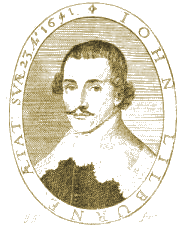
In conclusion, the Levellers (like John "Free-Born John" Lilburne pictured above) were ahead of their time and may indeed be called "liberal democrats," although they were not though of as such in their own time. Their ideas of toleration and consent ring across the ages as a example of popular government and radical dissent in the face of insurmountable odds.
Lastly, keep in mind their warnings to Cromwell at Putney. My reflections on Independence Day will concern revolutions that were and those that really weren't. The words of the Levellers echo throughout these revolutionary movements. Whether they were heeded is quite another story.
Tuesday, June 27, 2006
In The Dull, Old Summertime
I promise to keep all sentences punchy yet and at the same time pithy as I go over my May and June.
Books I've Read
(This does not include the many items from this reading list for one of my seminars)
- Jared Diamond, Guns, Germs and Steel: The Fates of Human Societies - engaging, well written, rigidly determinstic.
- James Burke and Robert Ornstein, The Axemaker's Gift: A Double-Edged History of Human Culture - entertaining, well-written, interesting views on technological change.
- Thomas Cahill, How The Irish Saved Civilization - suprisingly well done considering the puckish title.
- David Edmonds and John Eidinow, Wittgenstein's Poker - conflation of a ten minute argument between Ludwig Wittgenstein and Karl Popper (with Bertrand Russell in the room) that makes an interesting point concerning 20th century philosophy.
- W.C. Sellar and J.W. Yeatman, 1066 and All That - clever, funny, a real classic (if jokes about British history are your thing).
Books I'm Currently Reading
- Bertrand Russell, Why I Am Not A Christian
- Francis Fukuyama, The End of History and the Last Man
- Thomas Cahill, Sailing the Wine-Dark Sea: Why the Greeks Matter
Films I've Recently Seen/Rewatched
- The Fog of War - Excellent documentary. War is extremely complex as are the people who wage it and Robert McNamara is a perfect example of this. No, it does not let him off the hook.
- All The President's Men - Political/journalistic thriller at its best. No matter what you think of any of the players (my views on Richard Nixon are famously complex), it is a well-done film.
- Enron: The Smartest Guys in the Room - Really informative, leaves the central question unanswered (was the collapse the fault of bad people or indicative of a bad system?)
Places I've Recently Visited (That Aren't The Grocery Store, Sleazy Dives, Etc.)
- The Capital Brewery, Middleton, WI - Great tour and beer. Fun all around.
- Warner Park/The Duck Pond (home of the Madison Mallards) - Great game and beer. Fun all around.
Things I've Regretted
- Not getting to Indiana to see my Puma bretheren. We shall meet on the good earth of the Hoosier State once again. I promise.
- Beer, refried beans and gyros in a single day. My colon has recalled its ambassador and closed the embassy.
Asses I've Kicked
- Those other bitches in the Pub Trivia League. Trey Junkins does not fuck around. So there.
Current Favorite People (You Readers Out There Are ALWAYS My Favorites)
- Fitchburg, WI mayor Thomas Clauder - He promised to veto any smoking ban that crosses his desk. Way to promote small business and freedom of choice and movement among your citizens! You could teach Mayor Dave a lesson.
- New Glarus Brewing Company Brewmaster Dan Carey - Yokel is one of my new favorite beers and I got a free bumper sticker out of the deal. It is my standard sixer before descending to other wonderful but less refined libations.
Well, that's about it. Oh, and I played host to my brother, my friend Eric and my parents in three weekends of fun and frolic here in beautiful south central Wisconsin. I love visitors and should ask Mayor Dave to put me on the payroll. I sell this place better than your whiny ass.
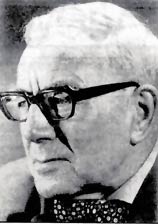
I also added a picture. Do you know who that is? I'm guessing Greg probably does.
Your Homework For The Evening (Or Whenever, I Guess)
- Read about the Levellers and the debates at Putney in 1647. Real democracy in action in the midst of the English Civil Wars. Don't worry, this will not be Hobbes redux. I learned my lesson.
Remember, more links make it more fun. Enjoy!